
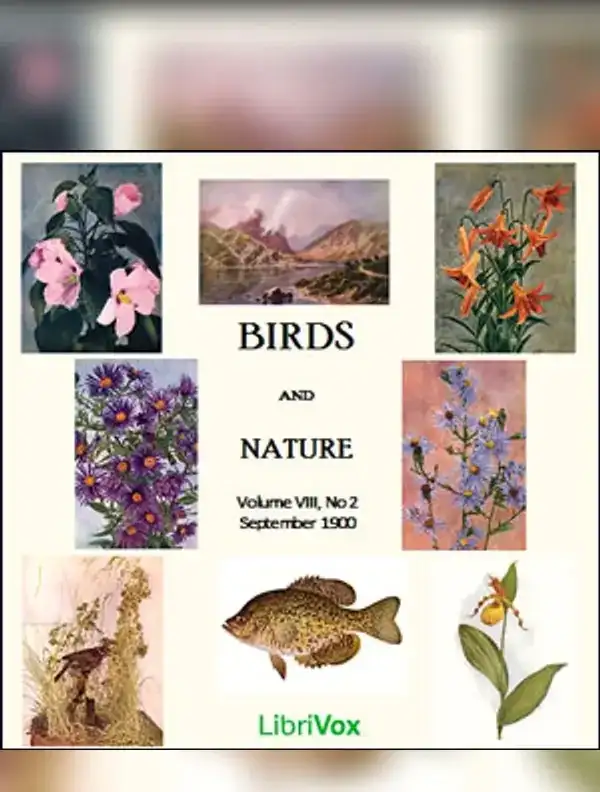
At the turn of the twentieth century, nature study emerged as a pivotal educational movement in American society, bridging the gap between rigorous scientific taxonomy and popular conservationist literature. Birds and Nature, Vol. VIII, No 2, September 1900 captures this transition, serving up a vibrant periodical blend of ornithological observations, botanical sketches, poetry, and aquatic lore.
Birds and Nature, Vol. VIII, No 2, September 1900, compiled by various period contributors, is a natural history periodical combining poetry, essayistic species profiles, and environmental prose. Ideal for historians of science, eco-literary enthusiasts, and readers of vintage nature writing, though less suited for those seeking modern scientific taxonomies or linear story arcs.
| Compiler / Editors | Various (Nature Study Publishing Company, Chicago) |
|---|---|
| Publication Date | September 1900 |
| Genre | Natural History / Periodical / Educational Nature Writing |
| Format | Anthology of Essays, Species Profiles, and Verse |
| Primary Focus | Ornithology, Botany, Ichthyology, Conservation Ethics |
| Target Audience | Nature lovers, vintage literature readers, historians of science |
Content Overview & Premise
In this September 1900 issue, the publication continues its core mission: fostering public appreciation for the natural environment through short, accessible entries. The anthology features twenty-three distinct pieces, carefully alternating between factual natural history essays and classic poetry. Readers encounter seasonal reflections on the shift into autumn alongside poetry from prominent figures, including Alfred Lord Tennyson’s classic snippet on nature’s mystery.
Botanical profiles examine plants such as mallows, asters, tiger-lilies, and the wild yellow lily, highlighting their visual characteristics and ecological roles. Entries like “Flowers and Their Invited Guests” explore the co-dependent relationship between flowering plants and insect pollinators. The ornithological segments shine in pieces devoted to the Oregon Junco, the Vesper Sparrow, and a humorous observational piece titled “The Flicker’s Mistake.” Furthermore, the issue expands beyond terrestrial life into aquatic biology, offering primers on fish origins, growth patterns, and a profile of the Calico Bass.
Key Themes & Literary Analysis
The driving force behind Birds and Nature lies in the Progressive-era philosophy that cultivating an emotional connection to the outdoors builds moral character and civic responsibility. By blending scientific facts with romanticized nature poetry, the magazine pioneered a multi-disciplinary style of environmental education designed for homes and classrooms alike.
A dominant theme throughout the volume is ecological interconnectedness. Long before modern ecological jargon entered common speech, entries like “Flowers and Their Invited Guests” illustrated mutualism in nature. Similarly, reflective pieces like “What Do We Owe the Birds” present an early argument for conservation, urging public restraint against habitat destruction and fashion-driven bird hunting. The prose style balances the late-Victorian sentimentality popular at the time with straightforward descriptive writing, making natural history digestible for a broad general audience.
Who Should Read This?
Recommended For:
- Environmental Historians: Readers studying how natural science was popularized at the turn of the twentieth century.
- Bird Watchers & Botanists: Hobbyists curious about historical regional descriptions of North American wildlife and flora.
- Vintage Anthology Enthusiasts: Anyone who enjoys short, reflective nature essays and classic thematic poetry.
Who Might Want to Skip:
- Modern Field Guide Users: Readers needing updated scientific classifications, modern nomenclature, or photography.
- Fiction Seekers: Readers looking for character-driven narrative arcs or plot-based stories.
Frequently Asked Questions
What is the historical context of the Birds and Nature periodical?
Published by the Nature Study Publishing Company in Chicago between 1897 and 1907, the magazine operated under a few title variations, including Birds and Nature and Art. The September 1900 issue marked the firm reinstatement of the title Birds and Nature, which was maintained for the remainder of its run.
Is the scientific content in this 1900 issue still accurate today?
While the general behavioral descriptions and botanical observations remain charming and largely accurate, some technical terminology, bird names, and biological classifications reflect the scientific understanding of 1900 rather than modern ornithology and botany.
What age group is this volume suitable for?
The content is clean, educational, and accessible, making it suitable for general adult readers, students, and young adults interested in historical nature writing.