
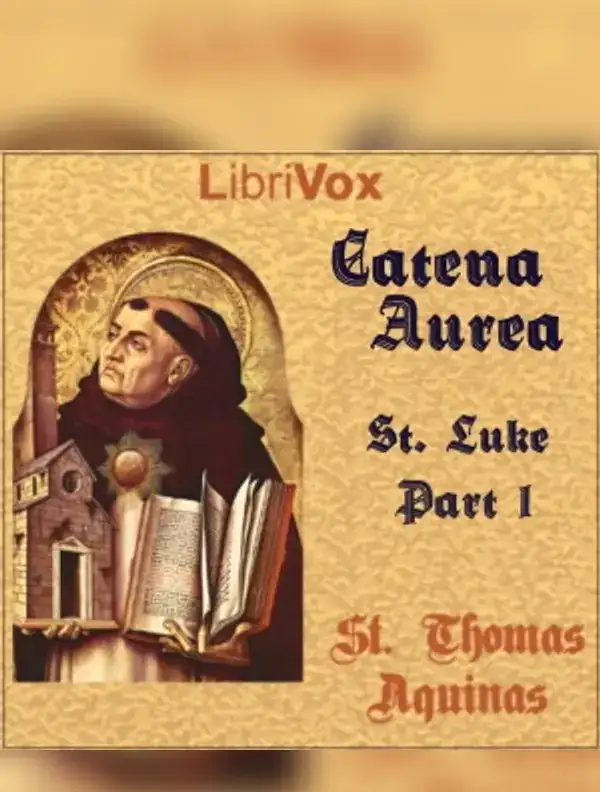
When Pope Urban IV commissioned Thomas Aquinas in the thirteenth century to synthesize the vast breadth of early Christian interpretation, the result transformed scriptural study for centuries to come. Catena Aurea (Gospel of St. Luke – Part 1), compiled by Saint Thomas Aquinas, is a seminal work of patristic biblical commentary that gathers verse-by-verse glosses from over eighty Church Fathers, including St. Augustine, St. Jerome, St. Ambrose, and St. John Chrysostom. Designed for academic theologians, clergy, and serious students of historical exegesis, this volume covers Luke 1:1 through 10:42; however, readers seeking modern narrative commentary or concise summaries may find its dense, verse-by-verse structure demanding.
| Compiler / Author | Saint Thomas Aquinas |
|---|---|
| Historical Era | 13th Century (c. 1262–1268) |
| Genre / Sub-genre | Christian Theology / Biblical Exegesis / Patristics |
| Main Themes | Patristic Consensus, Multi-Layered Hermeneutics, Early Christology, Incarnational Theology |
| Target Audience | Theologians, church historians, clergy, and students of classical commentary |
| Structure | Verse-by-verse classical commentary anthology (Luke 1:1–10:42) |
Content Overview & Premise
The title Catena Aurea translates to the “Golden Chain,” reflecting how Aquinas chained together extracts from early Christian authors into a continuous, readable commentary stream. Rather than inserting his own voice prominently, Aquinas meticulously selected and arranged comments from Eastern and Western Fathers to systematically analyze the Gospel according to St. Luke.
Part 1 tracks the opening half of Luke’s Gospel, beginning with the formal preface addressed to Theophilus and moving through the infancy narratives, including the Annunciation, the Magnificat, and the birth of John the Baptist. It proceeds through Christ’s baptism in the Jordan, His temptations in the wilderness, early ministry in Galilee, the calling of the Apostles, the Sermon on the Plain, and various miracles such as the raising of the widow’s son at Nain. The text concludes with the commissioning of the seventy-two disciples and Jesus’ visit to the home of Mary and Martha in Luke 10:38–42. For every individual verse or phrase, Aquinas provides curated commentary entries from patristic writers, showcasing how the early church interpreted the text literally, morally, and spiritually.
Key Themes & Literary Analysis
- Consensus Patrum (Consensus of the Fathers): Aquinas aimed to demonstrate agreement among early theologians. By placing Latin Fathers alongside Greek Fathers, the collection highlights a unified tradition on essential doctrines regarding the divinity and humanity of Jesus Christ.
- Fourfold Hermeneutical Approach: The commentary illustrates the traditional medieval interpretative framework: literal (historical context), allegorical (doctrinal meaning), tropological (moral application), and anagogical (eschatological scope).
- Curatorial Precision: Aquinas acts as a scholar-editor. His mastery over patristic literature is evident in how seamlessly excerpts transition from one Father to another, framing complex theological debates in an accessible anthology.
- Incarnational Focus in Lukan Theology: Luke’s particular emphasis on Christ’s compassion, the role of women, prayer, and the Holy Spirit receives deep analysis through the writings of Chrysostom, Cyril of Alexandria, and Ambrose.
Who Should Read This?
Recommended for:
- Theology students and researchers examining patristic hermeneutics and medieval scholarship.
- Clergy and preachers looking for historical, verse-by-verse commentary to enrich sermon preparation.
- Readers interested in early Church history and Catholic theological tradition.
Not recommended for:
- Casual readers looking for a simple, continuous story or modern historical-critical commentary.
- Those unfamiliar with classical theological terminology who prefer accessible devotional guides.
Frequently Asked Questions
What does “Catena Aurea” mean?
“Catena Aurea” is Latin for “Golden Chain.” It refers to the method of chaining together commentary quotes from early Church Fathers verse by verse across the Gospels.
Which Bible passage does Part 1 of Luke cover in this volume?
Part 1 covers Luke 1:1 through Luke 10:42, encompassing the infancy narratives, the opening of Jesus’ public ministry, major miracles, and the appointment of the seventy-two disciples.
Who commissioned Thomas Aquinas to construct this commentary?
Pope Urban IV commissioned Saint Thomas Aquinas in the 1260s to create an authoritative collection of early Church commentaries on the four Gospels.