
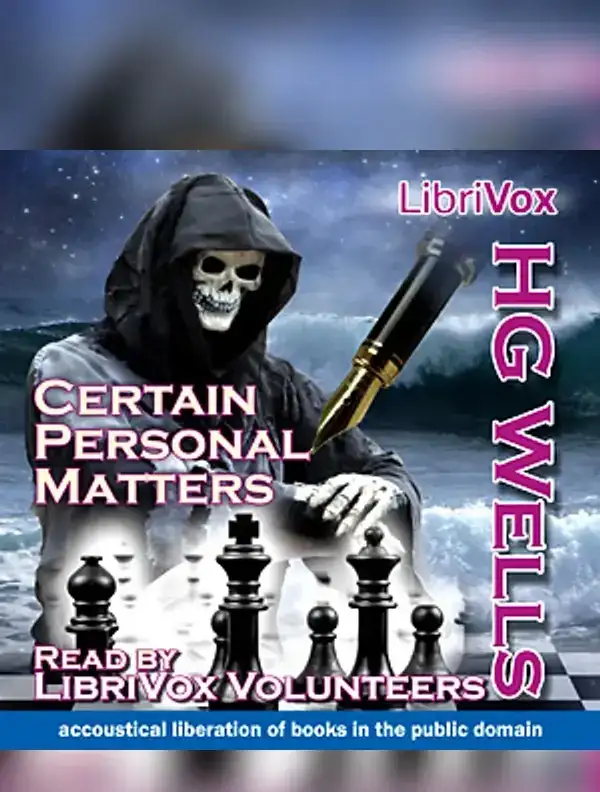
Before H.G. Wells redefined speculative literature with invading Martians and temporal travel machines, he sharpened his razor-sharp intellect on the quiet absurdities of late-Victorian everyday life. Certain Personal Matters, an 1897 essay collection by H. G. Wells, offers a humorous, lighthearted, and observant window into Victorian society, domestic quirks, literary posturing, and early scientific curiosity through thirty-nine distinct short pieces. This collection is best suited for enthusiasts of classic British humor, social satire, and historical non-fiction, while readers searching strictly for high-stakes science fiction narratives might prefer to skip it.
| Metadata Field | Details |
|---|---|
| Author | H. G. Wells |
| Original Publication Year | 1897 |
| Genre | Essay Collection / Social Satire / Humor |
| Main Themes | Victorian Domesticity, Literary Ambition, Scientific Curiosity, Daily Absurdities |
| Target Audience | Fans of classic British humor, 19th-century literature, and short non-fiction |
| Narrative Perspective | First-person observational essayist |
Content Overview & Premise
While modern audiences primarily associate H. G. Wells with groundbreaking science fiction, Certain Personal Matters captures the author in a delightfully informal mode. Originally published in various periodicals during the 1890s, these thirty-nine short essays reflect the candid thoughts of an inquisitive young writer observing the eccentricities of late 19th-century middle-class existence.
The collection spans a wide variety of topics, ranging from trivial domestic frustrations to sweeping cosmic reflections. In pieces like “Thoughts on Cheapness and My Aunt Charlotte,” “The Trouble of Life,” and “House-Hunting as an Outdoor Amusement,” Wells turns mundane household experiences into rich comedic commentary. Elsewhere, he tackles the anxieties of the creative life in “In a Literary Household,” “The Literary Regimen,” and “The Writing of Essays,” poking gentle fun at writerly pretensions and the publishing industry of his era.
Interspersed throughout the light banter are glimpses of the scientific imagination that would later define his legacy. Essays such as “The Extinction of Man,” “Through a Microscope,” and “From an Observatory” blend humor with evolutionary theory and astronomical wonder, demonstrating how deeply scientific thinking influenced every facet of Wells’s perspective.
Key Themes & Literary Analysis
- The Subversion of the Everyday: Wells possesses an extraordinary ability to elevate trivial subjects—such as a messy coal-scuttle, a game of chess, or a bad haircut—into thoughtful commentaries on human nature and social vanity.
- Proto-Speculative Curiosity: In essays like “The Extinction of Man,” Wells moves away from comfortable Victorian optimism, playfully suggesting that humanity is merely a temporary master of the Earth that could easily be supplanted by cephalopods or insects.
- Satire of Victorian Social Norms: The collection systematically pokes fun at rigid class expectations, public school education, literary grandstanding, and artificial social etiquette with understated irony.
- Self-Deprecating Conversational Style: Unlike the stern moralizing common among period essayists, Wells adopts a warm, self-effacing narrative tone that invites the reader into his personal study as a confidant rather than a pupil.
Who Should Read This?
Recommended For:
- Readers looking for light, witty short-form non-fiction from the Victorian era.
- Literary historians and H.G. Wells completists interested in his early journalistic career and personal philosophy.
- Fans of conversational, humorous essayists like Jerome K. Jerome or Charles Lamb.
Who Might Want to Skip:
- Readers expecting dramatic, plot-driven science fiction novels like The War of the Worlds or The Time Machine.
- Those looking for heavy academic treatises rather than breezy, satirical period sketches.
Frequently Asked Questions
Is this book a science fiction novel?
No, this collection consists of thirty-nine non-fiction essays, satirical pieces, and personal reflections on everyday life in Victorian England, though a few entries feature scientific themes.
Do I need prior knowledge of Victorian culture to enjoy these essays?
Not at all. While the essays mention late 19th-century customs and items, Wells’s observations on human nature, domestic life, and creative work remain universally relatable and easy to follow.
Are these essays standalone reads?
Yes, every essay in the collection is brief and entirely self-contained, making the book ideal for casual, episodic reading.