
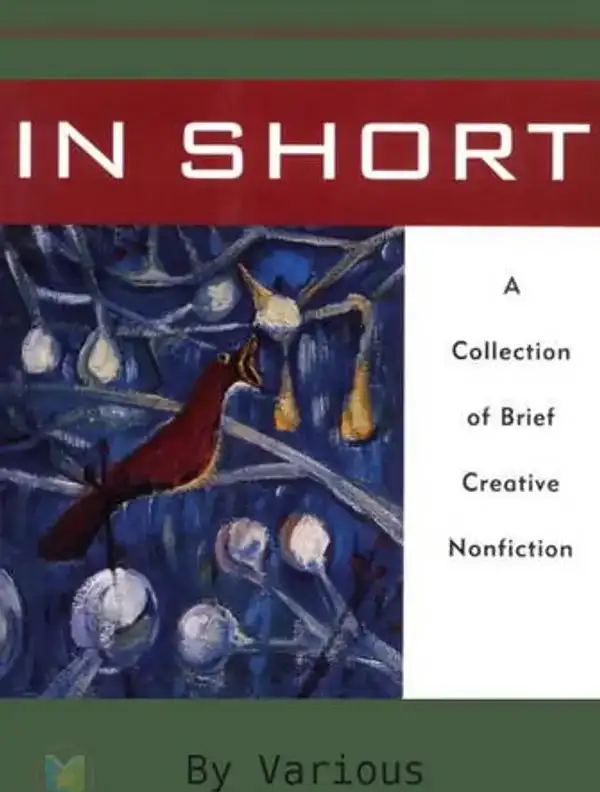
Few literary formats offer as sharp a window into the evolution of human thought as the brief essay, where foundational philosophers and radical social critics distill complex worldviews into concise arguments. Short Nonfiction Collection (Volume 001) brings together ten seminal public-domain essays spanning philosophy, political theory, science, and social commentary, written by historical figures including Immanuel Kant, Jonathan Swift, Emma Goldman, Jack London, and Lysander Spooner. This anthology examines intellectual autonomy, legal consent, and systemic critique across three centuries of prose. It is best suited for readers of classic philosophy, political history, and historical rhetoric; those seeking modern, lighthearted narrative prose may find the dense academic style challenging.
| Metric / Attribute | Details |
|---|---|
| Title | Short Nonfiction Collection (Volume 001) |
| Author(s) | Various (Immanuel Kant, Jonathan Swift, Emma Goldman, Jack London, Lysander Spooner, Samuel Butler, E.C. Pickering, Chapman Cohen, A.C. Benson, Albert Brisbane) |
| Publication Era | 18th Century to Early 20th Century |
| Genre | Nonfiction Anthology / Philosophy / Political Theory / Essays |
| Primary Themes | Intellectual independence, critique of religious and state authority, human psychology, rhetoric |
| Target Audience | Students of classic literature, history of philosophy, political theory, and historical rhetoric |
| Structure | Anthology of 10 standalone short essays |
Plot Overview & Premise
Rather than following a single continuous narrative, this collection aggregates ten distinct intellectual inquiries, each functioning as a standalone examination of human behavior, society, or scientific ambition. The works span multiple centuries, capturing pivotal moments when thinkers challenged prevailing orthodoxies of their respective eras.
The collection opens with Immanuel Kant’s defining Enlightenment text, An Answer to the Question: What Is Enlightenment?, which argues for intellectual self-reliance and the freedom to exercise public reason. Political and social critiques form the core of the anthology: Emma Goldman’s The Hypocrisy of Puritanism exposes how rigid moralism enforces social control, while Jack London’s The Somnambulists serves as a biting critique of societal passivity under modern industrial structures. Legal individualist Lysander Spooner dissects state authority in his essay on trial by jury and taxation, framing compulsory taxation as incompatible with genuine consent.
Complementing these radical sociopolitical texts are broader reflections on human culture, literature, and science. Jonathan Swift provides sharp, satirical observations on social discourse in Hints Towards An Essay on Conversation, while Samuel Butler reflects on clarity and style in On English Composition and Other Matters. Scientific and psychological inquiries round out the volume, featuring Edward Charles Pickering on the future trajectories of astronomical research, Chapman Cohen challenging theological design arguments, A.C. Benson contemplating psychological isolation in Escape, and Albert Brisbane probing economic compulsion in Why are All Men Gamblers?
Key Themes & Literary Analysis
The unifying thread across these disparate works is the assertion of individual agency against entrenched institutional norms. Kant’s famous motto sapere aude (“dare to know”) sets an analytical baseline that echoes through the subsequent pieces. When Emma Goldman attacks puritanical constructs or Lysander Spooner questions government legitimacy, both build upon this fundamental Enlightenment demand for intellectual autonomy.
From a stylistic perspective, the collection demonstrates the historical evolution of the persuasive essay. Swift utilizes sharp classical wit and prescriptive rules to critique social posturing, whereas Jack London employs evocative, naturalistic imagery to depict the modern public as unthinking sleepwalkers. Samuel Butler’s commentary on composition serves as a meta-analytical framework for the entire volume, reminding readers that effective rhetoric relies on directness and intellectual honesty rather than overly ornamental prose.
The inclusion of secular philosophy alongside scientific forecasting underscores a turn-of-the-century shift toward rationalism. Chapman Cohen’s critique of teleological arguments complements Pickering’s systematic vision for astronomical progress, showing how 19th- and early 20th-century thinkers sought to replace traditional dogma with empirical observation and critical logic.
Who Should Read This?
This anthology provides an accessible entry point for readers who wish to engage with primary historical texts without committing to multi-volume treatises. Its short-form structure makes it an effective resource for readers studying the history of ideas.
- Recommended For: Enthusiasts of classic philosophy, historical political essays, rhetoric, and readers who enjoy bite-sized non-fiction from major historical figures.
- Skip If: You prefer contemporary prose, cohesive single-author narratives, or light personal memoirs, as these historical essays feature formal syntax and dense argumentation.
Pros
- Features foundational essays by influential historical authors in a single compilation.
- Offers diverse perspectives across philosophy, law, science, and literary critique.
- Short essay formats allow for quick, focused intellectual reading sessions.
Cons
- Varying historical prose styles can feel dense or antiquated to modern readers.
- Lack of a single overarching theme means transitions between topics can feel abrupt.
Frequently Asked Questions
What authors are featured in this short nonfiction collection?
The collection includes influential figures such as Enlightenment philosopher Immanuel Kant, satirist Jonathan Swift, anarchist political writer Emma Goldman, novelist Jack London, legal theorist Lysander Spooner, author Samuel Butler, astronomer E.C. Pickering, and secular thinker Chapman Cohen.
Are these essays tied together by a central storyline?
No, this is an anthology of ten distinct, self-contained essays. While they do not share a plot, they are connected by overarching themes of critical inquiry, social critique, human psychology, and intellectual freedom.
Is this collection suitable for readers new to classic philosophy?
Yes, because each essay is brief, it offers a manageable way to explore primary texts from major historical figures without needing to read lengthy volumes. However, readers should expect formal, historical writing styles typical of the 18th to early 20th centuries.