
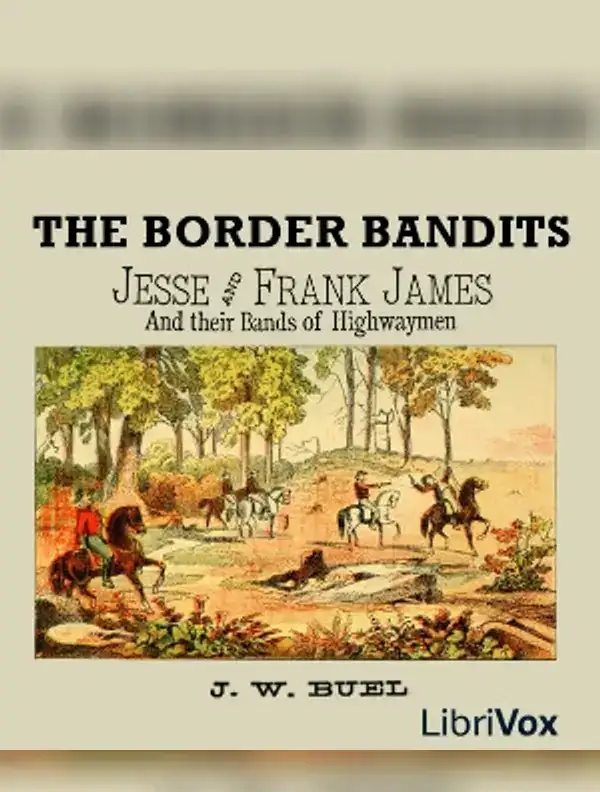
Long before modern true crime podcasts captivated the public imagination, 19th-century chroniclers fed an eager audience’s appetite for gritty frontier violence and outlaw lore. J. W. Buel’s The Border Bandits stands as a seminal contemporary account of Jesse and Frank James, capturing the bloody transition of Confederate guerrillas into the most notorious bank and train robbers in American history.
The Border Bandits by J. W. Buel is a work of 19th-century historical journalism and true crime that chronicles the violent careers of Jesse and Frank James alongside the Younger brothers. The book traces their origin in border guerrilla warfare during the American Civil War through their decade-long spree of robberies across Missouri, Kentucky, Iowa, and Minnesota. This work is ideal for Western history enthusiasts and researchers studying 19th-century outlaw mythology, while readers seeking modern, objective academic biography may prefer contemporary historical texts.
| Metadata Field | Details |
|---|---|
| Author | J. W. Buel (James William Buel) |
| First Published Era | Early 1880s (Circa 1881) |
| Genre | True Crime / Western History / Sensational Journalism |
| Main Themes | Post-Civil War border trauma, frontier lawlessness, criminal myth-making |
| Narrative POV | Third-person episodic chronicle / Period journalistic narrative |
| Target Audience | Old West history enthusiasts, true crime readers, scholars of American folklore |
Plot Overview & Premise
The Border Bandits delivers a chapter-by-chapter chronicle detailing how youth molded in the furnace of border warfare produced the most dangerous highwaymen in post-bellum America. The narrative opens by examining the formative years of Jesse and Frank James, documenting their indoctrination into Confederate guerrilla tactics under leaders like William Quantrill and Bloody Bill Anderson. Early chapters recount devastating engagements, including the sack of Lawrence, Kansas, and the massacre at Centralia, establishing the brutal skill set the brothers later applied to civil crime.
Following the Civil War, Buel tracks the formation of the James-Younger Gang as they pivot from military skirmishes to organized bank, stagecoach, and train robberies. The book systematically presents key heists across multiple states, detailing raids in Russellville (Kentucky), Corydon (Iowa), Ste. Genevieve (Missouri), and the audacious robbery of the cash box at the Kansas City Fair. Buel highlights high-profile train wrecks and hold-ups, such as the Gad’s Hill and Rocky Cut robberies, alongside the fateful Pinkerton raid on the Samuels homestead and the bloody collapse of the gang during the Northfield, Minnesota bank raid in 1876.
Key Themes & Literary Analysis
Buel’s text provides crucial insight into the psychological and cultural landscape of the Reconstruction-era American West. The primary thematic threads include:
- The Guerrilla Legacy: The narrative demonstrates how the irregular warfare of the Civil War desensitized young men to violence, transforming partisan combatants into career criminals who viewed state authorities as partisan enemies.
- 19th-Century Sensational Journalism: Written while many of the subjects were still alive or recently deceased, Buel’s writing blends investigative detail with dramatic flair, epitomizing the dime-novel journalistic style of the late 1800s.
- Myth vs. Reality in Frontier History: The text captures the emerging conflict between popular romanticization of outlaws as Robin Hood figures and the bloody reality of innocent bystanders murdered during bank heists.
Who Should Read This?
This volume offers a compelling primary-era lens into American outlaw history, though prospective readers should weigh its historical style against modern standards.
- Recommended For: Collectors of classic Western lore, readers interested in the origins of American true crime literature, and historians analyzing 19th-century perspectives on the James Gang.
- Who Might Skip: Readers looking for polished modern prose, definitive modern forensic analysis, or unbiased neutral accounting, as Buel relies heavily on period rumors alongside official reports.
Frequently Asked Questions
Is The Border Bandits an accurate historical biography?
While the book relies on contemporary police reports, newspaper accounts, and personal interviews from the period, it reflects the sensationalized tone of 1880s journalism. It is best read as a valuable historical artifact illustrating how outlaws were perceived at the time rather than an absolute modern academic biography.
Which notorious outlaws are featured in the book?
The primary focus remains on Jesse and Frank James, but the book extensively covers their key accomplices, including Cole, Jim, and Bob Younger, as well as George Shepherd and various lawmen and detectives involved in their pursuit.
What makes J. W. Buel’s perspective unique?
Buel was a prolific 19th-century journalist who wrote his accounts while the events were fresh in the public consciousness. His work captures raw public reactions and rumors surrounding the James Gang before modern Hollywood romanticized their legacy.