
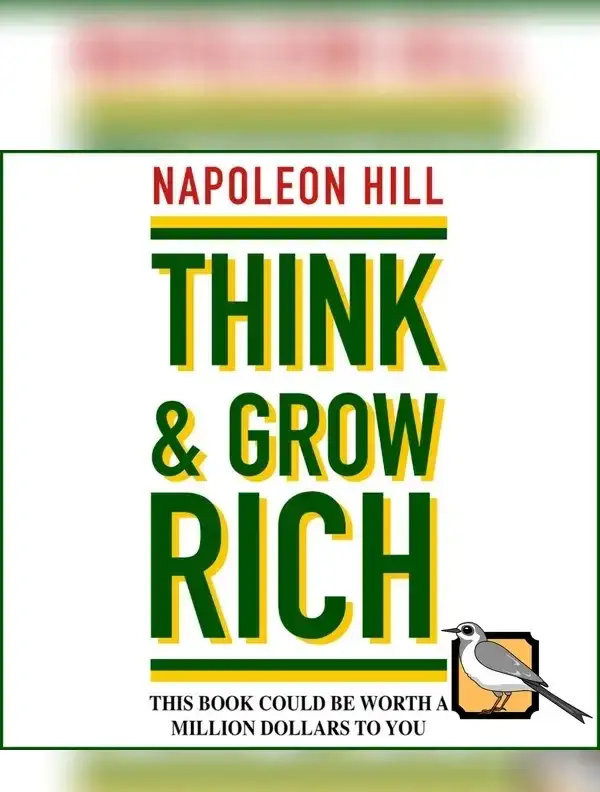
Long before modern personal development turned into a saturated digital industry, a former investigative journalist spent two decades distilling the wealth-building habits of industrial titans into a singular philosophy. Think and Grow Rich by Napoleon Hill is a foundational 1937 self-help and business classic that posits financial success begins with a disciplined psychological mindset. Examining the lives of leaders like Andrew Carnegie, Henry Ford, and Thomas Edison, the book outlines thirteen practical principles for transforming abstract desire into tangible financial achievement. It is ideal for entrepreneurs, ambitious professionals, and personal development enthusiasts, while readers seeking modern empirical financial advice, technical investment formulas, or quick budgeting strategies should look elsewhere.
| Attribute | Details |
|---|---|
| Author | Napoleon Hill |
| Original Publication Era | 1937 (Great Depression Era) |
| Genre / Sub-genre | Non-Fiction / Personal Development / Entrepreneurship |
| Main Themes | Psychological Mindset, Autosuggestion, Specialized Knowledge, Persistence, The Mastermind Concept |
| Target Audience | Entrepreneurs, self-starters, corporate leaders, personal growth readers |
| Narrative Style | Authoritative, didactic, persuasive instructional guide |
Plot Overview & Core Philosophy
Commissioned by industrialist Andrew Carnegie, Napoleon Hill devoted over twenty years to studying more than 500 of the wealthiest individuals in early twentieth-century America. His goal was simple: determine whether success follows a predictable formula that any ordinary individual can replicate. The resulting work argues that financial abundance is not merely the product of luck or raw talent, but rather the result of a specific, repeatable mental architecture.
The core philosophy hinges on the premise that thoughts possess a tangible, formative force. When an individual combines a definite purpose with unwavering focus and persistence, the human brain aligns subconscious drives toward achieving that objective. Hill structures his program around thirteen key steps, including the development of a burning desire, precise visual planning, auto-suggestion, specialized knowledge acquisition, organized action, and the tactical use of collective intelligence through peer groups.
Key Themes & Literary Analysis
At its heart, the text serves as a bridge between early New Thought metaphysics and pragmatic American industrial pragmatism. Published during the depths of the Great Depression, its message provided a powerful counter-narrative to economic despair by putting agency back into the hands of the individual.
- The Power of the Mindset: Hill asserts that emotionalized thoughts act as magnetizing forces. By constantly feeding the subconscious mind with clear, definite goals, individuals bypass fear and indecision.
- The Mastermind Principle: One of Hill’s most enduring contributions to business management is the concept of the Mastermind—a harmonious alliance of two or more minds working toward a common objective to create a synergy far greater than individual talent.
- Persistence and Overcoming Failure: The text highlights that temporary defeat is often a necessary precursor to monumental success, advocating for a relentless commitment to one’s primary goal despite initial setbacks.
Stylistically, Hill writes with direct, uncompromising conviction. His prose reads like a motivational manifesto, blending anecdotal case studies with structured exercises. While modern readers may find the metaphysical terminology somewhat dated, the underlying behavioral principles—such as setting defined goal dates and constructing focused peer networks—remain central to contemporary performance coaching.
Who Should Read This?
This work remains essential reading for anyone interested in the history of self-improvement literature, personal motivation, and early corporate leadership strategies. It offers timeless psychological principles that encourage personal accountability and strategic focus.
- Pros: High-energy motivational writing, timeless conceptual frameworks, practical focus on persistence and goal-setting.
- Cons: Lacks modern economic data, uses archaic early-20th-century terminology, leans occasionally on pseudoscientific explanations.
Recommendation: Read this book if you need a foundational mindset shift and structured motivation to pursue long-term career or entrepreneurial goals. Skip it if you are looking for specific, contemporary financial advice such as stock trading tactics, real estate strategies, or scientific psychological research.
Frequently Asked Questions
Is Think and Grow Rich strictly about financial wealth?
No. While financial gain serves as the primary practical example throughout the book, Hill emphasizes that these thirteen principles apply equally to personal fulfillment, leadership development, professional relationships, and mental peace.
What is the Mastermind Alliance mentioned by Napoleon Hill?
The Mastermind Alliance is defined as the coordination of knowledge and effort between two or more people working toward a definite purpose in complete harmony. Hill argues that no individual achieves permanent success without leveraging the collective energy and intelligence of others.
Does the book offer practical, modern financial strategies?
It does not contain modern tactical financial advice like budgeting methods, stock portfolio management, or real estate investing techniques. Instead, it provides the underlying psychological blueprint and mindset required to execute those tactics effectively.