
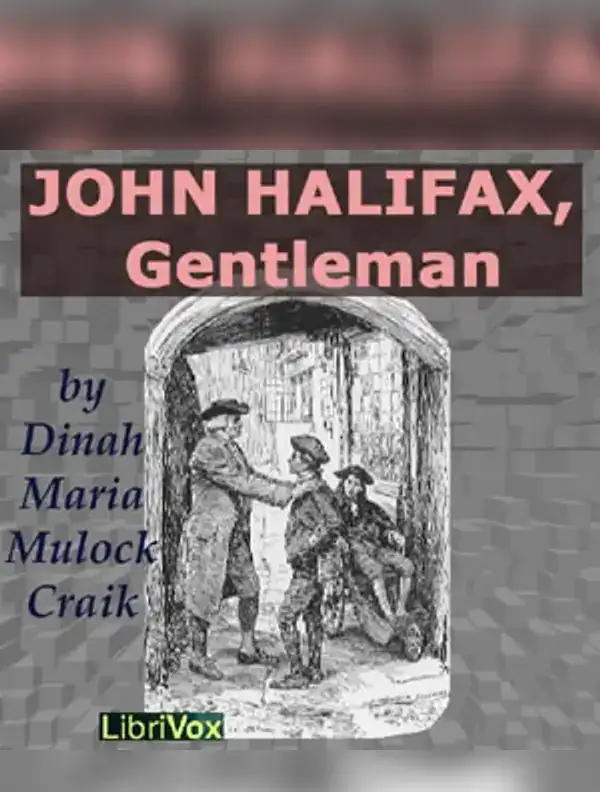
Few mid-Victorian novels capture the ideological spirit of the rising middle class as eloquently as Dinah Maria Mulock Craik’s 1856 novel. Narrated through the tender, observational lens of an invalid companion, the story charts the transformative life of an impoverished orphan who redefines the traditional concept of social nobility through self-reliance, moral integrity, and quiet fortitude.
*John Halifax, Gentleman*, authored by Dinah Maria Mulock Craik, is a mid-Victorian Bildungsroman tracking the life of a self-made orphan in early 19th-century England amidst industrial changes. The narrative contrasts inherited aristocratic privilege with earned personal virtue. This book is ideal for readers who enjoy classic 19th-century literature, Victorian social histories, and stories of moral perseverance like Charles Dickens’s Great Expectations. Readers seeking modern fast-paced plotting or dark, antiheroic themes may wish to skip it.
| Field | Details |
|---|---|
| Author | Dinah Maria Mulock Craik |
| Original Publication Date | 1856 |
| Literary Period / Genre | Victorian Era / Historical Fiction / Bildungsroman |
| Narrative Perspective | First-person retrospective (narrated by Phineas Fletcher) |
| Setting | Norton Bury (based on Tewkesbury, Gloucestershire), England (1790s–1830s) |
| Primary Themes | Class mobility, definition of true nobility, industrial progress, Quaker values, domestic piety |
| Target Audience | Classic literature enthusiasts, Victorian history scholars, general historical fiction readers |
Plot Overview & Premise
The story opens in the late 1790s in the English town of Norton Bury. Phineas Fletcher, the sickly, wheelchair-bound son of a stern Quaker tanner named Abel Fletcher, encounters fourteen-year-old John Halifax—a destitute, orphaned boy seeking honest work. Impressed by John’s quiet dignity and physical strength, Abel hires him to work at the tannery. Phineas instantly forms a profound, lifelong friendship with John, finding in him a brotherly protector and intellectual companion.
Through unwavering discipline, keen intelligence, and honesty, John earns the trust of his employer and gradually elevates his station. He transitions from manual labor at the tannery to managing and eventually owning a cloth mill at Enderley. Along his path, John meets Ursula March, an educated heiress of higher social standing. Despite intense opposition from her aristocratic guardian, Richard Brithwood, John’s unblemished moral character and personal success earn Ursula’s love and hand in marriage, proving that character outweighs inherited titles.
As the narrative progresses across forty chapters, John faces significant historical and personal trials. He navigates economic downturns, food shortages, and violent labor unrest driven by the introduction of steam-powered machinery. Unlike harsh industrial owners, John quells riots through fairness and personal bravery rather than force. The couple raises a family, enduring deep personal sorrow—including the blindness and early death of their beloved eldest daughter, Muriel—while confronting the lingering arrogance of the upper classes. Ultimately, John secures prosperity, political respect, and a lasting legacy as a true gentleman of the modern era.
Key Themes & Literary Analysis
Redefining the “Gentleman”
The central premise of Craik’s novel revolves around the shifting definition of social rank during the Industrial Revolution. In traditional Victorian society, a gentleman was defined exclusively by noble birth, inherited wealth, and idle leisure. Craik directly challenges this feudal standard through John Halifax, asserting that true status is derived from intrinsic moral conduct, honor, industry, and kindness toward others. John’s pedigree consists only of a Greek Testament inscribed with his father’s name and the words “Gentleman”—a title he earns through merit rather than bloodline.
Industrial Progress and Social Responsibility
Set during a epoch of rapid mechanical innovation, the novel addresses the anxieties surrounding the rise of manufacturing. John represents the ideal Victorian industrialist: an innovator who adopts steam power to advance human productivity, yet remains deeply empathetic toward his workers. During grain shortages and Luddite riots, John refuses to hoard food or exploit his laborers, demonstrating that Christian ethics and free-market enterprise can coexist harmoniously.
Narrative Perspective and Retrospective Devotion
Framing the story through Phineas Fletcher provides a distinct emotional depth. Because Phineas suffers from chronic illness and remains largely outside the public realm of commerce and marriage, his retrospective narrative acts as an idealizing lens. His devotion to John allows the reader to observe the protagonist’s public victories and private struggles with intimate, affectionate clarity, making the novel an enduring study of male friendship and spiritual companionship.
Who Should Read This?
Recommended For:
- Classic Literature Readers: Those who appreciate Victorian prose, domestic sagas, and morality-driven narratives.
- Social History Enthusiasts: Anyone interested in the cultural shift from rural land ownership to industrial enterprise in 19th-century Britain.
- Fans of Inspirational Novels: Readers who enjoy rewarding stories centered on resilience, integrity, and personal redemption.
Who Might Skip:
- Readers looking for fast-paced modern pacing, gritty realism, or complex antiheroes.
- Those who prefer cynical or dark psychological fiction over earnest Victorian moral frameworks.
Frequently Asked Questions
Is John Halifax, Gentleman based on a true story?
While the novel is a work of fiction, Dinah Maria Mulock Craik drew heavy inspiration from real locations and socio-economic conditions of 19th-century England. The town of Norton Bury is a fictionalized representation of Tewkesbury, Gloucestershire, where Craik stayed while researching local tanning and milling industries.
What is the primary message of the novel?
The novel argues that true gentlemanly status is defined by moral integrity, personal effort, and compassion for others, rather than noble ancestry or unearned wealth. It celebrates self-reliance and Christian humanism during an era of significant industrial and social change.
Is this novel suitable for academic study?
Yes. It serves as an essential text for studying mid-Victorian middle-class ideology, early industrial economic history, gender dynamics, and 19th-century representations of physical disability through the narrator Phineas Fletcher.