
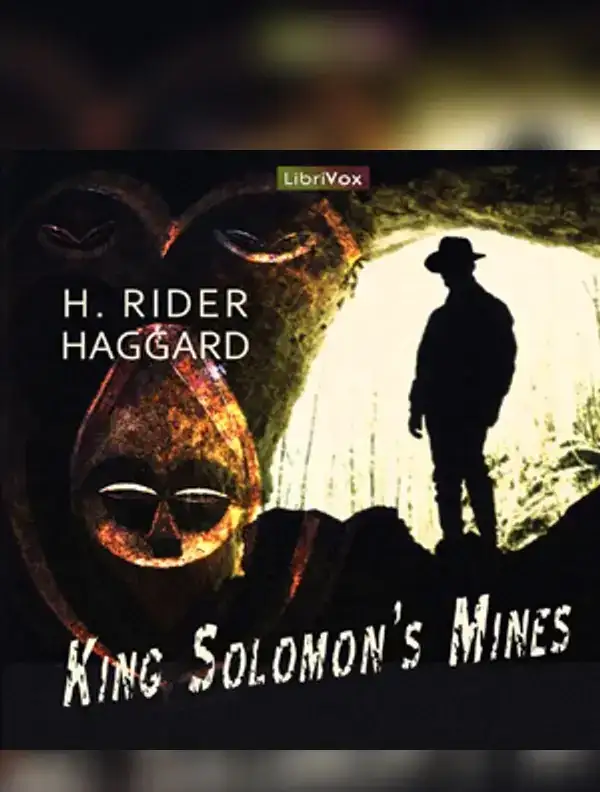
When H. Rider Haggard accepted a five-shilling wager from his brother that he could not write a novel as entertaining as Robert Louis Stevenson’s Treasure Island, he created an enduring blueprint for modern expedition fiction.
King Solomon’s Mines (1885) by H. Rider Haggard is a seminal Victorian adventure novel that introduced hunter Allan Quatermain and established the “Lost World” subgenre. The narrative follows a perilous trek across uncharted African terrain to locate a missing British nobleman and discover ancient biblical riches guarded by an isolated civilization. This book is best suited for literary historians and enthusiasts of classic pulp adventure, while modern readers seeking progressive cultural representations or character-driven nuance may prefer to skip it.
| Metadata Field | Details |
|---|---|
| Author | H. Rider Haggard |
| Original Publication Date | 1885 (Victorian Era) |
| Genre / Sub-genre | Classic Adventure / Lost World Fiction |
| Narrative POV | First-person limited (Allan Quatermain) |
| Main Themes | Colonial exploration, survival, greed versus honor, ancient legends |
| Target Audience | Fans of classic literature, historical adventure, and early pulp fiction |
Plot Overview & Premise
The story opens in South Africa, where seasoned big-game hunter Allan Quatermain is recruited by British aristocrat Sir Henry Curtis and his companion, Captain John Good. Sir Henry seeks Quatermain’s assistance to find his missing brother, George Neville, who vanished while searching for the legendary diamond mines of King Solomon. Quatermain agrees to lead the quest after remembering an ancient map drawn in blood by a dying 16th-century Portuguese explorer.
Before setting out, the party hires a dignified native named Umbopa to serve as their assistant. The expedition faces grueling hardship as they trek across a scorching desert and survive the freezing temperatures of a mountain range known as Sheba’s Breasts. Upon crossing into the untamed valley beyond, they uncover Kukuanaland, an isolated, warrior-centric society hidden from the outside world.
The adventurers quickly discover that Umbopa is actually Ignosi, the rightful king of Kukuanaland, who was ousted in his youth by his treacherous uncle, King Twala, and the sinister witch doctor Gagool. Allied with Ignosi, Quatermain and his companions become key players in a violent tribal war to reclaim the throne. After victory is secured, Gagool leads the men to the hidden vault containing Solomon’s vast hoard of diamonds, where betrayal and entrapment test their ultimate will to survive.
Key Themes & Literary Analysis
H. Rider Haggard’s novel served as a major turning point in late 19th-century popular literature, sparking a wave of wilderness survival narratives that influenced works ranging from Arthur Conan Doyle’s The Lost World to modern film franchises like Indiana Jones.
- Genesis of the Lost World Archetype: The novel introduced structural tropes that still define action-adventure media today: cryptic maps, forgotten civilizations hidden behind impassable geographic barriers, deadly ancient traps, and resource-rich underground chambers.
- Victorian Imperial Idealism: The book reflects the complex colonial mindset of late Victorian Britain. Quatermain’s perspective alternates between romanticizing the African interior and viewing its indigenous populations through a patronizing imperial lens.
- Subversion of Modernity vs. Tradition: While the British protagonists utilize advanced weaponry like repeating rifles to win battles, Haggard depicts the native Kukuana warriors with physical prowess and tactical intelligence, challenging the simplistic Victorian assumption of European absolute superiority.
- Material Wealth vs. Survival: The climax inside the treasure chamber highlights the vanity of human ambition; locked in total darkness alongside heaps of priceless gems, diamonds become entirely worthless compared to water and air.
Who Should Read This?
King Solomon’s Mines remains a vital historical benchmark for readers interested in the evolution of popular genre fiction.
- Pros: High-pacing, foundational influence on modern pop culture, memorable set-pieces, and accessible first-person prose.
- Cons: Contains racial caricatures, imperialist perspectives, and outdated language common to Victorian literature that may alienate contemporary readers.
Frequently Asked Questions
Is King Solomon’s Mines part of a series?
Yes. Although it works completely as a standalone novel, it is the first published entry in the Allan Quatermain series, which eventually grew to include 14 novels and several short stories written by H. Rider Haggard.
What literary genre was created by King Solomon’s Mines?
The novel is recognized as the origin of the “Lost World” subgenre, characterized by modern explorers discovering forgotten civilizations isolated from the rest of the world.
Is Allan Quatermain based on a real person?
Allan Quatermain was largely inspired by Frederick Courtney Selous, a famous real-life British big-game hunter, explorer, and conservationist in South Africa.