
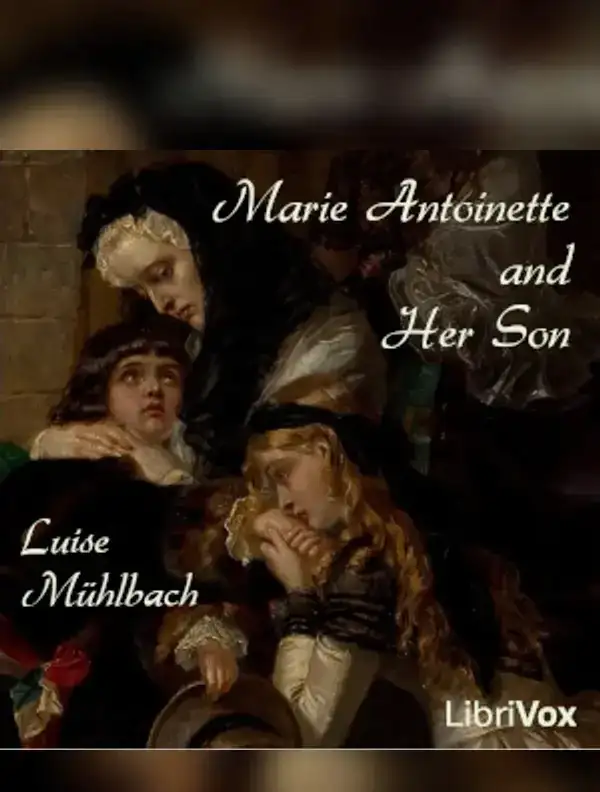
The swift collapse of Versailles under the weight of revolutionary fervor remains one of history’s most harrowing falls from grace, transforming a celebrated Austrian princess into an executed political casualty. Luise Mühlbach’s Victorian-era novel captures this dramatic descent while shifting its narrative gaze onto the tragic aftermath suffered by her orphaned heir, Louis XVII.
Marie Antoinette and Her Son by 19th-century German author Luise Mühlbach is a dramatic historical fiction novel that charts the Queen of France’s descent from royal opulence to the scaffold, followed by the shadowy fate of her imprisoned young son. Perfect for readers who enjoy high-stakes historical drama and classic revolutionary sagas, though readers seeking strictly factual, non-fiction biographies may find its romanticized court intrigue and conspiracy subplots overly dramatized.
| Author | Luise Mühlbach (Clara Mundt) |
|---|---|
| Publication Era | Mid-19th Century (1867) |
| Genre | Historical Fiction / Victorian Romance Novel |
| Narrative Perspective | Third-Person Omniscient |
| Core Themes | Monarchical Collapse, Maternal Tragedy, Conspiracy & Escape, The Lost Dauphin Mythos |
| Target Audience | Fans of classic historical fiction, French Revolutionary drama, and royal court histories |
Plot Overview & Premise
The novel opens during the serene, idyllic early years of Marie Antoinette’s reign at the Petit Trianon, where the young Queen seeks refuge from the rigid, gossiping etiquette of the French court. However, dark rumors and aristocratic envy quickly erode her public standing. The scandalous Affair of the Diamond Necklace acts as a crucial catalyst, painting the Queen as a symbol of royal excess despite her innocence in the actual fraud scheme.
As the political climate darkens, the narrative tracks the explosive outbreak of the French Revolution. From the opening of the States-General to the chaotic march on Versailles on October 5, 1789, Marie Antoinette and King Louis XVI find themselves virtually imprisoned within the Tuileries Palace. The central dynamic shifts toward the domestic warmth of the royal family amidst mounting terror, highlighting Marie Antoinette’s fiercely protective instinct over her young son, the Dauphin Louis-Charles.
The novel’s second half plunges into the bleakest chapters of the Revolution: the execution of Louis XVI, the agonizing separation of the Queen from her children, and Marie Antoinette’s trial and death at the guillotine. Following her demise, Mühlbach shifts focus to the young King Louis XVII. Confined in the Temple prison under the brutal care of the cobbler Simon, the boy becomes the focal point of royalist rescue plots led by figures like the devoted Toulan. The story stretches beyond the Terror, weaving mystery, altered identities, and political maneuverings involving Fouché and the early Napoleonic era as royalist loyalists fight to protect the hidden heir.
Key Themes & Literary Analysis
The Demise of Royal Sanctity
Mühlbach constructs a stark contrast between the bright, unchecked luxury of Trianon and the damp, austere stones of the Conciergerie. Through this spatial trajectory, the novel explores how symbolic authority deteriorates. Marie Antoinette transitions from an untouchable sovereign to a vulnerable human being stripped of rank, title, and eventually her life, highlighting the fragile nature of political power.
Maternal Devotion Under Siege
While popular history often remembers Marie Antoinette for her perceived vanity, Mühlbach frames her primary identity around motherhood. The narrative repeatedly focuses on her emotional endurance when forced to shield her children from angry mobs and political zealots. Her heart-wrenching separation from the young Dauphin serves as the story’s emotional climax, emphasizing human affection above statecraft.
The Mystery of the Lost Dauphin
In keeping with popular 19th-century literary trends, the novel embraces the legend surrounding Louis XVII’s survival. Mühlbach weaves suspenseful plotlines of secret codes, disguise, and loyalty among underground royalists. By treating the young king’s post-prison life as an open question, the story captures the post-revolutionary anxiety over legitimate rule and political displacement.
Who Should Read This?
Recommended For:
- Classic Historical Fiction Enthusiasts: Readers who appreciate expansive, dramatic 19th-century storytelling in the vein of Alexandre Dumas or Sir Walter Scott.
- French Revolution Buffs: Those interested in dramatic retellings of court life, revolutionary strife, and monarchist perspectives.
- Fans of Mystery & Royal Intrigue: Readers intrigued by tales of escaped heirs, secret identities, and political conspiracies.
Who Might Want to Skip:
- Strict History Scholars: Readers seeking rigorous academic facts will find Mühlbach’s inclusion of romanticized myths and speculative survival theories historically inaccurate.
- Modern Pacing Seekers: Readers who prefer minimalist prose or fast-paced modern thrillers may find the Victorian dialogue and theatrical pacing slow.
Frequently Asked Questions
Is Marie Antoinette and Her Son historically accurate?
While the book is built upon real historical events—such as the Diamond Necklace affair, the storming of Versailles, and the execution of the royal couple—it is fundamentally a work of 19th-century historical fiction. Author Luise Mühlbach dramatized conversations and incorporated popular legends surrounding the escape of the young Dauphin that deviate from confirmed historical consensus.
Does the novel focus entirely on Marie Antoinette?
No. The first half focuses on the Queen’s rise, reign, and downfall, but the second half shifts attention to her son, Louis-Charles (Louis XVII), detailing his imprisonment in the Temple prison, his handlers, and the royalist attempts to rescue and hide him.
What is the style of Luise Mühlbach’s writing?
Mühlbach writes in a traditional Victorian style characterized by high emotional stakes, theatrical dialogue, vivid characterization, and dramatic narrative arcs typical of 19th-century biographical novels.