
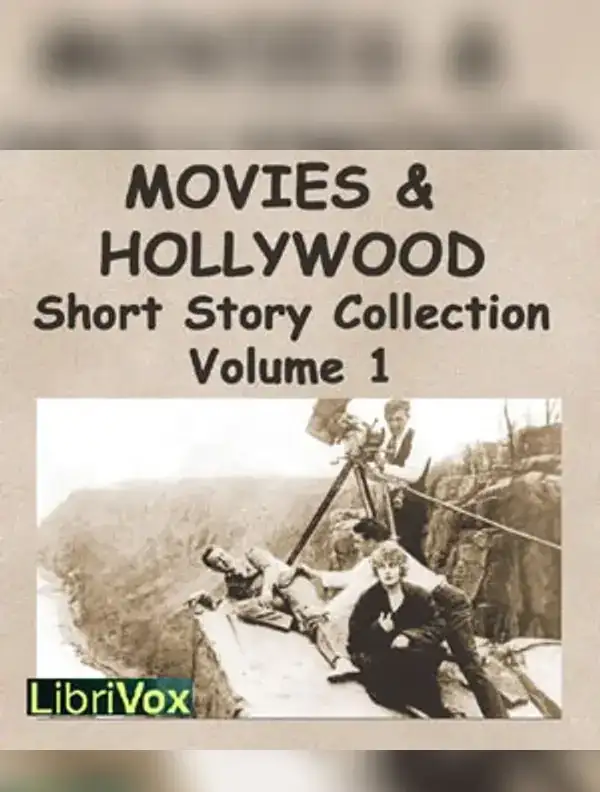
Before Hollywood established its global cultural monopoly, prose writers were already grappling with the sudden, disorienting rise of motion picture technology. Movies and Hollywood Short Story Collection, Volume 1 compiles early literary reactions to the silver screen, capturing a historic moment when cinema was viewed with equal parts wonder, skepticism, and existential anxiety.
This vintage anthology features sixteen short stories and one dramatic monologue published between 1895 and 1922 by diverse writers including Rudyard Kipling, O. Henry, Susan Glaspell, and Katherine Mansfield. The collection explores early kinetoscopes, silent film sets, and the dawn of celebrity obsession. This work is best for film historians and classic literature enthusiasts; casual readers seeking polished modern Hollywood thrillers may want to pass.
| Attribute | Details |
|---|---|
| Title | Movies and Hollywood Short Story Collection, Volume 1 |
| Authors | Various (Rudyard Kipling, O. Henry, Susan Glaspell, Katherine Mansfield, Brander Matthews, et al.) |
| Publication Era | 1895–1922 (Silent Era & Early Technological Inventions) |
| Genre | Short Story Anthology / Vintage Fiction / Media History |
| Format / Contents | 16 Short Stories and 1 Dramatic Monologue |
| Primary Themes | Technological anxiety, illusion versus reality, early star culture, studio power dynamics |
| Target Audience | Film scholars, silent cinema fans, antiquarian fiction readers |
Plot Overview & Premise
The anthology chronicles the cultural transition from late-nineteenth-century peep-show novelties to the multi-million-dollar silent studio system of the 1920s. The earlier pieces in the collection treat the moving image as a quasi-magical or scientific curiosity. Stories like Brander Matthews’s “The Kinetoscope of Time” and O. Henry’s “The Vitagraphoscope” focus heavily on the mechanical apparatus itself, exploring how shadows projected on a wall alter human perception of time, memory, and presence.
As moving pictures evolved into a dominant narrative medium, the focus shifted from technical gadgets to the humans surrounding them. Rudyard Kipling’s famous narrative “Mrs. Bathurst” uses the novelty of a flickering newsreel to drive a haunting mystery about obsession and desertion. Later entries in the volume focus on the fledgling Hollywood dream machine itself. Katherine Mansfield’s “Pictures” and Susan Glaspell’s “His Smile” offer grounded depictions of struggling extra actors, desperate job seekers, and theater audiences projecting their unfulfilled grief onto screen idols. From satirical pieces on studio publicity stunts to Frank A. Welton’s comic piece “Maisie at the Movies: A Monologue,” the collection captures a multi-layered portrait of a society learning to live with moving images.
Key Themes & Literary Analysis
1. Technological Anxiety and Phantom Images
During the late 1800s and early 1900s, projected light and recorded movement felt uncanny. Authors represented in this collection frequently framed the motion picture camera as a device that captured souls or preserved phantom ghosts. The recorded subject remains eternally alive on celluloid while aging or disappearing in real life, a paradox that created narrative tension across romantic and speculative stories of the period.
2. The Architecture of Stardom and Illusion
The collection charts the rapid birth of celebrity culture. Stories from the late 1910s and early 1920s pull back the curtain on silent film studios, exposing the contrast between sparkling silver-screen illusions and the mundane realities of film sets. Writers dissect how studio publicists manipulated narratives, how stunt actors risked life and limb for little pay, and how everyday moviegoers forged one-sided emotional bonds with screen actors.
3. Literary Experimentation with Cinematic Techniques
The emerging visual medium significantly altered how literary authors structured prose. In several stories, authors employ narrative cuts, rapid transitions, and close-up descriptions that mirror cinematic montage and cross-cutting. This collection serves as a direct record of literature adapting its style to compete with and commentary upon visual entertainment.
Who Should Read This?
Recommended For:
- Film Historians & Cinephiles: Offers an authentic look at how early cinema was perceived in real time before Hollywood lore was standardized.
- Vintage Literature Collectors: Features rare and forgotten works by famous authors alongside overlooked early 20th-century magazine writers.
- Pop Culture Scholars: Provides foundational research material regarding the historical origin of fan culture and media criticism.
Not Recommended For:
- Readers Seeking Modern Narrative Pacing: The prose reflects early 20th-century sensibilities, featuring period slang, theatrical monologues, and slow-burn narrative structures.
- Those Expecting Golden-Age Hollywood Gossip: The focus remains on early silent cinema, nickelodeons, and technological novelties rather than mid-century studio drama.
Frequently Asked Questions
Is this story collection based on real historical events?
While the stories are fictional, they accurately reflect the real-world technologies, studio environments, nickelodeons, and public attitudes toward cinema between 1895 and 1922.
Do I need background knowledge of silent cinema to enjoy this collection?
No prior background knowledge is necessary. The stories were written for general magazine readers of their era, offering accessible entry points into early movie theater culture and film set experiences.
How vary are the storytelling styles in Volume 1?
The collection offers significant variety, ranging from speculative sci-fi fantasies about early cameras and psychological dramas to satirical studio comedies and spoken monologues.