
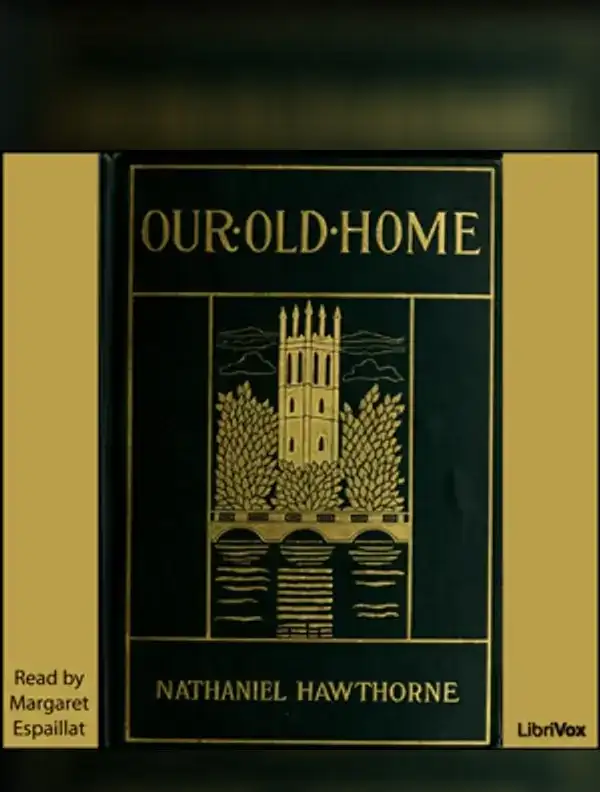
When Nathaniel Hawthorne served as the United States Consul in Liverpool during the mid-1850s, he observed Victorian Britain with the dual perspective of a nostalgic descendant and a fiercely proud American democrat.
Our Old Home by Nathaniel Hawthorne is an 1863 collection of autobiographical travel essays documenting his four-year diplomatic residence in England and Scotland. Blending sharp social commentary, administrative satire, and evocative travelogues, Hawthorne contrasts British imperial tradition against American identity while examining stark class divides. This work is best suited for readers of 19th-century history, travel literature, and American classic prose; casual readers looking for a structured novel plot may find its episodic essay format less engaging.
| Metadata Field | Details |
|---|---|
| Author | Nathaniel Hawthorne |
| Publication Date | 1863 (Based on journal entries from 1853–1857) |
| Genre | Travel Literature / Autobiographical Essays / Non-Fiction |
| Narrative POV | First-Person Observational |
| Core Themes | Anglo-American Relations, Ancestral Memory, Social Inequality, Bureaucracy |
| Target Audience | Literary Historians, Victorian Era Enthusiasts, Hawthorne Readers |
Plot Overview & Premise
Originally serialized in The Atlantic Monthly before being collected into a single volume, Our Old Home gathers twenty-four distinct sections reflecting Hawthorne’s impressions of Great Britain during his consular posting from 1853 to 1857.
The collection opens with his “Consular Experiences,” offering a humorous yet weary account of his office in Liverpool. As consul, Hawthorne was bombarded by eccentric travelers, destitute American sailors seeking safe passage home, and bizarre claimants seeking English inheritances. These administrative chapters highlight the practical burdens of mid-19th-century diplomacy with dry wit.
Beyond his official duties, Hawthorne embarked on extensive excursions throughout England and Scotland, detailed in dedicated chapters:
- Historical & Architectural Excursions: Visits to Leamington Spa, Warwick Castle, Lichfield, Uttoxeter, and Old Boston reveal his fascination with England’s ancient churches, quiet villages, and lingering medieval heritage.
- Literary & Intellectual Encounters: “Recollections of a Gifted Woman” describes his support for Delia Bacon, an American scholar obsessed with proving Francis Bacon wrote Shakespeare’s plays, while “Some of the Haunts of Burns” traces his pilgrimage through Scottish literary landmarks.
- Urban & Cultural Observations: Essays covering London suburbs, river trips up the Thames, and elaborate “Civic Banquets” illustrate the pomposity and grandeur of Victorian public life.
- Stark Social Realism: In “Outside Glimpses of English Poverty,” Hawthorne abandons romantic scenery to document the severe urban destitution, overcrowded almshouses, and visible hardship haunting industrial-era Britain.
Key Themes & Literary Analysis
1. Anglo-American Identity and Ambivalence
The central tension of the book lies in Hawthorne’s complex feelings toward England. He famously refers to the country as “our old home,” recognizing the deep cultural and ancestral roots linking Americans to the British Isles. However, his reverence for historical landmarks is continually checked by his republican ideals. He views English society as overly rigid, class-bound, and resistant to modern democratic progress.
2. The Contrast Between Luxury and Poverty
Hawthorne exposes the dark underbelly of Victorian prosperity. By placing descriptions of lavish “Civic Banquets”—replete with heavy dining rituals and aristocratic posturing—in close proximity to “Outside Glimpses of English Poverty,” he draws a sharp moral line. His empathy for the impoverished reveals a compassionate side often overshadowed by the dark romanticism of his fiction works.
3. Satirical Bureaucracy and Human Eccentricity
The early sections of the collection present an invaluable historical record of 19th-century transatlantic mobility. Hawthorne casts a sarcastic eye over the parade of grifters, dreamers, and desperate wanderers passing through the Liverpool consulate, providing comedic relief while critiquing human folly.
Who Should Read This?
Recommended For:
- Hawthorne Scholars: Essential reading for understanding the author’s late-life perspectives, political views, and personal voice outside his fiction.
- Victorian History Buffs: Offers a firsthand, contemporary American perspective on 1850s British culture, city life, and countryside landscapes.
- Travel Essay Enthusiasts: Anyone who enjoys reflective, place-based non-fiction rich in atmosphere and historical context.
Might Want to Skip If:
- You are looking for a cohesive narrative novel with developed fiction characters.
- You prefer fast-paced modern travelogues over 19th-century descriptive prose.
Frequently Asked Questions
Is Our Old Home a work of fiction or non-fiction?
Our Old Home is a non-fiction work composed of autobiographical essays, travel sketches, and personal journal entries recorded during Hawthorne’s time as American Consul in Liverpool.
What is the meaning behind the title “Our Old Home”?
The title reflects Hawthorne’s belief that England represents the ancestral homeland of European Americans, evoking both a feeling of familiar heritage and a sense of detachment from a country America had politically outgrown.
How does this work differ from Hawthorne’s famous novels like The Scarlet Letter?
Unlike his gothic and allegorical fiction, Our Old Home presents Hawthorne’s authentic first-person voice, showcasing his observational humor, pragmatic political views, and real-world social commentary.