
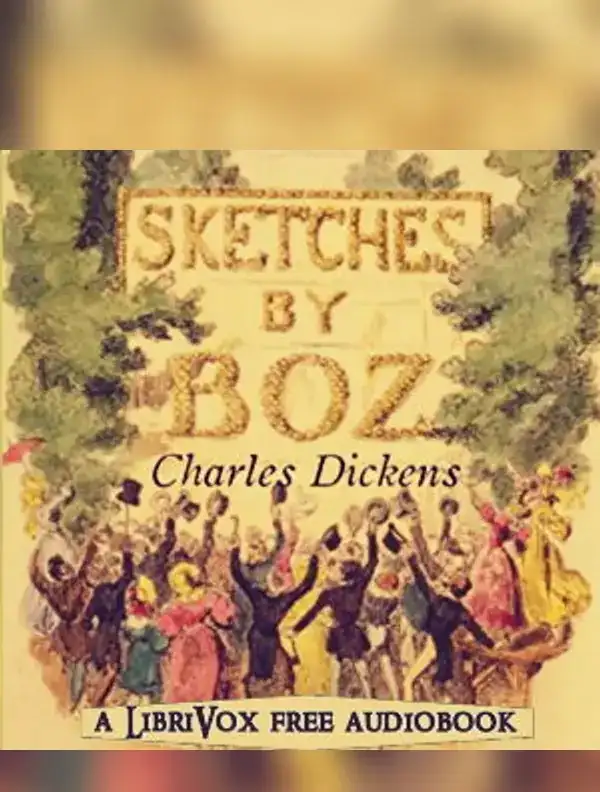
Long before Ebenezer Scrooge or Oliver Twist captivated Victorian readers, a young court reporter under the pen name “Boz” roamed the foggy thoroughfares of 1830s London, capturing the vibrant absurdity and crushing poverty of urban life.
Sketches by Boz by Charles Dickens is an episodic collection of journalistic essays, character portraits, and narrative short stories detailing early Victorian society. Divided into four distinct sections—Our Parish, Scenes, Characters, and Tales—it explores social class, local bureaucracy, and human eccentricity. Ideal for literary historians, Dickens enthusiasts, and fans of vintage observational satire, though readers seeking a single continuous novel plot may prefer his later long-form works.
| Attribute | Details |
|---|---|
| Author | Charles Dickens (writing as “Boz”) |
| Original Publication Era | 1833–1836 (Periodicals); 1836 (Collected Edition) |
| Genre | Literary Journalism, Short Fiction, Social Satire |
| Structure | Four Sections: Our Parish, Scenes, Characters, Tales (58 chapters) |
| Narrative POV | First-person observational voice & Third-person narrative |
| Key Themes | Urban Poverty, Institutional Bureaucracy, Social Pretense, London Geography |
| Target Audience | Fans of classic literature, social history buffs, and Dickens completionists |
Plot Overview & Premise
Sketches by Boz serves as Charles Dickens’s literary debut, gathering a sprawling array of non-fiction vignettes, social commentary, and imaginative short fiction written during his early career as a journalist. Rather than following a central hero or unified storyline, the anthology uses the vantage point of an anonymous narrator—Boz—who acts as an observant, witty flâneur navigating the bustling streets of London.
The work is organized into four distinct thematic sections:
- Our Parish: A satirical examination of small-town and suburban civic life, focusing on local figures such as the parish beadle, the curate, schoolmasters, and the petty politics of local elections.
- Scenes: A geographical and sensory tour of 1830s London. Dickens walks readers through morning and night streetscapes, pawnshops, public gardens, overcrowded omnibuses, criminal courts, and the grim interiors of Newgate Prison.
- Characters: A gallery of psychological and social archetypes, detailing the habits of parlour orators, dancing academy instructors, ambitious milliners, and the “shabby-genteel” middle class trying to maintain appearances.
- Tales: Fully realized fictional short stories showcasing Dickens’s early narrative talents, ranging from farce and domestic comedy (such as “The Boarding-House” and “The Tuggses at Ramsgate”) to stark, brooding drama (“The Black Veil” and “The Drunkard’s Death”).
Key Themes & Literary Analysis
The defining feature of Sketches by Boz is Dickens’s acute power of observation. Drawing heavily on his background as a parliamentary reporter and legal clerk, he documents the minute details of everyday nineteenth-century life with photographic clarity and theatrical flair.
Social satire and institutional critique form the backbone of the collection. Dickens exposes the hypocrisy of local parish authorities, the absurdity of legal proceedings in Doctors’ Commons, and the stark economic inequalities exposed in pawnshops and gin-palaces. Yet, alongside harsh social commentary, the collection displays a deep empathy for London’s working-class citizens and vulnerable populations.
Stylistically, the anthology showcases the embryonic stages of the iconic Dickensian tone. Readers can observe his trademark blend of hyperbole, vivid characterization, and rapid shifts between hilarious farce and harrowing melodrama. It marks the transitional moment where journalistic reporting transformed into modern social fiction.
Who Should Read This?
Recommended For:
- Dickens Admirers: Essential reading for anyone interested in tracing the artistic origins and early development of one of history’s greatest novelists.
- 19th-Century Historians: Offers an unmatched, eye-level glimpse into the daily sights, sounds, transportation, and culture of 1830s London.
- Short Form Readers: Perfect for readers who enjoy standalone vignettes, observational essays, and episodic humor rather than massive literary sagas.
Who Might Skip:
- Plot-Driven Fiction Readers: Those expecting a unified narrative arc like Great Expectations or Bleak House may find the sprawling, non-continuous structure disjointed.
- Casual Classic Readers: The high volume of localized 1830s references and dated topical humor can require occasional historical context to fully appreciate.
Frequently Asked Questions
Is Sketches by Boz a continuous novel?
No, it is a curated collection of 58 standalone essays, character studies, and short stories originally written for various newspapers and periodicals between 1833 and 1836.
What does the pseudonym “Boz” mean?
“Boz” was a childhood family nickname that Charles Dickens adopted from his younger brother Augustus, whom he called “Moses.” Pronounced through a nasal accent, “Moses” became “Boses,” which was eventually shortened to “Boz.”
Are the stories in this collection comedic or serious?
The collection contains a mix of both. While many entries are humorous satires on middle-class vanity and urban quirks, several entries—particularly towards the end—are dark, tragic explorations of crime, poverty, and addiction.