
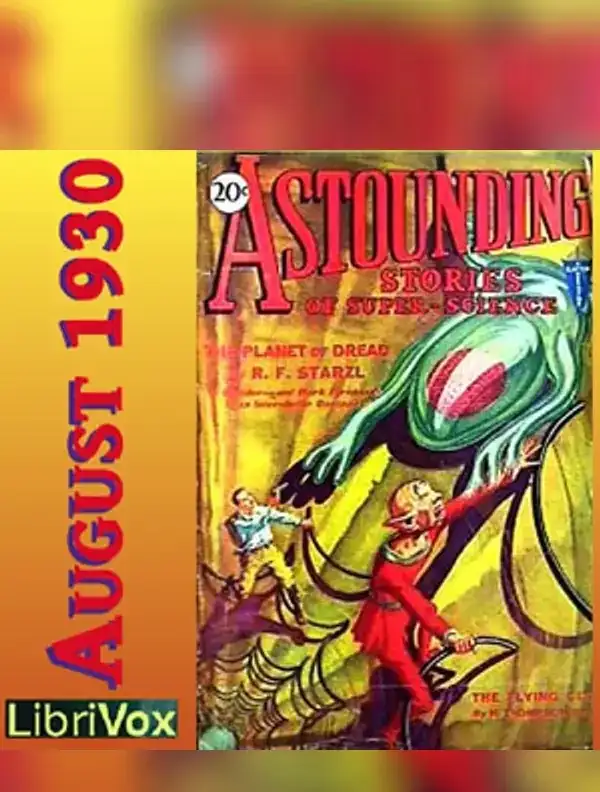
August 1930 marked a pivotal moment for pulp science fiction as Astounding Stories of Super-Science solidified its reputation for delivering fast-paced space opera, mad science, and cosmic peril. Under the editorial guidance of Harry Bates, this eighth issue captured the restless imagination of an era standing on the threshold of major technological and astronomical discoveries.
Astounding Stories 08 (August 1930) is an influential pulp science fiction anthology issue featuring work from iconic early genre authors including Murray Leinster, Arthur J. Burks, Edmond Hamilton, and Harl Vincent. Across its featured serials and short stories, the issue explores themes of rogue planetary movements, mind-control conspiracies, dangerous alien biomes, and futuristic engineering. This collection is ideal for retro science fiction collectors, space opera enthusiasts, and literary historians; readers who disfavor dramatic pulp conventions or dated 1930s prose styles may prefer modern hard sci-fi.
| Field | Details |
|---|---|
| Title | Astounding Stories of Super-Science, Vol. III No. 2 (August 1930) |
| Editor | Harry Bates |
| Authors | Murray Leinster, Arthur J. Burks, Edmond Hamilton, Harl Vincent, Victor Rousseau, R. F. Starzl, Harold Thompson Rich |
| Genre | Pulp Science Fiction / Space Opera / Speculative Fiction |
| Format | Periodical Anthology (Short Stories & Serialized Novels) |
| Key Themes | Cosmic catastrophes, biological tyranny, alien worlds, futuristic urban architecture, space exploration |
Plot Overview & Premise
The August 1930 issue of Astounding Stories offers an action-heavy slice of early speculative fiction, headlined by the explosive conclusion of Murray Leinster’s acclaimed serial, Murder Madness. In this finale, Secret Service agent Bell confronts “The Master,” a megalomaniacal villain using a madness-inducing chemical compound to terrorize and enslave the nations of South America. Bell’s high-stakes infiltration provides a tense mix of bio-hazard horror and espionage.
Continuing the high-concept scale, Part 2 of Arthur J. Burks’ three-part serial, Earth, the Marauder, plunges readers into a cosmic disaster scenario where the entire planet Earth is torn from its orbit. As humanity drifts through the void, the survivors face hostile cosmic forces and monstrous extraterrestrial entities while attempting to regain control of their world’s trajectory.
The shorter fiction pieces in this issue expand on classic pulp tropes:
- The Second Satellite by Edmond Hamilton: A daring space mission ventures to Jupiter’s obscure moons, encountering dangerous alien life and high-stakes survival challenges typical of Hamilton’s cosmic thrillers.
- The Planet of Dread by R. F. Starzl: Set on the swampy, primeval world of Infera, this survival story pits stranded humans against brutal alien flora and fauna, testing human endurance against an unforgiving nature.
- Silver Dome by Harl Vincent: A tale combining deep-sea or subterranean mystery with advanced technological threats that require scientific brilliance to overcome.
- The Flying City by H. Thompson Rich: A visionary story predicting mobile, airborne metropolises elevated by advanced anti-gravity energy systems.
- The Lord of Space by Victor Rousseau: An interplanetary narrative dealing with space travel perils, iron-fisted cosmic rulers, and heroic resistance.
Key Themes & Literary Analysis
A dominant motif across this issue is the tension between scientific progress and apocalyptic ruin. In Leinster’s Murder Madness, technology is weaponized through biochemistry, reflecting early 20th-century anxieties regarding covert warfare and totalitarian control. Conversely, H. Thompson Rich’s The Flying City reflects unbridled industrial optimism, imagining architectural feats that break human dependency on land.
Edmond Hamilton and R. F. Starzl highlight the motif of hostile environments. Hamilton’s work routinely cast human explorers into a cold, uncaring cosmos where survival demands quick thinking and sacrifice. Starzl’s The Planet of Dread shifts this dynamic to a visceral level, framing the alien world not as a passive backdrop, but as an active predator. These narratives captured the pulps’ core ethos: humanity’s intelligence and grit will ultimately triumph over cosmic indifference.
From a structural standpoint, the issue demonstrates the magazine’s mastery of serial pacing. Editors balanced serialized cliffhangers with complete standalone adventures, ensuring casual readers received immediate narrative resolution while subscriber retention was maintained through continuing sagas.
Who Should Read This?
Recommended For:
- Fans of early 20th-century pulp literature and golden age sci-fi roots.
- Literary historians studying the evolution of science fiction magazines and tropes.
- Readers who enjoy high-concept retro adventures featuring rogue planets, mad scientists, and space exploration.
Not Recommended For:
- Readers seeking grounded, realistic physics or contemporary hard science fiction.
- Those sensitive to melodramatic dialogue, dated character archetypes, or quick pulp pacing.
Frequently Asked Questions
Is Murder Madness in this issue a standalone story or a serial?
This issue contains the fourth and final chapter of Murray Leinster’s serial novel Murder Madness. While the dramatic climax resolves the primary conflict against “The Master,” reading previous installments offers fuller character context.
What makes Edmond Hamilton’s contribution to this issue notable?
Edmond Hamilton was one of the early pioneers of the space opera sub-genre. His story The Second Satellite showcases his signature style: grand cosmic settings, intense planetary hazards, and fast-paced adventure storytelling.
Do these 1930s stories hold up for modern science fiction fans?
While the prose style and scientific assumptions reflect the early 1930s pulp era, the stories retain historical value and entertainment appeal for readers who appreciate retro-futurism, creative speculative concepts, and unflagging narrative momentum.