
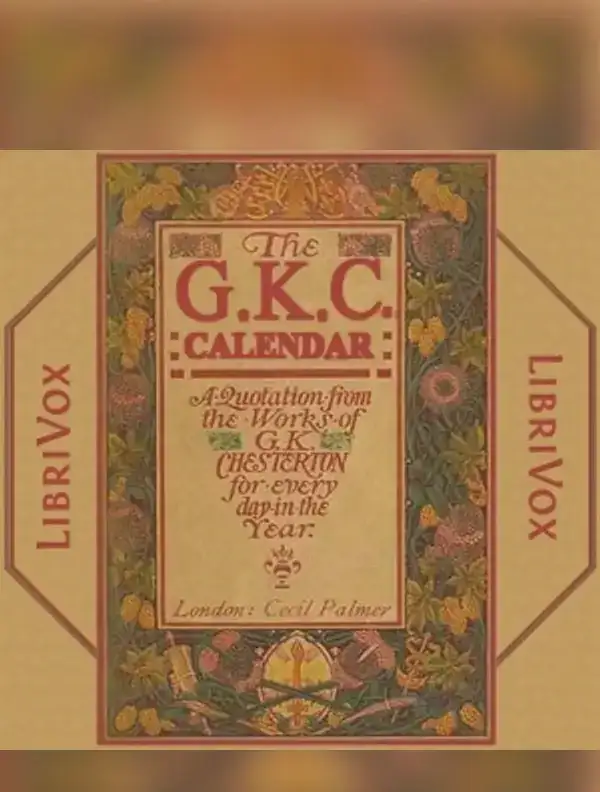
Daily reading habits often struggle to balance high philosophical depth with accessible, energetic wit. Chesterton Calendar presents a daily journey through the mind of one of Edwardian England’s most distinctive critics, thinkers, and poets.
Chesterton Calendar, compiled from the extensive writings of G. K. Chesterton, is a daily anthology of verse, prose, and social commentary organized month-by-month alongside a special section for moveable feast days. This collection is best suited for readers seeking short daily reflections on Christian theology, literature, and human nature, though it may not appeal to readers looking for a continuous narrative plot.
| Attribute | Details |
|---|---|
| Author | G. K. Chesterton (Selection Compiled) |
| Original Era | Early 20th Century |
| Genre | Literary Anthology / Daily Reader / Christian Apologetics |
| Structure | 12 Monthly Sections (365 Daily Entries) + Moveable Feasts |
| Core Themes | Paradox, Christian Orthodoxy, Gratitude, Social Satire, Wonder |
| Target Audience | Literary enthusiasts, daily devotional readers, and students of classic essayists |
Overview & Structure
Unlike standard anthologies organized by publication date or thematic topic, this work formats Chesterton’s vast output into a structured calendar year. Divided cleanly into twelve monthly chapters—from January through December—the text assigns a brief excerpt for every single day. The passages encompass a wide range of formats, including short epigrams, poetic stanzas, narrative snippets, and philosophical arguments drawn from classic books like Orthodoxy, Heretics, and various journal essays.
A notable feature of the collection is the supplementary section dedicated to The Moveable Feasts. Recognizing that significant observances in the Christian liturgical calendar—such as Ash Wednesday, Good Friday, Easter, and Whitsun—shift dates each year, the editor isolated these reflections into an independent appendix. This allows readers to consult relevant entries whenever those holy days fall on the actual calendar year.
Key Themes & Literary Analysis
At the heart of the collection lies Chesterton’s signature literary tool: the constructive paradox. By turning familiar cultural assumptions upside down, Chesterton forces readers to re-examine fundamental truths about morality, religion, and modern society. Key themes throughout the daily entries include:
- The cultivation of daily wonder: Chesterton repeatedly argues that the greatest human failing is taking existence for granted. His writings encourage a permanent sense of gratitude for the gift of life.
- Defense of tradition and orthodoxy: Writing against the cynical intellectual currents of his era, Chesterton presents classical Christian belief not as a rigid cage, but as an adventurous, liberating romance.
- Critique of modern materialism: Many entries satirize modern progressivism, bureaucratic overreach, and industrial detachment, advocating instead for local community, personal liberty, and humanness.
Who Should Read This?
Recommended For:
- Readers who prefer micro-doses of classic literature and philosophy integrated into their morning routine.
- Fans of early 20th-century British literature, Christian apologetics, and essayists like C.S. Lewis or Hilaire Belloc.
- Anyone who enjoys sharp intellectual humor combined with moral serious-mindedness.
Not Recommended For:
- Readers expecting a full-length fiction story or cohesive biography.
- Those who dislike non-linear excerpt collections or daily devotional formats.
Frequently Asked Questions
Is Chesterton Calendar an original work written by Chesterton as a single book?
No, it is a curated compilation drawn from Chesterton’s extensive bibliography of essays, poems, journalism, and non-fiction books, arranged systematically across the days of the calendar year.
What makes the “Moveable Feasts” section necessary?
Because religious observances like Easter and Lent move dates every year depending on lunar cycles, placing those specific reflections in a fixed calendar day would make them inaccurate in most years. A dedicated section allows readers to match the feast entry to the correct date dynamically.
Is this calendar strictly a religious devotional?
While Christian theology is a central thread, many passages focus on secular literature, political satire, common sense philosophy, poetry, and humorous observations on daily life.