
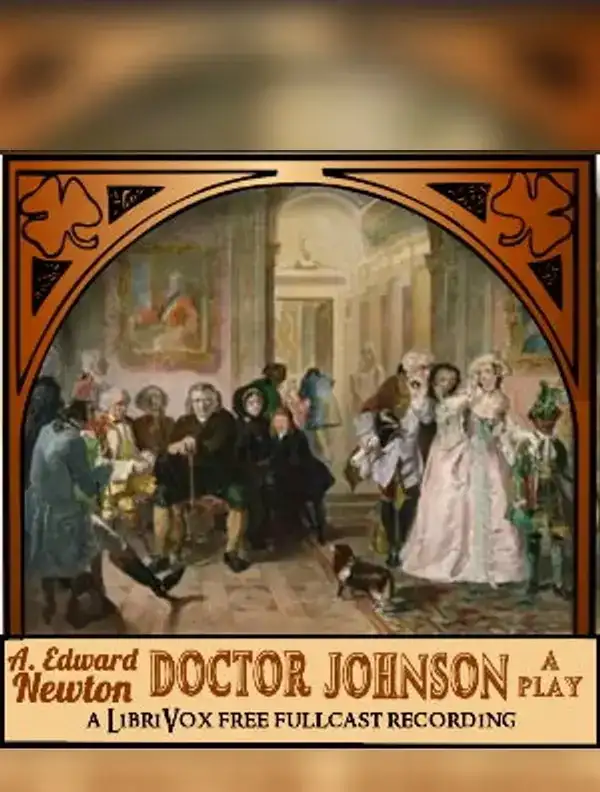
Reconstructing the brilliant conversational world of eighteenth-century London literary society requires more than factual accuracy; it demands an ear for sharp wit and intellectual sparring. A. Edward Newton’s four-act biographical drama Doctor Johnson: A Play resurrects the formidable lexicographer Dr. Samuel Johnson almost entirely through authentic period dialogue, primary accounts, and James Boswell’s legendary reporting.
Doctor Johnson: A Play by noted bibliophile A. Edward Newton is a biographical historical drama that dramatizes key phases of Dr. Samuel Johnson’s life across four acts. Eschewing a conventional theatrical plot, the play draws its tension and power directly from the real-life conversations recorded by James Boswell, Hester Thrale, and Fanny Burney. This work is ideal for eighteenth-century literature enthusiasts and historical biography readers, whereas those seeking fast-paced, action-driven drama should look elsewhere.
| Attribute | Details |
|---|---|
| Author | A. Edward Newton |
| First Published | 1923 |
| Genre | Historical Drama / Biographical Play |
| Format | Four-Act Episodic Stage Play |
| Main Themes | Intellectual Companionship, The Art of Conversation, Literary Legacy, Mortality |
| Target Audience | Fans of 18th-century literature, biographers, Samuel Johnson scholars |
| Narrative Style | Verbatim & Adapted Historical Dialogue |
Plot Overview & Premise
Unlike standard dramas that rely on invented interpersonal crises, Newton’s work functions as a dramatic montage of Samuel Johnson’s life. The play relies on the premise that Johnson’s actual spoken words were far more compelling than any manufactured theatrical dialogue.
Act 1 introduces Dr. Johnson in his cluttered London surroundings, managing his famously chaotic household comprised of dependents like Dr. Robert Levett, Mrs. Williams, and his loyal manservant Frank Barber. The act showcases Johnson’s literary labor, his famous clash with Macpherson’s Ossianic claims, his disdain for Lord Chesterfield’s belated patronage, and his initial encounters with James Boswell and Mrs. Thrale.
Act 2 shifts to the vibrant social sphere of Streatham Place and the famous Literary Club. Here, Johnson holds court among the greatest minds and figures of the era, exchanging repartee with painter Sir Joshua Reynolds, actor David Garrick, playwright Oliver Goldsmith, political figure General Paoli, and young novelist Fanny Burney.
Act 3 explores the changing tides of Johnson’s later years, particularly his complicated relationship with Mrs. Thrale following the death of her husband, along with commercial affairs involving Thrale’s brewery alongside Perkins and Barclay. The banter remains sharp, but an undercurrent of aging and transition begins to take hold.
Act 4 brings the narrative to a poignant close inside Johnson’s home during his final days. Surrounded by distinguished visitors—including statesman Edmund Burke, radical writer Mary Wollstonecraft, actress Mrs. Siddons, physician Dr. Brocklesby, and faithful companions Reynolds and Burney—Johnson confronts his mortality with the same intellectual rigor, faith, and honesty that characterized his long life.
Key Themes & Literary Analysis
The central thematic pillar of the play is conversation as an end in itself. Newton explicitly embraces Johnson’s belief that dynamic human discourse is one of life’s highest pursuits. Rather than driving toward a dramatic climax, each scene exists to display the collision of distinct personalities through language, debate, and moral philosophy.
Another major theme is the preservation of historical memory. By constructing the script using genuine utterances recorded in Boswell’s Life of Johnson, Hester Thrale’s Anecdotes, and Fanny Burney’s diaries, Newton demonstrates how historical biography can be translated directly into performance art. Boswell is portrayed not merely as a sidekick, but as a crucial historical recorder whose meticulous note-taking secured Johnson’s place in cultural history.
Finally, the work highlights Johnson’s profound humanity and vulnerability. Beneath his dogmatic pronouncements and famous eccentricities lay a deep fear of death, immense charity toward London’s downtrodden, and a desperate need for intellectual companionship. The play balances his soaring intellect with his physical infirmities and personal griefs.
Who Should Read This?
- Recommended For: Readers who appreciate 18th-century British history, fans of James Boswell’s biographical work, students of drama history, and literary enthusiasts who prefer character-driven, conversational works over action plots.
- Who Should Skip: Readers looking for modern narrative pacing, romantic subplots, or traditional dramatic conflict with clear hero-villain dynamics.
Frequently Asked Questions
Is Doctor Johnson: A Play a fictional story or historical biography?
It is a historical drama constructed almost entirely from real historical records. Author A. Edward Newton arranged actual quotes, recorded conversations, and documented letters from Samuel Johnson and his circle into a structured four-act theatrical script.
Does the play have a traditional dramatic conflict?
No, the play deliberately lacks a conventional plot driven by a single central crisis. Instead, it offers an episodic portrait of Dr. Johnson’s life, relying on intellectual debate, sharp dialogue, and historical character interactions to engage the audience.
Which real-life historical figures appear in the script?
The cast includes many prominent 18th-century figures, including James Boswell, Oliver Goldsmith, Sir Joshua Reynolds, David Garrick, Hester Thrale, Fanny Burney, Edmund Burke, Mary Wollstonecraft, and Mrs. Siddons.