
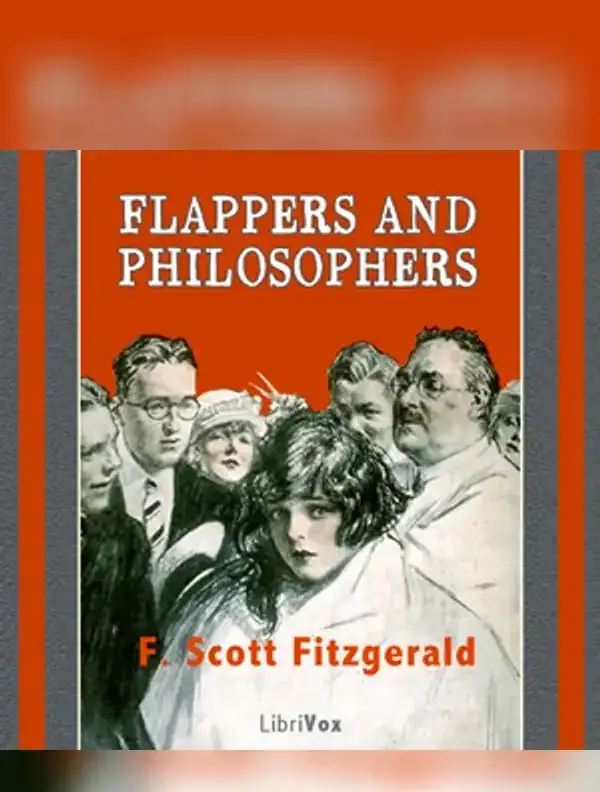
Before the Roaring Twenties fully hit their stride, F. Scott Fitzgerald captured the restless ambition and social anxieties of a generation standing on the precipice of modern independence. Flappers and Philosophers, written by F. Scott Fitzgerald, is a 1920 short story collection blending Jazz Age romanticism with cynical social critique. Across eight distinct tales, Fitzgerald explores youthful idealism, societal expectations, and romantic disillusionment. Ideal for fans of early American modernism and Jazz Age history; casual readers seeking fast-paced modern plot structures might find the era’s melodramatic sensibilities dated.
| Author | F. Scott Fitzgerald |
|---|---|
| Original Publication Date | September 1920 |
| Genre / Sub-genre | Short Story Collection / Literary Fiction / Jazz Age Literature |
| Main Themes | Youthful Rebellion, Social Class, Regional Cultural Clash, Ambition vs. Reality |
| Target Audience | Enthusiasts of 1920s literature, Fitzgerald scholars, and classic fiction readers |
| Narrative POV | Third-person limited (varies across individual stories) |
Plot Overview & Premise
Published shortly after his breakthrough debut novel, This Side of Paradise, Fitzgerald’s first short story anthology gathers eight pieces originally written for popular magazines like The Saturday Evening Post. The collection serves as an early showcase of his ability to balance commercial entertainment with sharp cultural critique.
The eight stories included in the volume are:
- “The Offshore Pirate”: Follows Ardita Farnam, a headstrong heiress who gets hijacked aboard her uncle’s yacht by a charismatic band of buccaneers, only to discover that her captor is an admirer operating under a elaborate ruse.
- “The Ice Palace”: Contrasts Southern warmth with Northern rigidity as Georgia belle Sally Carrol Happer travels to her fiancé’s cold Midwestern hometown, culminating in a harrowing experience inside a literal palace built of ice.
- “Head and Shoulders”: Examines a young intellectual prodigy whose life flips upside down after marrying a vivacious chorus girl, leading to a complete reversal of their traditional roles.
- “The Cut-Glass Bowl”: Traces the slow tragic decline of a middle-class family through an ominous, heavy glass bowl received as a wedding gift.
- “Bernice Bobs Her Hair”: A social satire in which an awkward girl gets transformed into a popular conversationalist by her manipulative cousin, leading to a memorable climax involving her controversial haircut.
- “Benediction”: Focuses on a young woman visiting her brother at a seminary as she wrestles with her faith and romantic desires.
- “Dalyrimple Goes Wrong”: Details a returning World War I veteran who discovers that moral uprightness leads to poverty, prompting him to turn to burglary to advance his career.
- “The Four Fists”: A psychological study of a man whose character is forcefully redirected at four critical moments in his life by a physical punch to the face.
Key Themes & Literary Analysis
The overarching brilliance of the collection lies in its binary title. The “flappers” represent the bold, modern women pushing back against Victorian propriety, while the “philosophers” embody the disillusioned men struggling to find intellectual or moral footing in a rapidly changing society.
Fitzgerald uses regional differences to highlight psychological tensions, nowhere more effectively than in “The Ice Palace.” The warmth of the American South symbolizes emotional security and tradition, whereas the frozen North represents cold efficiency and emotional distance. This cultural clash exposes the fractures beneath apparent romantic compatibility.
Additionally, the collection reflects Fitzgerald’s preoccupation with social status and economic necessity. In “Dalyrimple Goes Wrong,” moral compromise is depicted not as an inherent character defect, but as a rational response to an indifferent capitalist system. Meanwhile, “Bernice Bobs Her Hair” offers an incisive look at youth subcultures, where popularity is treated as a calculated craft requiring strategy, performance, and sacrifice.
Who Should Read This?
Recommended For:
- Readers interested in the origins of Jazz Age literary tropes and American youth culture.
- Fitzgerald fans wanting to track his development before The Great Gatsby.
- Lovers of classic short fiction who enjoy witty dialogue and social satire.
Who Might Skip:
- Readers looking for interconnected narratives or novel-length character arcs.
- Those sensitive to early 20th-century social attitudes or formulaic magazine fiction tropes.
Frequently Asked Questions
Is Flappers and Philosophers F. Scott Fitzgerald’s first collection?
Yes, published in September 1920 by Charles Scribner’s Sons, it was Fitzgerald’s very first short story collection, following the success of his debut novel earlier that year.
Which story in this collection is the most famous?
“Bernice Bobs Her Hair” and “The Ice Palace” are widely considered the standout classics of this volume, frequently anthologized for their sharp social commentary and vivid characterization.
Are these stories connected by plot?
No, the eight stories in this volume are completely standalone works, though they are unified by shared themes of youth, romance, social status, and moral conflict in 1920s America.