
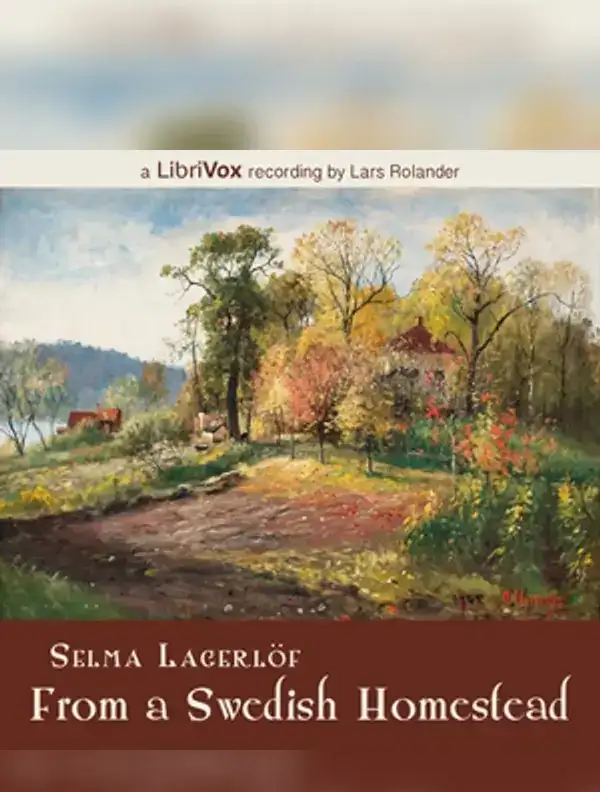
When trauma and ruin fracture a young scholar’s mind, only persistent empathy can piece together his lost humanity in Selma Lagerlöf’s evocative Nordic collection.
From a Swedish Homestead by Nobel laureate Selma Lagerlöf (translated by Jessie Brochner) is a classic compilation of Swedish gothic realism, regional folklore, and medieval religious legends. Anchored by the central novella “The Story of a Country House,” which chronicles the psychological breakdown of student Gunnar Hede and his redemption through the devotion of an orphan girl named Ingrid, the work explores themes of mental illness, grace, and human warmth. It is ideal for admirers of 19th-century Scandinavian classics and mythic storytelling, though readers seeking modern, fast-paced narrative structures may find its deliberate, fable-like pacing dated.
| Author | Selma Lagerlöf (Translated by Jessie Brochner) |
|---|---|
| Original Publication Era | Late 19th Century (1899 / 1901 English Edition) |
| Genre | Nordic Folklore, Gothic Psychological Drama, Short Story Collection |
| Main Themes | Trauma and mental restoration, empathy, Scandinavian myth versus Christianity, spiritual grace |
| Target Audience | Enthusiasts of classic Swedish literature, literary fairy tales, and psychological allegories |
| Narrative POV | Third-Person Omniscient / Legendary Storytelling |
Plot Overview & Premise
The core anchor of the collection is “The Story of a Country House,” a nine-part short novel centered on Gunnar Hede, a talented young student who inherits his family’s beloved estate, Munkhyttan. Driven to desperate measures to save his ancestral home from financial collapse, Hede attempts to drive a large herd of goats through harsh winter terrain. The grueling ordeal proves traumatizing: the brutal conditions and loss of his herd drive Hede into deep shock, causing him to lose his memory, speech, and mental stability. Terrified of animals and basic reality, he wanders the countryside as a eccentric traveling pedlar known as the “Goat-man.”
Concurrently, the story introduces Ingrid, a young orphan girl rescued from near-burial while suffering a cataleptic trance. Brought to live at the same estate where Hede once flourished, Ingrid develops a deep, spiritual bond with the broken man. Recognizing that Hede’s condition stems from hidden fear rather than irredeemable madness, Ingrid dedicates herself to restoring his shattered memory and dignity through patience, music, and steady affection.
The remaining entries in the collection branch outward into regional Swedish history and European legends. “Queens at Kungahalla” offers romanticized historical narratives set along the Swedish west coast during the transition from Norse paganism to early Christianity, highlighting figures like Queen Sigrid Storrada and Princess Astrid. Additional stories, such as “The Fisherman’s Ring,” “Santa Caterina of Siena,” and “The Peace of God,” travel into Italian and Belgian folklore, examining holy miracles, moral duty, and domestic peace across different cultural landscapes.
Key Themes & Literary Analysis
Lagerlöf constructs her narratives at the intersection of realistic psychological insight and traditional fable traditions. In “The Story of a Country House,” mental illness is depicted not as a supernatural curse, but as an acute psychological response to severe trauma and societal pressure. Gunnar Hede’s behavior mimics the classic fairy-tale beast who must be humanized, yet his suffering remains grounded in raw emotional distress.
Key analytical aspects of the text include:
- Empathy as Psychological Medicine: Rather than relying on isolation or harsh institutional treatments typical of the era, the text asserts that genuine human connection, safety, and recognition are the primary avenues for healing mental trauma.
- The Tension Between Myth and Faith: In the “Queens at Kungahalla” sequence, Lagerlöf contrasts pagan pride and wild ambition with the compassionate, humbling elements of early Christian doctrine, highlighting how local traditions reshaped foreign religious ideas.
- Atmospheric Domestic Realism: Set primarily against the backdrop of Värmland and Dalarna, the rural Swedish settings reflect the internal emotional states of the characters—harsh winters signify isolation and despair, while spring thaws parallel emotional recovery.
Who Should Read This?
Best For:
- Readers interested in early 20th-century Swedish literature and Nobel Prize-winning authors.
- Fans of psychological narratives presented in the style of folk tales and allegories.
- Literary historians researching Nordic folklore and early depictions of mental health in fiction.
Who Might Want to Skip:
- Readers who prefer modern thrillers with tight, fast-moving plots.
- Those disinclined toward sentimental or fable-like narrative structures.
Frequently Asked Questions
Is “From a Swedish Homestead” a single novel or an anthology?
It is an anthology containing one short novel (“The Story of a Country House”) followed by several independent short stories and legends set across Sweden, Italy, and Belgium.
What inspired Selma Lagerlöf to write “The Story of a Country House”?
Lagerlöf drew heavily on the oral storytelling traditions of her childhood home in Värmland, blending real-world observations of rural bankruptcy and psychological breakdown with traditional Nordic folklore structures.
Is this collection accessible to modern readers?
Yes. Jessie Brochner’s translation preserves Lagerlöf’s clear, lyrical prose. While the narrative style reflects 19th-century sensibilities, the underlying themes of mental health and human empathy remain entirely accessible today.