
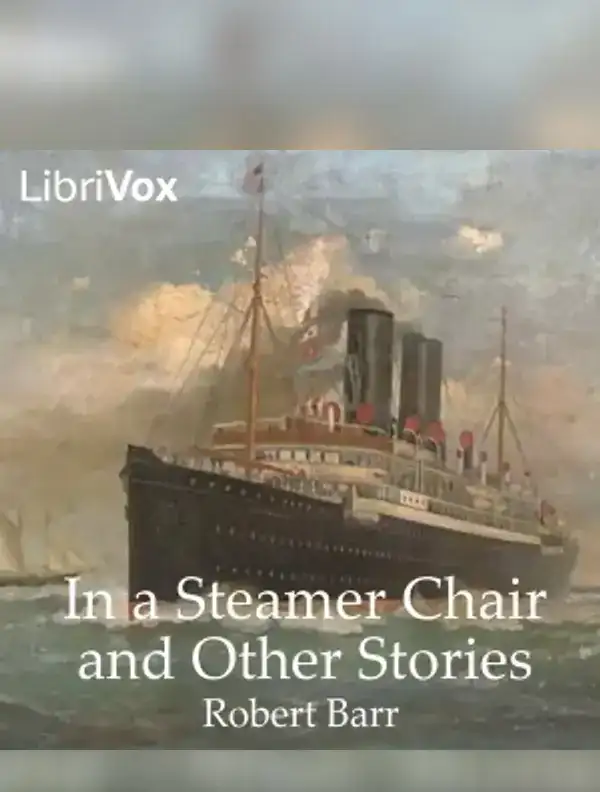
Transatlantic steamship travel in the late nineteenth century offered a unique social ecosystem—a floating enclave where rigid Victorian social strata dissolved amidst ocean breezes, shipboard romance, and deck-chair gossip. Robert Barr captures this ephemeral world with sharp observational wit and journalistic crispness, delivering a charming window into Victorian travel culture.
*In a Steamer Chair and Other Stories* by Robert Barr is a late 1890s collection of Victorian short fiction centered around ocean voyages and maritime misadventures. Blending light romance, social satire, and nautical intrigue, the book follows passengers navigating the quirks of transatlantic passage. It is best suited for fans of classic 19th-century humor and period maritime literature, while readers looking for high-octane modern thriller plots may find its episodic structure overly relaxed.
| Author | Robert Barr |
|---|---|
| First Published | 1892 |
| Genre | Victorian Fiction / Short Story Collection / Maritime Humor |
| Narrative Perspective | First-person and Third-person episodic perspectives |
| Primary Setting | Transatlantic ocean liners and maritime voyages |
| Key Themes | Transatlantic social dynamics, Victorian courtship etiquette, nautical life, social satire |
| Target Audience | Enthusiasts of classic Victorian literature, early short fiction, and historical ocean travel |
Plot Overview & Premise
The centerpiece of the collection is the multi-part title story, split into a nine-day journal-style narrative. Each installment chronicles a day in the life of passengers lounge-bound on the deck of a transatlantic liner. Held captive by the forced intimacy of steamship travel, the characters engage in witty banter, understated romance, deck games, and keen observations of their fellow travelers. The deck chair acts as both a vantage point and a social stage, allowing the narrator to unpack human eccentricities over the duration of the crossing.
The remaining entries in the collection branch into standalone tales that explore various facets of shipboard existence and nineteenth-century life. “The Man Who Was Not On The Passenger List” explores mystery and unexpected encounters aboard ship, while “A Society For The Reformation Of Poker Players” highlights Barr’s knack for lighthearted social satire. Other standout selections—such as “How The Captain Got His Steamer Out” and “My Stowaway”—shift focus toward nautical problem-solving, crew dynamics, and the tension inherent in ocean transit. Together, these stories construct a vivid mosaic of late-Victorian travel.
Key Themes & Literary Analysis
At its core, Barr’s collection uses the ocean vessel as a microcosm of late Victorian society. Stripped of their usual terrestrial routines, passengers are forced into close quarters, sparking quick-forming friendships, rivalries, and romantic entanglements. Barr, an accomplished journalist and contemporary of Arthur Conan Doyle and Stephen Crane, applies an economical, observational prose style that avoids heavy-handed melodrama in favor of sharp dialogue and ironic situations.
The collection also highlights the cultural bridge between Britain and North America during a period of expanding global travel. As an author of Scottish origin who worked extensively in Canada, the United States, and England, Barr possessed an insider-outsider perspective on transatlantic manners. His characters represent a blend of American pragmatism and British propriety, often resulting in subtle cultural friction that fuels the narrative’s humor.
Who Should Read This?
- Recommended For:
- Readers who enjoy late 19th-century short stories and period humor.
- Fans of classic nautical setting and historical travel narratives.
- Literary historians interested in popular Victorian periodical fiction outside of standard gothic or detective tropes.
- Who Might Want to Skip:
- Readers seeking fast-paced, high-stakes plotlines or modern thrillers.
- Those who prefer deep, psychological character studies over light episodic sketches.
Frequently Asked Questions
Is this collection primarily focused on mystery or humor?
While Robert Barr was famous for his detective fiction, this specific collection leans heavily into social satire, light romance, and humorous observations of travel culture, though subtle mystery elements appear in select stories.
Is “In a Steamer Chair” a full novel or a short story?
The main title, “In a Steamer Chair,” is a novella-length narrative broken into nine distinct daily segments, followed by twelve standalone short stories that complete the collection.
How does this work compare to Robert Barr’s other writings?
Unlike his well-known Sherlock Holmes parodies or crime collections featuring Eugène Valmont, this book showcases Barr’s broader range in observational fiction and slice-of-life comedy set within historical travel contexts.