
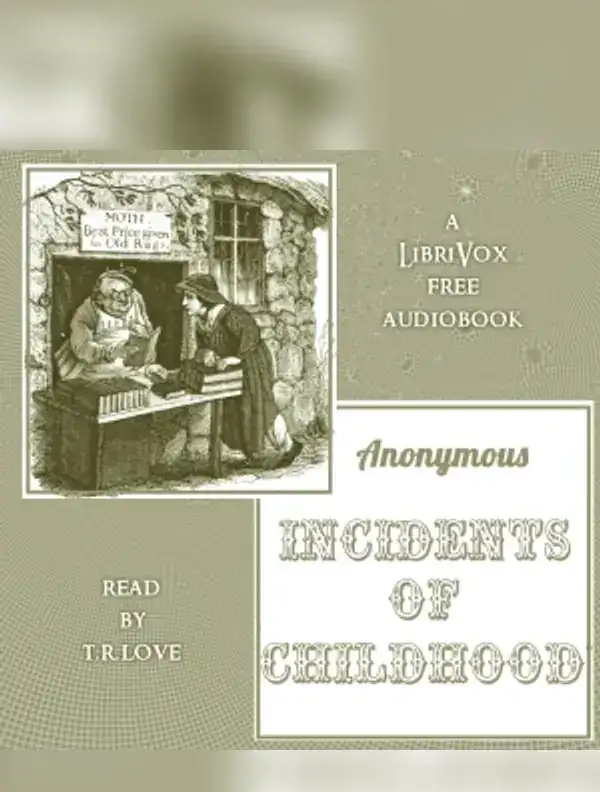
Early nineteenth-century juvenile literature served a dual purpose: entertaining young minds while quietly instilling social and moral discipline. Incidents of Childhood, published anonymously during this formative period, captures daily life in Regency-era England through a series of short, instructive vignettes centered on character building and observation.
Incidents of Childhood by an Anonymous author is an early 19th-century collection of moral short stories set across rural England and London. The anthology focuses on young protagonists navigating everyday ethical dilemmas concerning curiosity, self-control, and social responsibility. This collection is ideal for literary historians, students of 19th-century education, and fans of vintage children’s fiction, though readers seeking high-stakes modern pacing may find its didactic tone dated.
| Attribute | Detail |
|---|---|
| Author | Anonymous |
| Publication Era | Early 19th Century (c. 1800s–1830s) |
| Genre | Children’s Moral Fiction / Historical Short Stories |
| Setting | England (Rural communities and London) |
| Core Themes | Moral discipline, healthy curiosity, emotional regulation, social ethics |
| Target Audience | Historians of juvenile literature, vintage audio enthusiasts, educators |
| Narrative Structure | Episodic Anthology / Didactic Third-Person |
Plot Overview & Premise
The collection opens with a brief preface outlining the book’s instructional intent before transitioning into eight episodic tales. Each chapter focuses on a distinct event or character conflict designed to illustrate a specific virtue or common childhood misstep.
Early stories like “The Iron Box” and “Curiosity and Inquiry” examine the boundary between healthy learning and meddlesome behavior, showing how unbridled inquisitiveness can lead to awkward or harmful consequences. In “Phebe’s Visit” and “Little Fanny’s Plan,” the narrative shifts to domestic dynamics, highlighting hospitality, quiet generosity, and thoughtful planning among young family members.
Contrast plays a major role in “The Two Tempers,” which juxtaposes an agreeable disposition with a volatile temper to highlight how personal choices affect family harmony. The anthology broadens its physical landscape in “The Visit to London,” exposing rural children to the bustling metropolis, while stories like “The Belfry” and “The Tinner’s Son” incorporate elements of local trade, physical danger, and class interactions in provincial England.
Key Themes & Literary Analysis
The collection reflects the literary conventions popularized by late Georgian and early Victorian writers for youth, such as Maria Edgeworth and Hannah More. Rather than relying on fairy-tale magic or dramatic fantasy, the anonymous author grounds every narrative in domestic realism.
- The Pedagogy of Example: The text uses direct contrast—pairing good judgment against bad decisions—to guide young readers toward self-correction without harsh cruelty.
- Observation of 19th-Century Life: Beyond moral instruction, the stories provide details about daily routines, travel to London, trades like tin-working, and architectural landmarks like church belfries.
- Management of Temperament: Emotional self-regulation is presented as a crucial duty, teaching that anger and impatience disrupt social cohesion.
Who Should Read This?
Incidents of Childhood remains a valuable artifact for specific reader interests:
- Recommended For: Literary researchers studying early childhood education, readers interested in Regency and Georgian social history, and listeners who enjoy vintage audio archives.
- Who Might Skip It: Readers looking for modern fantasy, plot-driven adventures, or complex character development, as the stories prioritize moral lessons over drama.
Frequently Asked Questions
Who wrote Incidents of Childhood?
The collection was published anonymously. Anonymous authorship was common in early 19th-century children’s literature, where publishers emphasized the moral lesson over authorial identity.
What age group was this book originally written for?
It was created for middle-grade children in the early 1800s, designed to be read aloud in households or used by tutors to teach proper behavior and reading comprehension.
How many stories are contained in the text?
The book consists of eight distinct stories preceded by an introductory preface, each covering a self-contained situation or moral dilemma.