
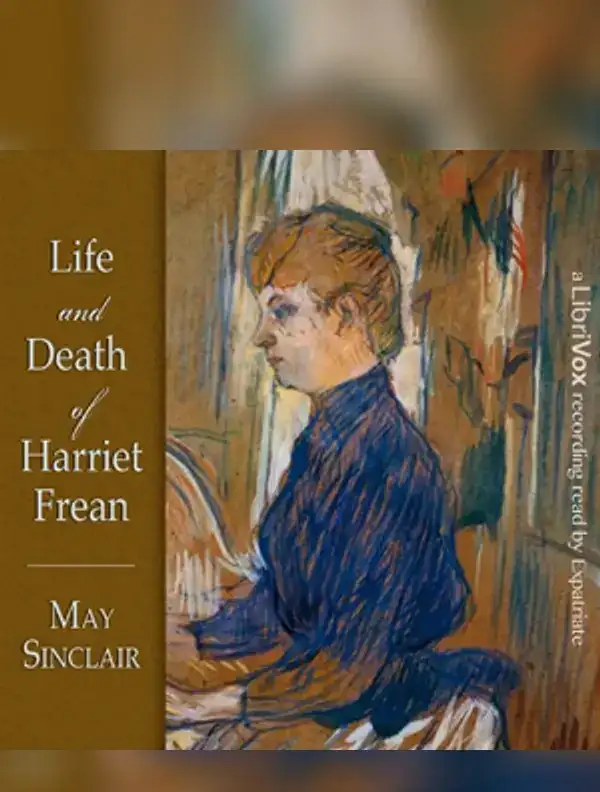
Victorian morality often framed self-abnegation as the supreme feminine virtue, yet May Sinclair’s 1922 novella exposes how such idealization can hollow out a human life from the inside. Life and Death of Harriett Frean by May Sinclair is a sharp, psychological novella that examines the quiet tragedy of a woman raised to equate goodness with emotional repression and passivity. Ideal for readers interested in early modernism, Victorian critiques, and feminist fiction, this book may feel too bleak or understated for those seeking active protagonists or conventional romance narrative arcs.
| Author | May Sinclair |
|---|---|
| Publication Era | 1922 (Early Modernist Period) |
| Genre | Psychological Fiction / Feminist Modernism / Novella |
| Main Themes | Victorian repression, the myth of self-sacrifice, female passivity, psychological atrophy |
| Target Audience | Fans of early 20th-century literature, literary critics, feminist theory enthusiasts |
| Narrative POV | Third-person limited (impressionistic / proto-stream-of-consciousness) |
Plot Overview & Premise
The story follows Harriett Frean from her sheltered childhood in a comfortable middle-class home to her elderly years. Reared by parents who embody Victorian ideals of sweetness, intellectual vanity, and absolute moral rectitude, Harriett absorbs the core lesson that her primary duty in life is to be “good” and perform acts of beautiful self-sacrifice.
When Harriett reaches adulthood, her life’s singular crisis presents itself. Robin Lethbridge, the fiancé of Harriett’s best friend Priscilla, realizes he is deeply in love with Harriett instead. Harriett reciprocates his feelings, but convinced that pursuing her own happiness would be a disgraceful betrayal, she insists that Robin fulfill his promise to Priscilla. By making what she views as a noble, altruistic sacrifice, Harriett willingly steps back into a quiet, unmarried life devoted to caring for her aging parents.
Far from bringing divine reward or emotional fulfillment, Harriett’s choice sets off a chain reaction of subtle devastation. Priscilla becomes a chronically ill, bitter wife, while Robin lives out a life of regret. Left alone after her parents pass away, Harriett is forced to confront the realization that her monumental sacrifice was not an act of holiness, but a cowardly withdrawal from real living that diminished everyone involved.
Key Themes & Literary Analysis
May Sinclair delivers a incisive critique of late Victorian gender norms and domestic expectations. Rather than painting Harriett as a heroic martyr, the narrative reveals how rigid societal conditioning turns individuals into accomplices in their own destruction.
- The Fallacy of Victorian Martyrdom: The novella systematically dismantles the literary trope of the saintly woman who sacrifices love for duty. Sinclair demonstrates that Harriett’s refusal to cause short-term pain ultimately inflicts long-term misery on Robin, Priscilla, and herself.
- Psychological Atrophy and Infantilization: Harriett never truly reaches emotional maturity. Her loyalty to her parents’ static values prevents her from developing an authentic identity, leaving her emotionally trapped in a state of perpetual childhood.
- Proto-Stream-of-Consciousness Technique: Sinclair, who originally coined the term “stream of consciousness” in literary criticism, employs a sparse, vignette-style narrative. Time accelerates rapidly between chapters, mimicking the way an unlived life slips away unnoticed.
Who Should Read This?
This novella is an essential read for scholars and enthusiasts of early 20th-century British literature, particularly those interested in how female writers transitioned from Victorian domestic fiction into modern psychological realism.
Pros:
- Brilliantly economical prose that conveys decades of psychological decline in under 100 pages.
- A groundbreaking feminist critique of traditional moral ideals.
- Incisive character study that remains historically relevant.
Cons:
- The deliberately passive heroine can be frustrating for readers who prefer decisive protagonists.
- The narrative tone is somber, restrained, and unsparingly melancholy.
Frequently Asked Questions
Is Life and Death of Harriett Frean a full-length novel or a novella?
It is a short novel or novella. Sinclair condenses an entire lifespan into a stark, tightly focused narrative, utilizing brief scenes to highlight major psychological shifts over several decades.
How does this book fit into May Sinclair’s broader work?
This work stands as one of Sinclair’s most explicit critiques of patriarchal social structures and the ideology of self-sacrifice, bridging the gap between late Victorian social drama and modern psychological fiction.
What is the central message behind Harriett’s tragic ending?
The ending underscores that denying one’s desires out of a misguided sense of moral purity is not virtuous, but rather a form of existential cowardice that leads to a wasted, unfulfilled existence.