
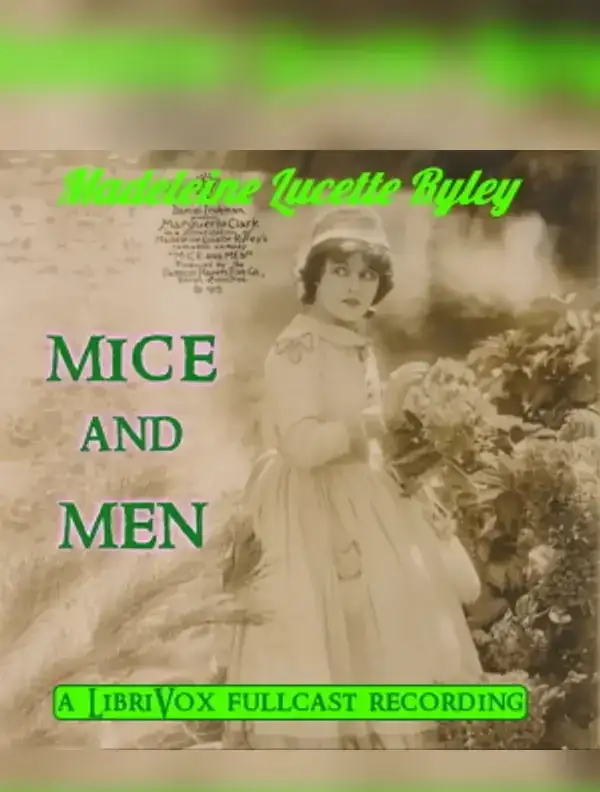
Long before John Steinbeck captured the tragic struggles of the American Dust Bowl, playwright Madeleine Lucette Ryley crafted an entirely different theatrical work titled Mice and Men. First premiered in 1901, Madeleine Lucette Ryley’s Mice and Men is a four-act romantic comedy centered on an eccentric scholar who adopts an orphan girl to mold her into his ideal wife, only to spark a cascade of romantic misunderstandings. This sentimental stage classic is ideal for fans of Edwardian theater and Pygmalion-style tropes, though modern readers seeking gritty realism or Steinbeck’s famous tragedy should look elsewhere.
| Author | Madeleine Lucette Ryley |
|---|---|
| First Produced / Era | 1901 (Edwardian Era Dramatic Comedy) |
| Genre | Four-Act Romantic Comedy / Historical Stage Play |
| Core Themes | Social experimentation, mistaken romantic motives, gratitude versus affection, Pygmalion trope |
| Target Audience | Enthusiasts of early 20th-century theater, vintage romantic comedy, and dramatic history |
| Format | Stage Play (Four Acts) |
Plot Overview & Premise
The story opens with Mark Embury—a scholar, philosopher, and confirmed bachelor—who decides to execute a grand social experiment. Convinced that modern women are too fickle or untrustworthy for intellectual men, Embury chooses to rear his own perfect bride from scratch. He selects an energetic young orphan named Peggy (nicknamed “Little Britain”) from the Foundling Hospital, bringing her into his home as his ward with the intention of educating her into ideal womanhood.
As years pass, Peggy blossoms into an engaging, kind-hearted woman, and Embury unexpectedly finds himself falling deeply in love with her. However, his failure to clearly state his intentions creates a chaotic Web of confusion. Peggy misinterprets Embury’s subtle affection, coming to believe that he views her purely as a daughter figure. Furthermore, she convinces herself that Embury plans to marry her off to his handsome young nephew, Captain George Lovell.
The situation grows increasingly complicated as Captain Lovell enters the scene alongside a cast of eccentric friends, fiddlers, and local figures. Peggy believes Lovell’s heart belongs to another woman, yet she feels bound by duty to obey what she assumes are her guardian’s wishes. Over four acts of bright dialogue and emotional near-misses, the characters must navigate their false assumptions before true feelings can be declared.
Key Themes & Literary Analysis
The Engineering of Affection
At its heart, Mice and Men explores the folly of attempting to rationalise human emotion through logic or scientific control. Embury treats human connection as an experiment that can be managed through structured upbringing, only to discover that emotional growth and romantic attraction operate outside academic theory.
Duty Versus Genuine Romance
Peggy’s deep sense of gratitude toward Embury acts as a barrier to honest communication. Because she views him as a benefactor and savior, she is quick to surrender her own agency to fulfill what she believes to be his desires. Ryley highlights how uneven social dynamics and feelings of obligation can easily obscure genuine affection.
Sentimental Theater and Tone
Unlike late 19th-century social realism that dominated intellectual circles of the period, Ryley’s play leans unashamedly into optimism and warmth. Contemporary critics noted that while the premise resembles a theatrical fairy story, the sincere spirit of the characters makes the lighthearted comedy remarkably grounded and believable.
Who Should Read This?
- Recommended for: Readers who enjoy classic theater, historical stage comedies, Pygmalion narrative tropes, and early female playwright achievements.
- Skip if: You are seeking John Steinbeck’s tragic novella of the same name, or if you dislike romantic comedy plots based on guardian-ward dynamics and dramatic misunderstandings.
Frequently Asked Questions
Is this play related to John Steinbeck’s novel Of Mice and Men?
No, Madeleine Lucette Ryley’s play was written in 1901, decades before Steinbeck’s 1937 work. While both titles share a common origin in Robert Burns’ famous poem “To a Mouse,” Ryley’s work is a lighthearted stage comedy set in 18th-century England rather than a tragedy set during the American Great Depression.
What is the primary central conflict in Ryley’s play?
The central conflict revolves around a romantic misunderstanding: Mark Embury intends to raise Peggy to become his own wife, but Peggy mistakenly believes she is being trained to marry Embury’s nephew, Captain Lovell.
What style of theater does this work represent?
It represents the sentimental romantic comedy popular in turn-of-the-century English and American theater, prioritizing bright dialogue, earnest characters, and a happy resolution over heavy social criticism.