
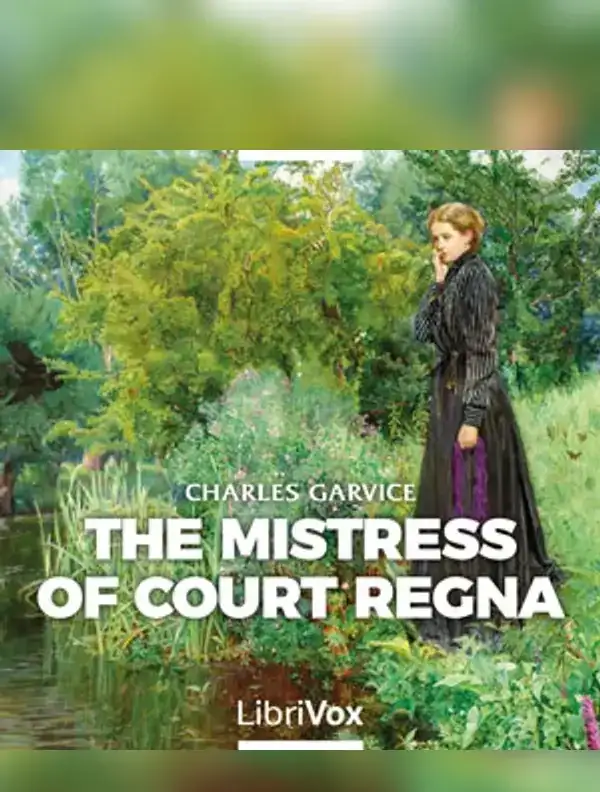
When late nineteenth-century romantic drama intersects with gothic suspense, it creates an enduring narrative formula that defined popular serial fiction of the era. Charles Garvice’s novel Mistress of Court Regna stands as a classic representative of Edwardian-era fiction, exploring how sudden inheritance, tragic miscommunication, and malicious intrigue test the bond between two lovers.
Mistress of Court Regna by Charles Garvice is a late Victorian romantic drama following Claire, a young woman who unexpectedly inherits the vast estate of Court Regna. Her romance with Gerald, a penniless architect, collapses due to misunderstanding, sudden disappearances, and criminal accusations. It is best for lovers of classic melodramatic fiction and vintage audiobooks, while modern readers seeking fast-paced prose may prefer to skip it.
| Metadata Field | Details |
|---|---|
| Author | Charles Garvice |
| Publication Era | Late 19th / Early 20th Century (Victorian & Edwardian Popular Fiction) |
| Genre | Victorian Romance / Gothic Melodrama / Romantic Mystery |
| Main Themes | Class Disparity, Deception, Virtue & Reputation, Secret Identity, Perseverance of Love |
| Target Audience | Enthusiasts of period romance, vintage fiction collectors, and classic audiobook listeners |
| Narrative Perspective | Third-person Omniscient |
Plot Overview & Premise
Following the unexpected passing of Lord Wharton, young Claire’s simple life changes overnight when she learns she has inherited the vast estate of Court Regna. Along with the grand property comes a nobility title, immense wealth, and significant social responsibility. As Claire attempts to adapt to her newfound position in society, she encounters Gerald, an impoverished but proud architect working in the area. A sincere affection quickly forms between them, promising a bright future despite their stark social inequality.
However, a tragic misinterpretation destroys their burgeoning bond. Claire witnesses a ambiguous encounter involving Gerald, leading her to question his intentions and reject his proposal. Heartbroken and unaware of the true depth of her doubts, Gerald leaves Regna that very night. His sudden departure coincides with the mysterious disappearance of a local village girl, prompting immediate rumors that Gerald has eloped with her or committed a crime. As Claire navigates her obligations while haunted by regret, long-buried secrets, deceitful rivals, and dark deeds surface before the lovers can be reunited.
Key Themes & Literary Analysis
Charles Garvice was among the most commercially successful British storytellers of his era, widely recognized for crafting highly emotional narratives built on moral integrity and dramatic reversals of fortune. Mistress of Court Regna illustrates several defining elements of turn-of-the-century romantic literature:
- Class Divisions and True Honor: The story contrasts Claire’s newly acquired aristocratic status with Gerald’s humble profession, asserting that personal integrity outweighs wealth and high social standing.
- The Fragility of Reputation: Dramatic momentum builds around gossip, circumstantial evidence, and false assumptions. Gerald’s sudden departure makes him an easy target for community suspicion, reflecting Victorian anxieties surrounding honor and social standing.
- Triumph Over Malice: True to Garvice’s narrative style, villainous plots and deceptive schemes are gradually exposed through perseverance, reinforcing the thematic ideal that true love and moral truth ultimately prevail.
Who Should Read This?
- Recommended For: Fans of vintage British romance novels, readers who enjoy classic serial fiction with dramatic twists, and historical audiobook listeners interested in late Victorian romance tropes.
- Who Might Skip: Readers looking for contemporary pacing, modern romantic dynamics, or complex psychological realism rather than traditional melodrama.
Frequently Asked Questions
Is Mistress of Court Regna a standalone novel?
Yes, Mistress of Court Regna is a complete standalone novel written by Charles Garvice. It delivers a self-contained story of romance, mystery, and moral resolution without needing prior context.
What writing style can readers expect from Charles Garvice?
Charles Garvice employs an expressive, classic late Victorian narrative style. His stories feature earnest characters, clear moral contrasts, high emotional stakes, and traditional happy endings.
Does this book contain mystery elements alongside romance?
Yes. In addition to its romantic storyline, the book incorporates mystery elements such as an unexplained village disappearance, false criminal allegations, and hidden ancestral secrets.