
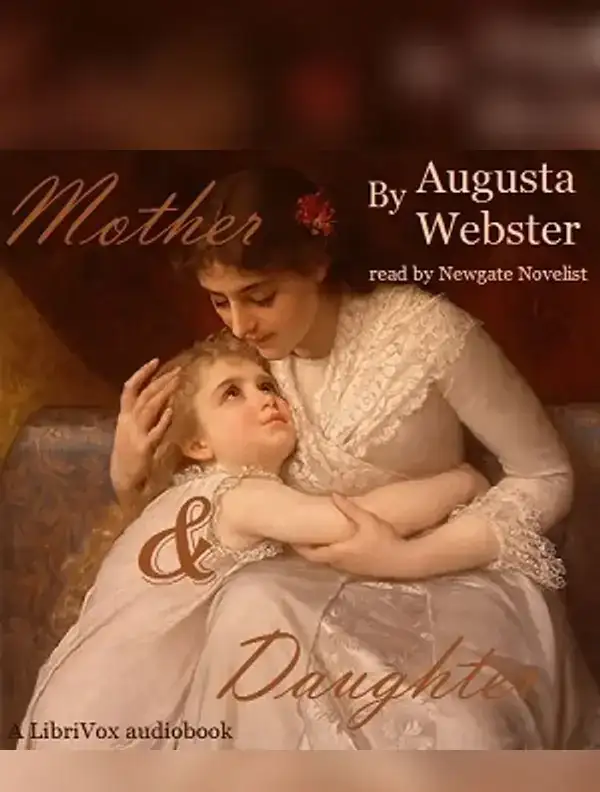
Few Victorian poetic works capture the domestic sanctuary of maternal devotion with the quiet realism and psychological acuity found in Augusta Webster’s final sequence. Left unfinished at her death in 1894, these verses turn away from standard Victorian tropes of idealized childhood to illuminate the tender, evolving, and deeply felt relationship between a mother and her growing daughter.
Direct Summary: Mother and Daughter by Augusta Webster is a posthumously published Victorian sonnet sequence and poetry collection exploring maternal love, personal identity, aging, and mortality. Ideal for readers of classic literature, Victorian women writers, and introspective poetry, though those looking for dramatic fiction or conventional romantic plots might find its reflective, domestic focus modest in scope.
| Author | Augusta Webster |
|---|---|
| Publication Era | Late Victorian (Published posthumously in 1895) |
| Genre | Victorian Poetry / Sonnet Sequence |
| Structure | 27 Sonnets (“Mother and Daughter”) + 7 Additional Sonnets |
| Core Themes | Maternal affection, aging and mortality, passage of time, identity |
| Target Audience | Lovers of classic poetry, feminist literary history, and domestic themes |
| Narrative Perspective | First-person speaker (Mother) |
Plot Overview & Premise
The core of the volume consists of twenty-seven sonnets centered on the speaker’s emotional connection with her only child. Unlike many Victorian works that portray children as distant symbols of purity, Webster offers an intimate look into the daily rhythm of watching a child grow. The speaker notes the changing stages of her daughter’s life, reflecting on the joy of companionship alongside the quiet anxiety of watching a child step toward independent adulthood.
Key installments within the sequence, such as Love’s Counterfeit (Sonnet X) and Love’s Mourner (Sonnet XI), examine how maternal affection contrasts with romantic passion, asserting that the bond between parent and child carries its own profound weight and griefs. The uncompleted sequence ends abruptly after Sonnet XXVII, preserving the collection in an poignant, open state that mirrors the natural unpredictability of life.
Beyond the primary sequence, the volume contains seven standalone sonnets that broaden the work’s thematic scope: two parts of The Old Love, the naturalistic The Brook Rhine, the reflective Choosing, and a three-part narrative poem titled Poulain the Prisoner. These supplementary pieces explore themes of memory, geographic distance, personal choice, and captivity, demonstrating Webster’s range as a formalist.
Key Themes & Literary Analysis
The defining strength of Webster’s sequence lies in her subversion of the traditional sonnet sequence. Historically reserved for courtly love or romantic longing—as seen in Elizabeth Barrett Browning’s Sonnets from the Portuguese or Christina Rossetti’s Monna Innominata—the form is repurposed here to validate maternal love as a worthy subject for serious poetic philosophy.
- Re-centering Maternal Subjectivity: Webster gives voice to the mother’s inner world rather than treating her merely as a domestic caretaker. The speaker possesses her own intellectual depth, fears, and acute awareness of time.
- Mortality and the Intergenerational Shift: A subtle melancholy runs throughout the sequence. As the daughter blossoms, the mother acknowledges her own physical decline and inevitable mortality, framing parenthood as a gentle passing of the torch.
- Restrained Realism over Sentimentality: Webster avoids overly sweet language. Her observation of her child is clear-eyed, recognizing both the fierce protectiveness of motherhood and the necessity of granting autonomy.
Who Should Read This?
This collection is an essential read for enthusiasts of Victorian literature, gender studies, and classic poetry seeking overlooked voices from the 19th century. Readers who appreciate nuanced character studies and quiet emotional depth will find much to admire.
Pros:
- Offers a rare, sophisticated treatment of mother-daughter dynamics in classic literature.
- Demonstrates masterful control of the sonnet structure with conversational rhythm.
- Provides historical importance as the final work of a prominent Victorian feminist intellectual.
Cons:
- Remains incomplete due to the author’s death, lacking a formal resolution.
- Focuses on meditative thought rather than plot-driven action.
Frequently Asked Questions
Is Mother and Daughter a complete work?
No, Augusta Webster died before finalizing the project. The primary sequence consists of 27 completed sonnets published posthumously in 1895 with an introductory note by William Michael Rossetti.
What makes this sonnet sequence historically significant?
It is one of the few major 19th-century sonnet sequences explicitly dedicated to maternal affection rather than romantic or religious devotion, expanding the boundaries of Victorian women’s poetry.
What other poems are included in this volume?
In addition to the 27 main sonnets, the publication includes seven supplementary sonnets: “The Old Love” (Parts I & II), “The Brook Rhine”, “Choosing”, and “Poulain the Prisoner” (Parts I, II, & III).