
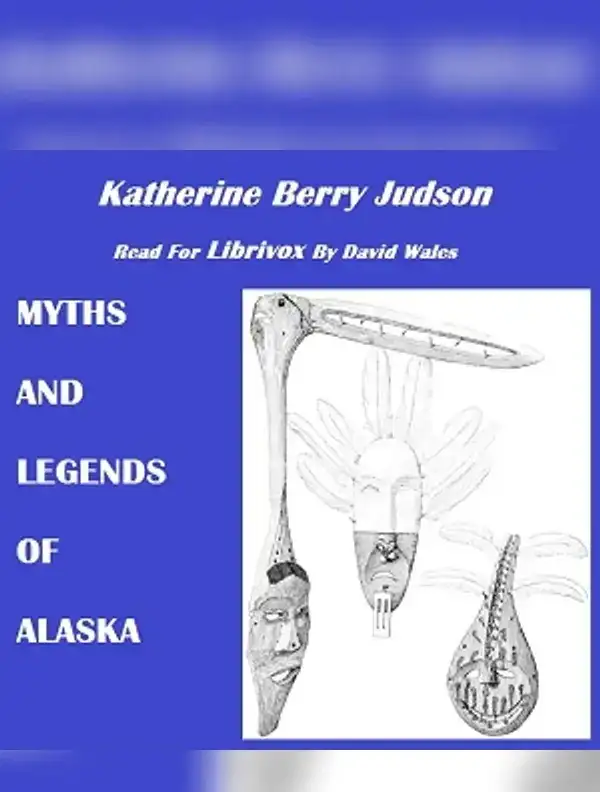
Long before modern ethnography formalized tribal record-keeping, the oral traditions of the Pacific Northwest and Arctic regions preserved deep cosmologies through rich story-cycles. Katharine Berry Judson’s 1911 compilation captures these fragile oral narratives direct from early government anthropological records before they were altered by rapid Western expansion.
In Myths and Legends of Alaska, author Katharine Berry Judson gathers authentic oral folklore from Indigenous North American and Siberian groups, featuring the widespread Raven creator cycle across Tlingit, Eskimo, Athapascan, and neighboring traditions. This book is best for folklore scholars, native culture enthusiasts, and readers of early American anthropology; it may be less appealing to those looking for modern, fictionalized narrative novels.
| Author | Katharine Berry Judson |
|---|---|
| Original Publication Date | 1911 |
| Genre | Indigenous Folklore / Anthropology / Mythology |
| Core Themes | Raven Trickster Cycle, Creation Myths, Nature Animism, Cultural Preservation |
| Target Audience | Folklore enthusiasts, anthropology students, history buffs |
| Narrative Style | Direct oral tradition transcriptions, unembellished tribal folk tales |
Plot Overview & Premise
Unlike framed folklore collections that heavily rewrite native stories into European fairytale tropes, Myths and Legends of Alaska presents direct, stripped-down records of northern mythologies. Drawn from field reports gathered by U.S. government ethnologists, Judson compiled the purest and most authentic accounts available at the turn of the twentieth century, focusing on northern Pacific and Arctic tribal heritage.
The core of the collection revolves around the Raven Myth, the primary creation cycle shared among tribes of the far North. Raven is presented in his complex dual identity: as the heroic bringer of daylight, fire, and fresh water to humanity, and as a mischievous, ravenous trickster whose misadventures explain natural phenomena. Beyond the dominant Raven tales, the volume provides distinct cultural glimpses into several tribes across vast geographic regions:
- Tlingit (Wrangel) & Tsimshian: Coastal narratives centered on ocean spirits, sea monsters, and clan origins.
- Eskimo Traditions (Bering Strait, Lower Yukon, Port Clarence): Tales highlighting survival in harsh ice landscapes, seal spirits, and solar myths.
- Athapascan (Upper Yukon) & Koyukun: Inland river legends detailing animal transformations and hunter ethics.
- Tsetsaut & Koryak (Siberia): Trans-Bering Strait connections showing common cultural links between northern North America and northeastern Asia.
Key Themes & Literary Analysis
1. The Raven Archetype: Creator and Culture Hero
In northern mythology, Raven is not merely a bird, but a primal force of transformation. Judson structures the collection to show how Raven shapes the universe—stealing the sun from a hidden box to give light to mankind, placing mountains, and organizing river flows. His motivations blend altruism with self-serving greed, presenting a nuanced view of divinity where creation arises from cunning rather than moral perfection.
2. Animism and Environmental Harmony
Every tale reflects an animistic worldview where humans, animals, and natural forces exist on the same spiritual plane. Animals remove their skins to reveal human forms, trees possess voices, and natural elements hold distinct personalities. The stories enforce social norms regarding respectful hunting practices, warning against wastefulness and showing that disrespect toward animal spirits yields catastrophic environmental consequences.
3. Anthropological Preservation without Victorian Sentimentality
Writing in 1911, Judson intentionally avoided imposing moralizing European literary styles on the tribal material. By retaining the straightforward cadence of the original translations, the text offers readers an unvarnished look at early North American oral literature, preserving sparse dialogue, sudden plot shifts, and pragmatic worldviews characteristic of original Indigenous storytelling.
Who Should Read This?
- Recommended For: Comparative mythology researchers, readers interested in Native American history, students of Pacific Northwest tribal culture, and fans of classical folk tales.
- Who Might Skip: Readers seeking modern, continuous fiction, heavily stylized fantasy fiction, or contemporary commentary on modern Alaska.
Frequently Asked Questions
Are these stories modern retellings or historical recordings?
These stories are early twentieth-century compilations drawn directly from ethnographic records collected by government researchers. Judson curated the selections to preserve the authentic structure and cadence of original Indigenous oral traditions.
What is the role of the Raven in these legends?
Raven serves as both the central creator god and a trickster figure. He brings light, fire, and water to human beings while also engaging in humorous, selfish exploits that teach moral and practical lessons.
Which tribes are included in this collection?
The collection represents a broad Arctic and sub-Arctic region, including the Tlingit, Tsimshian, Tsetsaut, Upper Yukon Athapascan, Koyukun, various Eskimo groups (Bering Strait, Lower Yukon, Port Clarence), and the Siberian Koryak.