
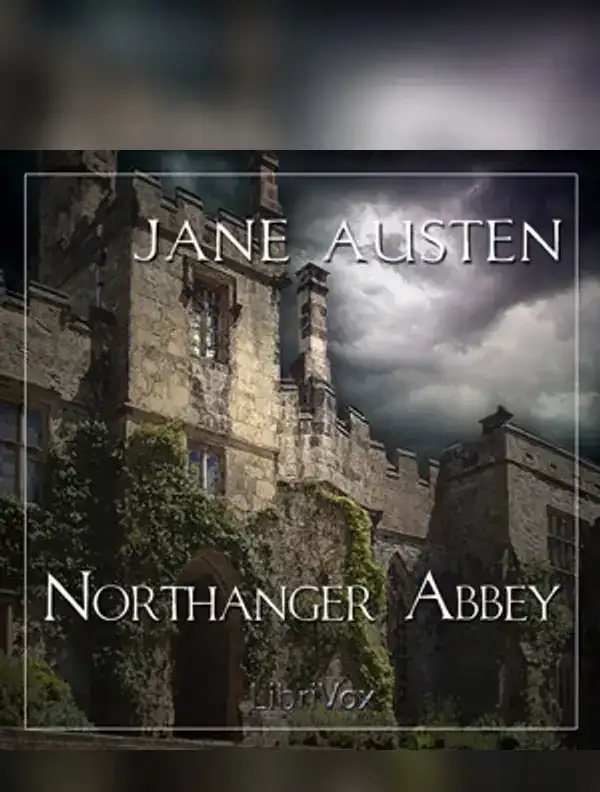
Jane Austen’s coming-of-age satire turns a sharp, affectionate lens on the absurdities of popular fiction and the perils of an overactive imagination. Rather than populating her narrative with traditional gothic heroines—exquisitely accomplished, perpetually tragic, and impossibly brave—Austen presents Catherine Morland, an utterly ordinary young woman whose mind has been thoroughly marinated in sensational horror stories.
Northanger Abbey, written by Jane Austen, is a classic Regency coming-of-age satire that follows seventeen-year-old Catherine Morland as she leaves her quiet village life to navigate the fashionable ballrooms of Bath and the imposing estate of the Tilney family. Intoxicated by popular gothic novels like Ann Radcliffe’s The Mysteries of Udolpho, Catherine repeatedly mistakes mundane social posturing and mercenary motives for sinister medieval conspiracies. This novel is ideal for lovers of classic literature, witty social satire, and humorous subversions of genre tropes, though readers seeking a genuine, chilling gothic thriller may find its comedic realism disappointing.
| Author | Jane Austen |
|---|---|
| Original Publication Era | 1817 (Posthumously published; written circa 1798–1799) |
| Genre / Sub-genre | Literary Realism, Gothic Parody, Coming-of-Age (Bildungsroman), Regency Satire |
| Main Themes | Illusion vs. Reality, Satire of Gothic Tropes, Social Status & Mercenary Marriage, Female Agency & Maturation |
| Target Audience | Fans of classic British literature, Austen readers, admirers of satire and literary parody |
| Narrative Perspective | Third-person omniscient with direct, playful authorial commentary |
Plot Overview & Premise
The story begins as seventeen-year-old Catherine Morland, a unpretentious daughter of a countryside clergyman, is invited by her wealthy neighbors, Mr. and Mrs. Allen, to spend a season in Bath. Unversed in the artifice of high society, Catherine quickly strikes up a friendship with the superficial Isabella Thorpe and finds herself relentlessly courted by Isabella’s boorish brother, John Thorpe. Simultaneously, Catherine is captivated by the charming, clever Henry Tilney and his polite younger sister, Eleanor.
As relationships shift, Catherine is invited by the patriarch General Tilney to visit their ancestral home, Northanger Abbey. Thrilled by the prospect of staying in a ancient, brooding structure reminiscent of her favorite gothic romances, Catherine lets her imagination run wild. She searches mysterious cabinets for hidden manuscripts and eventually suspects General Tilney of having murdered or imprisoned his deceased wife. When Henry discovers her suspicions, he gently corrects her runaway romanticism, forcing Catherine to confront the boundary between sensational fiction and human reality.
The final conflict arises not from gothic supernaturalism, but from harsh socioeconomic pragmatism. Upon discovering that Catherine is not the wealthy heiress John Thorpe falsely claimed she was, General Tilney abruptly and rudely banishes her from the estate. Catherine returns home humbled but mature, eventually reuniting with Henry after he defies his father’s mercenary demands, proving that real-world villainy lies in greed and social snobbery rather than haunted dungeons.
Key Themes & Literary Analysis
1. Parody of Gothic Conventions and Defense of the Novel
Austen systematically dismantling the sensational tropes popular in late 18th-century gothic fiction. By contrasting dramatic fictional expectations with the banality of English country life, she exposes how trashy romances can warp a young reader’s perception. However, Austen explicitly defends the novel as a legitimate artistic form, arguing through her narrator that well-crafted fiction offers profound insight into human behavior when read with discernment.
Illusion, Reality, and the Growth of the Heroine
Catherine’s narrative arc represents a classic bildungsroman. Her journey requires shedding naive assumptions both about terrifying gothic mysteries and about human relationships. She learns that charming companions like Isabella Thorpe can be treacherous and calculating, while real villains do not hide in dark crypts—they sit at the head of dinner tables calculating marital financial yields, as embodied by General Tilney.
3. Mercenary Marriage and Social Ambition
Underneath the light comedy lies a trenchant critique of the Regency marriage market. Characters like John and Isabella Thorpe view relationships as financial transactions, trading affection for perceived fortune. Austen contrasts this mercenary attitude with the genuine intellectual and emotional affinity that develops between Catherine and Henry, demonstrating that authentic affection must triumph over vanity and financial calculation.
Who Should Read This?
- Recommended For: Readers who enjoy quick-witted social satire, fans of Jane Austen looking for her funniest authorial voice, and students of literature interested in late 18th-century genre parodies.
- Skip If: You are expecting a literal gothic horror novel filled with ghosts, murder, and dark curses, or if you prefer intense, angst-ridden romance over sharp social comedy.
Frequently Asked Questions
Is Northanger Abbey part of a series or a standalone novel?
It is a standalone novel. Although published posthumously alongside Persuasion in late 1817, the story, characters, and plot of Northanger Abbey are entirely self-contained.
Why is Ann Radcliffe’s novel mentioned so frequently in the book?
Ann Radcliffe was the premier gothic novelist of the era, and her book The Mysteries of Udolpho serves as the primary literary influence shaping Catherine Morland’s exaggerated view of reality, making it central to Austen’s parodic goals.
What is the central lesson Catherine Morland learns?
Catherine learns to distinguish between dramatic literary fiction and real-world human motives, recognizing that while life lacks haunted castles and gothic monsters, real society harbors plenty of genuine malice in the form of selfishness, hypocrisy, and greed.