
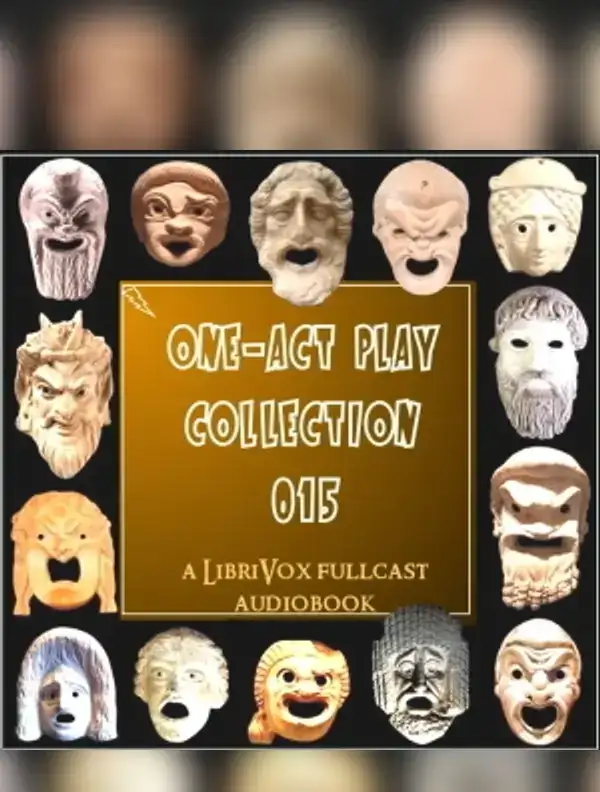
Spanning three centuries of dramatic literature, short-form theatre captures raw human emotion and sharp comedic timing with an efficiency full-length productions rarely match.
One-Act Play Collection 015, featuring works by canonical and vintage playwrights such as Molière, John Millington Synge, Booth Tarkington, and Lady Augusta Gregory, gathers ten short audio plays spanning from 17th-century French farce to early 20th-century Irish and American drama. This public domain collection examines marital friction, community gossip, romantic misunderstandings, and meta-literary satire across diverse historical settings. It is best suited for classic theatre enthusiasts, drama scholars, and audio performance fans; casual readers seeking a single continuous novelistic narrative may find the anthology’s stylistic shifts jarring.
| Metadata Field | Details |
|---|---|
| Title | One-Act Play Collection 015 |
| Author(s) | Various (Molière, J.M. Synge, Lady Gregory, Booth Tarkington, Philip Moeller, J.R. Planché, Frederic Hay, John W. Postgate, Irene Jean Crandall, Beulah Bornstead) |
| Original Publication Era | Mid-1600s to Early 1900s (Public Domain Anthology) |
| Genre | Dramatic Anthology / Farce / One-Act Plays / Literary Satire |
| Main Themes | Marital Dynamics, Social Gossip, Romantic Misunderstandings, Literary Parody, Modernity vs. Tradition |
| Target Audience | Theatre historians, classic audio drama fans, voice actors, and students of early 20th-century drama |
| Narrative Structure | Multi-cast Audio Ensemble / Dramatic Scripts |
Plot Overview & Premise
This fifteenth installment of short theatrical recordings highlights the elasticity of the one-act format. The collection opens with satirical high jinks and Shakespearean subversion before moving into classic European farce, Irish folk realism, and early American domestic comedy.
Among the featured works is John W. Postgate’s Re-Taming of the Shrew, a comedic travesty that reverses William Shakespeare’s famous dynamic by turning classic figures like Petruchio, Othello, and Macbeth into meek husbands coping with wives active in the suffragist movement. In Molière’s early farce The Jealousy of Le Barbouillé (translated by Charles Heron Wall), domestic dispute takes center stage as an incompetent husband attempts to outwit his clever wife and her long-winded academic advisor.
The collection showcases major figures of the Irish Literary Revival. John Millington Synge’s atmospheric dark comedy In the Shadow of the Glen follows an elderly farmer who fakes his own death to test his unfaithful young wife, revealing the bleak economic realities of rural Irish county life. Contrastingly, Lady Augusta Gregory’s Spreading the News demonstrates how a harmless misunderstanding in a rural Irish market rapidly snowballs through community gossip into a absurd tale of murder and outrage.
American comedic traditions are equally represented. Booth Tarkington’s popular farce The Trysting Place revolves around multiple couples attempting to hold secret rendezvous in the exact same hotel room, leading to a cascade of humorous near-misses. Philip Moeller’s The Roadhouse in Arden presents a clever literary fantasy in which legendary authors visit an inn run by Hamlet and Cleopatra. Rounding out the volume are light Victorian comedies and Puritan-era courtship tales like Beulah Bornstead’s The Diabolical Circle, which features Cotton Mather attempting to manage his daughter’s romantic preferences.
Key Themes & Literary Analysis
The selection in this anthology highlights three major thematic pillars across theatrical history:
- The Mechanics of Miscommunication and Gossip: Plays like Lady Gregory’s Spreading the News and Tarkington’s The Trysting Place rely on dialogue errors to fuel their plots. Lady Gregory uses compounding rumors as a critique of small-town social anxiety, illustrating how language distorts reality when isolated communities search for scandal.
- Marital Power Dynamics and Gender Roles: From Molière’s 17th-century slapstick to Postgate’s early 20th-century suffrage parody, marital control is a constant motif. Synge’s In the Shadow of the Glen offers a more serious critique of pragmatic, loveless marriages forced by rural poverty, positioning the open road as a radical escape from domestic confinement.
- Meta-Theatre and Literary Parody: Several entries break the fourth wall or mock literary tropes. Moeller’s The Roadhouse in Arden and Crandall’s The Last Rehearsal engage directly with theatrical conventions, poking fun at playwrights, stage directors, and classic literary icons.
Who Should Read This?
Recommended For:
- Audio performance fans who enjoy full-cast vintage audio drama.
- Theatre students seeking short, classic audition pieces or examples of historical one-act structures.
- Readers interested in early 20th-century Irish drama (Synge, Lady Gregory) and historical comedy.
Who Might Want to Skip It:
- Listeners looking for a single, long-form novel narrative with consistent character development.
- Readers who struggle with historical stage directions or archaic dialect choices.
Frequently Asked Questions
Are the plays in this collection performed by a full cast?
Yes, as part of the LibriVox audio dramatization project, each play features a full voice cast with dedicated actors reading individual roles alongside a narrator reading stage directions.
What historical eras are covered in One-Act Play Collection 015?
The anthology covers roughly three centuries of dramatic writing, ranging from Molière’s 17th-century French comedy to early 20th-century works written prior to 1923.
What is the standout genre of this specific volume?
While the volume contains realistic folk drama (such as Synge’s work), the primary tone of the collection leans heavily toward farce, satire, and romantic misunderstanding.