
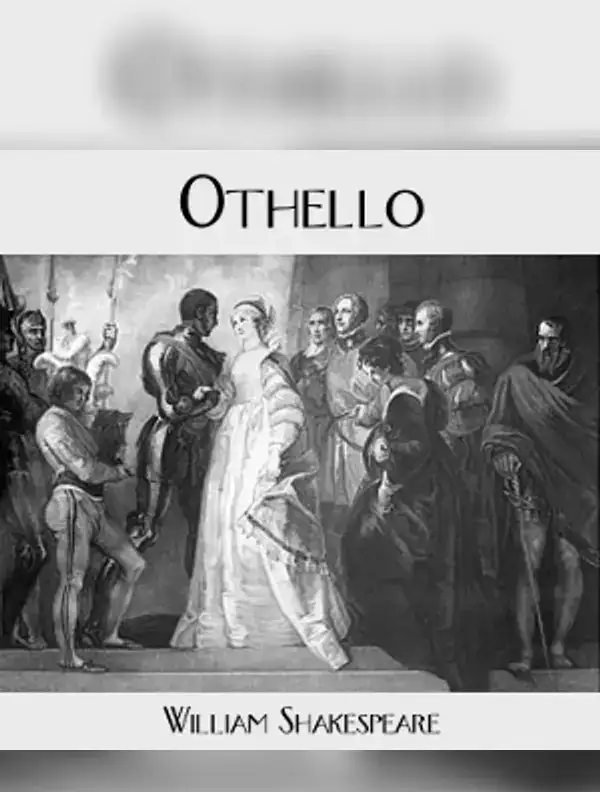
Few psychological dramas dissect the destructive nature of human insecurity with the ruthless precision found in William Shakespeare’s celebrated tragedy of jealousy, deceit, and manipulation.
Othello by William Shakespeare is a classic Jacobean tragedy exploring the ruin of a noble Moorish general tricked by his envious ensign, Iago, into believing his virtuous wife, Desdemona, has been unfaithful. Ideal for readers of classic theater, scholars of dramatic literature, and fans of dark character studies; readers looking for lighthearted entertainment or accessible contemporary prose may want to look elsewhere.
| Author | William Shakespeare |
|---|---|
| Original Performance / Publication | c. 1603 (First Performed) / 1622 (First Quarto) |
| Genre | Jacobean Drama / Psychological Tragedy |
| Main Themes | Jealousy, Manipulation, Race & Otherness, Reputation, Trust |
| Target Audience | Literary scholars, theater enthusiasts, high school & university students |
| Narrative POV | Dramatic Play (Five-Act Structure in verse and prose) |
Plot Overview & Premise
The story opens in Venice, where Othello, a highly respected Moorish general in the Venetian military, secretly marries Desdemona, the daughter of the influential senator Brabantio. Despite Brabantio’s outrage and accusations of witchcraft, the Venetian Senate approves the union due to Othello’s indispensability in military matters, immediately dispatching him to defend Cyprus against the Ottoman fleet.
Accompanying Othello to Cyprus are Desdemona, his newly appointed lieutenant Michael Cassio, and his ensign Iago. Driven by bitter resentment over being passed over for promotion in favor of Cassio—and fueled by deep-seated malice—Iago concocts a meticulous plot to destroy Othello. By orchestrating a drunken brawl that causes Cassio to lose his officer status, Iago strategically advises Cassio to petition Desdemona to intercede on his behalf with Othello.
Iago then uses these innocent interactions to plant seeds of suspicion in Othello’s mind. Through rhetorical insinuation and the opportunistic theft of a cherished embroidered handkerchief—a gift from Othello to Desdemona—Iago provides Othello with fabricated “ocular proof” of infidelity. Driven mad by jealousy, Othello smothers Desdemona in their marital bed, only to discover the truth moments later when Iago’s wife, Emilia, exposes the plot, leading to a bloody and devastating conclusion.
Key Themes & Literary Analysis
1. The Corrosive Power of Jealousy
Shakespeare famously characterizes jealousy through Iago’s warning as “the green-ey’d monster which doth mock the meat it feeds on.” The narrative demonstrates how jealousy functions as a self-fulfilling delusion. Othello’s transformation from a composed, articulate military leader to a frantic, violent husband shows how emotional vulnerability can be weaponized when trust is undermined.
2. Machiavellian Villainy and Manipulation
Iago stands as one of literature’s most formidable antagonists because his tactics rely on exploiting the virtues of others. He uses Othello’s honesty, Cassio’s politeness, and Desdemona’s loyalty against them. Rather than relying on physical force, Iago manipulates language, silence, and timing to force his victims to construct their own ruin.
3. Isolation and the Vulnerability of the Outsider
Despite his military accomplishments, Othello remains an ethnic and cultural outsider in Venetian society. His underlying anxiety regarding his age, race, and standing makes him susceptible to Iago’s suggestions that Desdemona would naturally prefer a younger Venetian nobleman like Cassio. His foreign status leaves him psychologically isolated when doubts begin to take root.
Who Should Read This?
This play remains essential reading for anyone interested in classic literature, dramatic structure, and complex psychological conflict.
- Recommended for: Readers who enjoy tense psychological conflicts, rich dramatic poetry, and profound explorations of human flaws.
- Not recommended for: Readers seeking light, modern narrative pacing, uplifting endings, or straightforward hero-versus-villain dynamics without distressing themes.
Frequently Asked Questions
What is the significance of the handkerchief in Othello?
The strawberry-patterned handkerchief is Othello’s first gift to Desdemona, symbolizing love, marital fidelity, and his family heritage. When Iago obtains it and plants it in Cassio’s lodgings, it becomes the false physical proof Othello demands, transforming a personal token of love into an instrument of destruction.
Why does Iago hate Othello?
Iago offers several motives throughout the play, including being passed over for promotion in favor of Cassio and suspecting Othello of having an affair with his wife, Emilia. However, critics often note that Iago’s malice extends beyond these justifications, driven by envy, racial bias, and a desire for control.
Is Othello suitable for contemporary study?
Yes, the play remains widely studied across universities and secondary schools worldwide. Its sharp examination of implicit bias, psychological warfare, domestic dynamics, and social identity makes it highly relevant for modern literary and cultural analysis.