
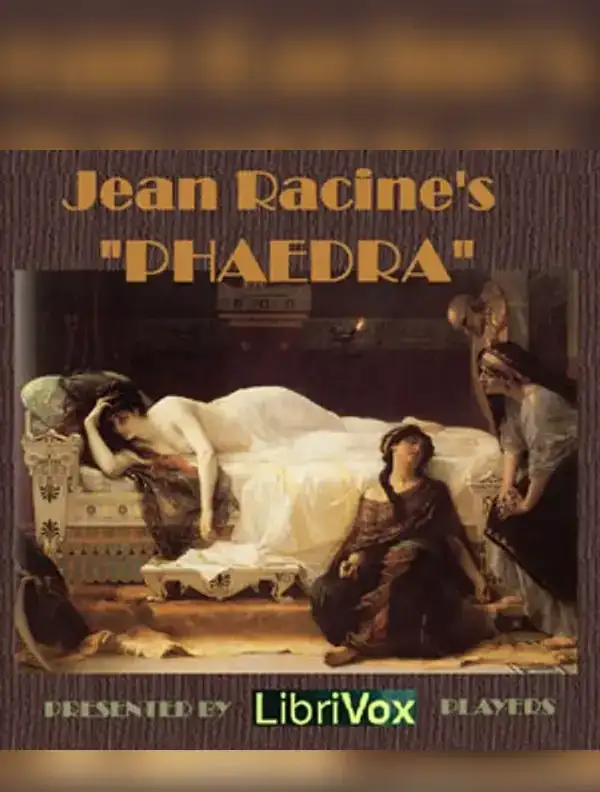
Few theatrical works capture the agonizing friction between forbidden desire and unrelenting moral duty as fiercely as Jean Racine’s 1677 Neoclassical tragedy. In Phaedra, French playwright Jean Racine reinterprets classical Greek mythology into a tense, five-act verse drama. Set in Ancient Greece, the narrative follows Queen Phaedra, who harbors a ruinous obsession for her stepson, Hippolytus. When rumors of King Theseus’s death spread, her secret leaks, unleashing a chain reaction of deceit, false accusations, and divine retribution once Theseus returns alive. This play is essential reading for lovers of classical drama, French literature, and psychological tragedy, though readers looking for modern fast-paced prose or lighthearted entertainment should look elsewhere.
| Author | Jean Racine |
|---|---|
| Original Performance Date | 1677 |
| Genre / Sub-genre | Neoclassical French Tragedy / Verse Drama |
| Main Themes | Fatal passion, moral guilt, honor vs. taboo, catastrophic silence, divine curse |
| Target Audience | Fans of classical theater, students of drama, readers of Greek mythology adaptations |
| Narrative Form | Five-act play written in Alexandrine verse (continuous action per act) |
Plot Overview & Premise
The tragedy unfolds in Troezen, where Prince Hippolytus prepares to search for his missing father, King Theseus. Hippolytus harbors his own secret: he loves Aricia, a surviving princess of a rival royal line forbidden from marrying. Meanwhile, Queen Phaedra suffers from a mysterious, debilitating illness. Pushed to the brink of death by torment, she confides in her loyal nurse, Oenone, revealing that her affliction is a consuming, taboo passion for Hippolytus—a curse inflicted upon her bloodline by the goddess Venus.
When news reaches the court that Theseus has died abroad, the political landscape shifts immediately. Believing her secret no longer carries political treason, Phaedra approaches Hippolytus under the guise of discussing the succession. Overwhelmed by emotion, she confesses her passion directly to him. Horrified, Hippolytus recoils, leaving Phaedra overcome with humiliation and remorse.
The situation collapses into chaos when shocking news arrives: King Theseus is alive and has returned home. Fearing execution and dishonor for her mistress, Oenone convinces Phaedra to let her frame Hippolytus, accusing the prince of attempting to violate the Queen. Outraged by the accusation and Hippolytus’s noble refusal to dishonor his father by exposing Phaedra, Theseus banishes his son and invokes the god Neptune to destroy him. By the time the truth is unraveled, the wrath of the gods and the weight of guilt leave the royal family in tragic ruin.
Key Themes & Literary Analysis
The Claustrophobia of Classical Form
Racine adheres strictly to the Neoclassical rule of the three unities: unity of action, time, and place. The entire drama takes place within a single day and setting, creating an unrelenting, claustrophobic atmosphere. Every character entrance and exit shifts the political and emotional dynamic without breaking the continuous flow of the act. Rather than relying on physical action stage directions, Racine builds tension through the sheer weight of spoken words and sudden confessions.
Fatalism and Psychological Agony
Deeply influenced by Jansenist theology—which stressed human helplessness against divine grace or damnation—Racine portrays Phaedra not as a calculated villain, but as a victim of irrational desire. She fully recognizes the moral horror of her love, yet she lacks the willpower to suppress it. Her suffering is internal; her conscience acts as her harsher judge, making her psychological downfall far more terrifying than any external punishment.
The Power and Poison of Speech
Throughout the play, silence offers safety, while speech brings destruction. Hippolytus’s decision to hide his love for Aricia and Phaedra’s effort to starve herself in silence keep disaster at bay. The moment feelings are spoken aloud—first to Oenone, then to Hippolytus, and finally in the form of false accusations to Theseus—death becomes inevitable. Racine highlights how language, once unleashed, cannot be recalled.
Who Should Read This?
- Recommended for: Admirers of Greek mythology, drama students, readers who enjoy high-stakes psychological drama, and scholars of 17th-century European literature.
- Skip if: You dislike reading play scripts, prefer contemporary prose, or find formal poetic verse structures difficult to engage with.
Frequently Asked Questions
Is Racine’s Phaedra a direct translation of ancient Greek drama?
No, it is an original French adaptation heavily inspired by Euripides’ play Hippolytus and Seneca’s Phaedra. Racine introduced original elements, such as the character of Aricia, to soften Hippolytus’s character and add romantic tension appropriate for the 17th-century French court.
Why are there no traditional stage directions in the text?
In classical French theater, a new scene is marked every time a character enters or leaves the stage. Because the action within each act is continuous, character entrances explicitly dictate stage presence, rendering traditional stage directions unnecessary.
What is the central moral conflict in the play?
The primary conflict revolves around the struggle between human reason and uncontrollable passion. Phaedra knows her love violates moral and social taboos, yet her inability to suppress her feelings leads directly to ruin for everyone around her.