
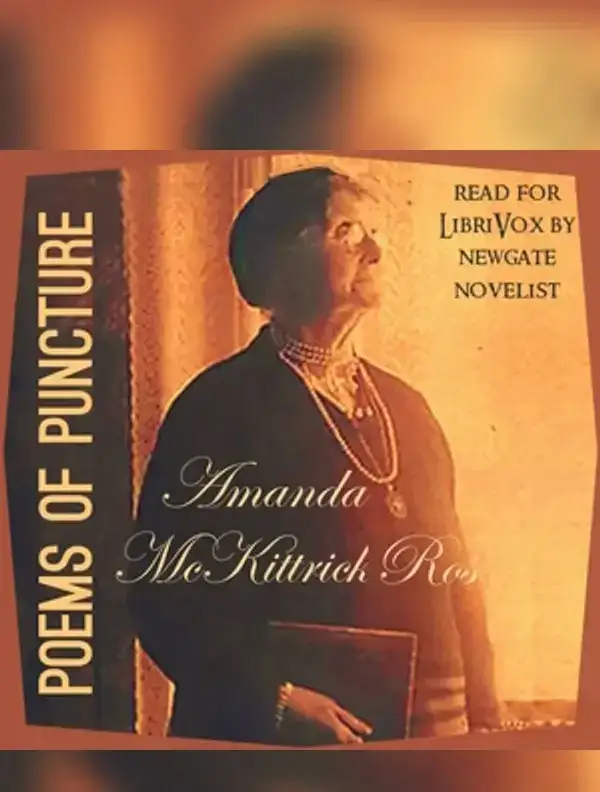
Few writers in the English canon wielded alliteration and vitriol quite like Amanda McKittrick Ros, an eccentric turn-of-the-century Irish author whose fiercely idiosyncratic verse earned her a permanent place as a cult literary curiosity.
Poems of Puncture by Amanda McKittrick Ros is a satirical and notoriously aggressive poetry collection that targets lawyers, doctors, clergy, and personal adversaries through dense alliteration, bizarre syntax, and unyielding invective. This work is ideal for fans of outsider art, literary oddities, and historical camp, but readers seeking conventional poetic structure or delicate aesthetics will want to skip it.
| Author | Amanda McKittrick Ros |
|---|---|
| Publication Era | Early 20th Century (Edwardian / Early Modern) |
| Genre | Satirical Poetry / Outsider Literature |
| Narrative POV | First-person poetic speaker / Direct address |
| Key Themes | Legal grievances, social satire, professional hypocrisy, extreme alliteration |
| Target Audience | Literary historians, lovers of eccentric verse, humorists |
Plot Overview & Premise
Unlike traditional poetry volumes centered on romantic beauty or philosophical contemplation, Poems of Puncture functions primarily as a rhetorical weapon. Amanda McKittrick Ros crafted this collection to publicly defame, lampoon, and “puncture” the egos of those who offended her personal sensibilities or professional pride. Her targets include legal figures, pompous clergymen, medical practitioners, and literary critics—groups she famously held in deep contempt throughout her writing career.
The collection opens with self-defensive declarations, including a “Preface,” “Dedication,” and “Defence,” setting a combative tone before diving into character assassinations of colorful caricatures. Verses such as “Mickey Monkeyface McBlear,” “The Ugliest Brute in Britain,” and “Revd. Goliath Ginbottle” showcase her habit of attaching grotesque names to her subjects. Other entries, including “Epitaph on Largebones the Lawyer,” “Doctor Bushybrows,” and “Sapphira Slick,” attack professional arrogance through absurd descriptions and unrelenting rhythm.
Interspersed among these venomous portraits are localized reflections and mournful pieces like “The Old Home” and “The Spa – Ballynahinch – Co. Down,” though even these quieter moments retain Ros’s theatrical cadence and unconventional linguistic choices.
Key Themes & Literary Analysis
1. The Weaponization of Extreme Alliteration and Syntax
Ros’s signature style relies on heavy, almost punishing alliteration paired with awkward grammatical inversions. Rather than smoothing her lines to fit standard meters, she forces words into dense, rhythmic clusters. This stylistic rigidity creates an intentional or unintentional comedic tempo that amplifies the absurdity of her grievances.
2. Anti-Establishment Invective and Personal Feuds
A core driver of Ros’s poetry is her deep-seated grievance against established authority figures—particularly lawyers and critics, whom she repeatedly accused of deceit and malicious intent. Works like “Lawyer Jock” and “Po, the Lawyer” depict the legal profession as inherently predatory, transforming personal disputes into grandiose moral battles between the innocent speaker and corrupt institutions.
3. Outsider Art and Unintentional Comedy
Literary figures like C.S. Lewis, J.R.R. Tolkien, and members of the Oxford Inklings famously held informal competitions to see who could read Ros’s prose and poetry aloud the longest without laughing. Her utter lack of self-consciousness and unyielding conviction elevate Poems of Puncture from mere doggerel into a celebrated example of outsider literature, where high melodramatic drama collides with bizarre word choices.
Who Should Read This?
Recommended For:
- Fans of Literary Curiosities: Readers who appreciate unusual, fringe, or unintentionally hilarious historical works.
- Scholars of Victorian/Edwardian Outsider Art: Anyone studying non-canonical or self-published literature outside the mainstream traditions of the early 1900s.
- Performers & Audio Enthusiasts: Readers who enjoy dramatic aloud recitations, as Ros’s heavy alliteration gains maximum impact when spoken.
Who Should Skip:
- Traditional Poetry Lovers: Those looking for subtle metaphors, refined lyrical beauty, or emotional nuance.
- Casual Readers Seeking Plot-Driven Works: The collection lacks a cohesive narrative arc, operating instead as a series of isolated satirical broadsides.
Frequently Asked Questions
Is Poems of Puncture part of a larger literary movement?
No, Amanda McKittrick Ros operated almost entirely outside established literary movements. While she published during the late Victorian and Edwardian eras, her distinct style was entirely self-developed and driven by personal conviction rather than contemporary stylistic trends.
Why are lawyers and critics targeted so heavily in this collection?
Ros suffered negative critical reviews for her early novels and experienced frustrating legal battles regarding property and publishing rights throughout her life. She channeled these personal resentments directly into her writing, painting lawyers and critics as villainous archetypes.
Is this collection intended to be funny?
Ros wrote her verse with complete seriousness and deep moral indignation. However, modern readers and historical literary societies largely engage with her work as high-camp comedy due to her absurd character names, aggressive alliteration, and over-the-top melodrama.