
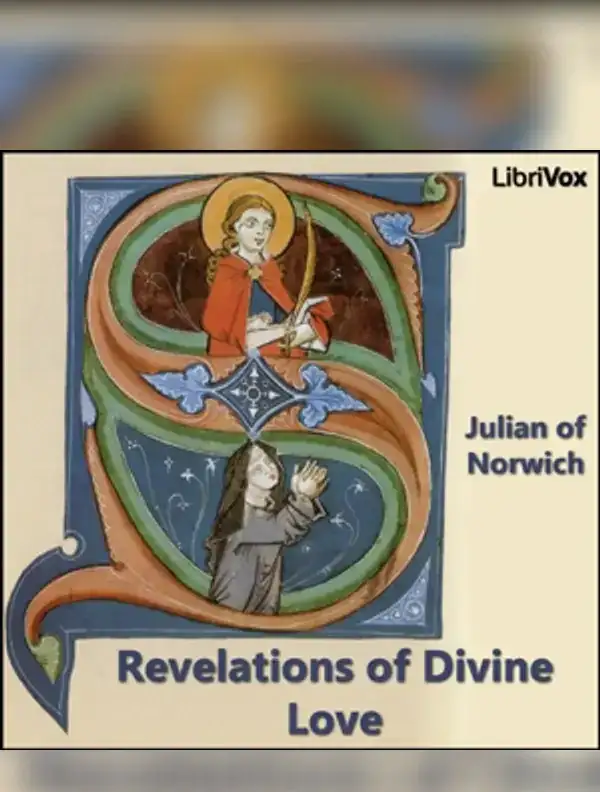
In May 1373, a thirty-year-old woman lay on what appeared to be her deathbed in Norwich, England, receiving last rites as her physical body grew numb. Instead of succumbing to illness, she experienced a sequence of sixteen vivid mystical visions focused on the passion of Jesus Christ and the nature of God’s affection for humanity—an encounter that yielded the earliest surviving book written by a woman in the English language.
Julian of Norwich’s Revelations of Divine Love is a foundational work of Christian mysticism detailing sixteen divine visions experienced during a life-threatening sickness, followed by decades of theological reflection. The text addresses the paradox of human sin, the infinite nature of divine grace, and the ultimate restoration of creation, famously reassuring readers that “all shall be well.” This work is best suited for readers interested in church history, medieval philosophy, and contemplative spirituality. Readers seeking standard narrative fiction or fast-paced modern prose may find its repetitive, meditative structure difficult to navigate.
| Attribute | Details |
|---|---|
| Author | Julian of Norwich |
| Publication Era | Late 14th Century / Early 15th Century (c. 1395) |
| Genre | Christian Mysticism, Theology, Medieval Autobiography |
| Key Themes | Unconditional Divine Love, God as Mother, Purpose of Sin, Universal Salvation |
| Target Audience | Historians, theologians, students of literature, spiritual seekers |
| Narrative Point of View | First-person mystical recount and theological commentary |
Plot Overview & Premise
Unlike traditional narrative literature, Revelations of Divine Love is structured around sixteen distinct spiritual showings, or “revelations,” that Julian received over a single night and morning in May 1373. Believing she was dying, Julian had previously prayed for three spiritual gifts: a recollection of Christ’s passion, a bodily illness in her youth to purge her worldly desires, and three “wounds” of true contrition, natural compassion, and longing for God.
Her visions begin with physical imagery of Christ’s suffering, but quickly broaden into profound cosmic insights. In one famous early vision, Julian sees a tiny object the size of a hazelnut lying in the palm of her hand. When she asks what it is, she receives the internal answer that it represents everything that is made, existing only because God loves it and preserves it continuously.
Following her recovery, Julian withdrew from society to become an anchoress, living in an enclosed cell attached to the Church of St. Julian in Norwich. Over the next twenty years, she meditated on these visions, expanding her initial short account into an eighty-six chapter “Long Text.” This definitive version systematically unpacks the theological implications of her experience, tackling tough questions regarding human suffering, divine justice, and the mystery of sin.
Key Themes & Literary Analysis
The Theology of Divine Love and Sin
The dominant theme of Julian’s work is the absolute, unchanging nature of divine love. Writing during an era marked by the devastation of the Black Death and rigid ecclesiastical warnings of hellfire, Julian presented a radically comforting worldview. She observed that in all her visions, she could see no anger or wrath in God. This created a theological dilemma: if God feels no wrath, how does sin affect humanity’s relationship with the divine? Julian concludes that sin brings its own pain and serves as a humbling mechanism, framing sin not as a cause for divine vengeance, but as a temporary sickness (“Sin is behovely, but all shall be well”).
The Concept of Jesus as Mother
One of Julian’s most striking contributions to Christian theology is her extended metaphor of Jesus as Mother. Drawing on biblical wisdom literature and medieval domestic reality, she argues that human motherhood is merely a reflection of Christ’s deeper, spiritual maternity. Just as a earthly mother feeds her child with her own body, Christ feeds believers with his flesh in the Eucharist. Furthermore, she describes God the Father as our protector, Jesus as our Mother who nurtures our growth through trial, and the Holy Spirit as our companion.
Vernacular Innovation and Literary Voice
Because Julian wrote in the East Anglian dialect of Middle English rather than Latin—the standard language for church authority at the time—her text represents a monumental milestone in English literature. Her writing combines direct, intimate personal testimony with rigorous logical inquiry. Her style uses vivid sensory imagery, symmetrical sentence structures, and rhythmic prose that mirrors the meditative rhythm of her anchoritic life.
Who Should Read This?
Revelations of Divine Love is essential reading for anyone studying medieval history, feminist literary history, or church theology. Readers who appreciate historical contemplative writings—such as those by Thomas à Kempis, Saint Teresa of Ávila, or Saint John of the Cross—will find Julian’s insights deeply rewarding.
However, general readers expecting a linear narrative or modern conversational language should note that the medieval sentence structures and dense theological repetition require slow, deliberate reading. Utilizing a well-annotated modern translation is highly recommended for those unacquainted with 14th-century religious concepts.
Frequently Asked Questions
Why is Revelations of Divine Love historically important?
It is widely recognized as the first book written by a woman in the English language. Beyond its linguistic precedence, it provides an extraordinarily original theological perspective that offered hope during a period dominated by plague and political turmoil.
What is the meaning of Julian’s phrase “All shall be well”?
The quote—”All shall be well, and all shall be well, and all manner of thing shall be well”—expresses Julian’s ultimate trust in divine providence. It summarizes her revelation that despite the presence of sin and suffering in the world, God’s ultimate plan will bring all creation into complete harmony and resolution.
Is this work considered orthodox Christian theology?
While Julian was a devout Catholic who repeatedly submitted her understandings to the authority of the Church, her bold views on divine wrath, the maternity of Christ, and the ultimate disposition of sinners pushed the boundaries of medieval orthodoxy. Today, her work is revered across multiple Christian traditions for its depth and spiritual sincerity.