
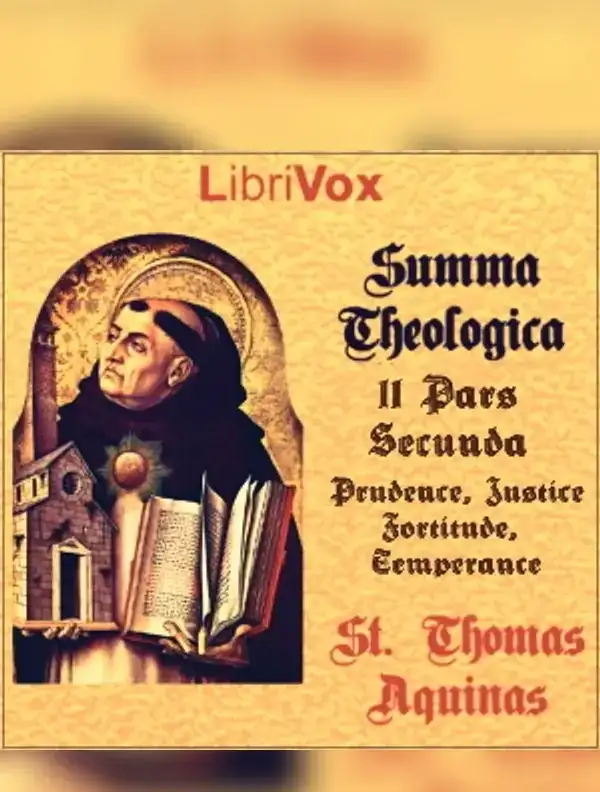
Few intellectual achievements in Western philosophy match the systematic rigor with which Saint Thomas Aquinas dismantled and reassembled human moral agency. In this crucial volume of the Summa Theologica, Aquinas weaves Aristotelian ethics with Christian theology to dissect the mechanics of human virtue, vice, and decision-making.
Saint Thomas Aquinas’s Treatise on the Cardinal Virtues (Questions 47–170 of the Secunda Secundae) offers an exhaustive Scholastic examination of Prudence, Justice, Fortitude, and Temperance. It is essential reading for theologians, philosophy scholars, and ethical theorists seeking a foundational understanding of classical moral thought, though casual readers seeking conversational prose may find its dialectical structure challenging.
| Author | Saint Thomas Aquinas |
|---|---|
| Composition Era | c. 1265–1274 (High Middle Ages) |
| Genre / Sub-genre | Scholastic Philosophy / Christian Virtue Ethics / Moral Theology |
| Core Focus | The four cardinal virtues, their subordinate parts, and opposing vices |
| Target Audience | Philosophers, ethicists, theological scholars, and students of medieval thought |
| Structure | Question-and-Article Scholastic Dialectic (Objections, On the contrary, Respondeo, Replies) |
Plot Overview & Premise
The Secunda Secundae (“Second-half of the Second Part”) represents the operational core of Thomas Aquinas’s moral framework. Having established the ultimate end of human life (happiness in God) in previous sections, Aquinas turns his attention to individual human acts and habits, organizing them around four central pillars known as the cardinal virtues.
Aquinas structures this massive treatise into four sequential sections:
- Prudence (Questions 47–56): Explored as practical wisdom applied to action. Aquinas outlines the parts of prudence—such as memory, shrewdness, and docility—alongside the gift of counsel and opposing vices like imprudence, negligence, and craftiness.
- Justice (Questions 57–122): The largest section of the treatise, detailing the habit of rendering to each person their due. Aquinas addresses civic law, rights, judgment, restitution, and specific transgressions (murder, theft, usury, and slander). He also integrates “potential parts” of justice, including religious devotion, piety, obedience, truthfulness, and equity (epikeia).
- Fortitude (Questions 123–140): Defined as moral strength and firmness of mind against terror, particularly the fear of death. Aquinas details martyrdom as the ultimate act of fortitude, balancing courage against the vices of fearlessness, foolhardiness, and timidity, while elevating sub-virtues like magnanimity, patience, and perseverance.
- Temperance (Questions 141–170): The virtue that restrains lower bodily appetites according to reason. Aquinas examines self-control across various drives, analyzing abstinence, sobriety, chastity, and humility, while contrasting them with gluttony, drunkenness, lust, anger, and pride.
Key Themes & Literary Analysis
The Fusion of Aristotelian Ethics and Christian Revelation
Aquinas’s primary methodological achievement in the treatise is his synthesis of pagan philosophy—most notably Aristotle’s Nicomachean Ethics—with divine revelation and Patristic traditions. He adopts Aristotle’s definition of virtue as a mean between extremes of excess and deficiency, but elevates it by framing reason as a reflection of divine law.
Anatomy of Moral Habits
Every virtue is dissected into its integral parts (necessary conditions), subjective parts (species of the virtue), and potential parts (secondary associated virtues). For example, Justice is not merely a legal concept; it extends into personal gratitude, truthfulness, and religious worship. In analyzing vices, Aquinas demonstrates remarkable psychological acuity, explaining how subtle internal shifts in motivation lead to overt external wrongdoing.
Socio-Economic Ethics and Natural Law
Aquinas’s treatise contains foundational commentary on economic justice, civil law, and personal rights. His analysis of private property, fair price in commerce, theft under necessity, and usury established legal and economic frameworks that influenced European jurisprudence for centuries.
Who Should Read This?
Recommended For:
- Students and professors of medieval philosophy, Catholic theology, and ethical theory.
- Historians studying the evolution of jurisprudence, human rights, and natural law theory.
- Readers interested in structured, rational frameworks for virtue ethics and moral decision-making.
Who Might Want to Skip:
- General readers looking for light, non-academic prose or personal moral reflection.
- Those unaccustomed to medieval Scholastic methodology, which requires navigating complex, formal objections and technical terminology.
Frequently Asked Questions
Why are these four virtues termed “cardinal”?
The term “cardinal” originates from the Latin cardo, meaning “hinge.” Aquinas views Prudence, Justice, Fortitude, and Temperance as the fundamental hinges upon which all other moral virtues turn and depend for human flourishment.
Is it necessary to read the entire Summa to understand this section?
While reading earlier sections on human nature and grace provides helpful context, the Treatise on the Cardinal Virtues functions as a self-contained system of ethics that can be studied independently.
What is the layout of each “Question” in Aquinas’s writing?
Each Question is subdivided into specific Articles. Every Article presents a precise question, lists several objections (arguments against Aquinas’s position), offers a counter-authority statement (“On the contrary”), presents Aquinas’s main thesis (“I answer that”), and systematically refutes each initial objection.