
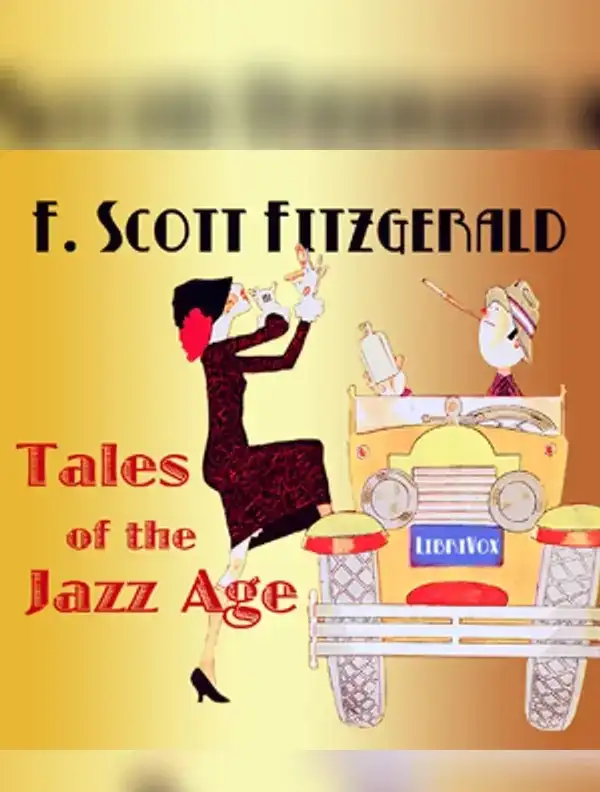
When F. Scott Fitzgerald coined the phrase “Jazz Age,” he was not merely labeling a decade of brassy music and buoyant excess; he was capturing the frantic, beautiful, and deeply tragic anxieties of post-World War I America.
F. Scott Fitzgerald’s 1922 short story collection Tales of the Jazz Age brings together eleven distinct narratives that explore American idealism, economic disparity, and temporal anxiety. This classic work suits readers fascinated by Roaring Twenties social satire and early modernist fiction, though readers searching for a single continuous novel plot may find the varied stylistic experiments fragmented.
| Author | F. Scott Fitzgerald |
|---|---|
| Original Publication Era | 1922 (Early Modernism / Roaring Twenties) |
| Genre & Sub-genre | Short Story Collection / Literary Fiction / Satire / Fantasy Realism |
| Main Themes | Wealth inequality, time and mortality, disillusionment, youth vs. decay |
| Target Audience | Fans of classic American literature, 1920s history, and satirical short fiction |
| Narrative POV | Varied (Third-person limited, dialogue/play script format) |
Plot Overview & Premise
Originally organized by Fitzgerald into three thematic sections—focusing on youth culture, fantastical satire, and experimental pieces—Tales of the Jazz Age captures a nation suspended between wild optimism and quiet despair. The collection serves as an anthology of Fitzgerald’s early commercial and literary magazine publications, showing his evolution from popular fiction chronicler to serious critic of the American Dream.
The anthology features some of Fitzgerald’s most enduring shorter works:
- “The Curious Case of Benjamin Button”: A central piece in the fantastical section, this story traces the life of a man born in his seventies who physically ages backward while society marches forward, exposing the rigid absurdities of human expectations across different stages of life.
- “The Diamond as Big as the Ritz”: A bizarre, fable-like satire detailing a secret family living in Montana atop a mountain made entirely of solid diamond. The narrative exposes how extreme wealth breeds paranoia, moral corruption, and a willingness to defy both God and human justice.
- “May Day”: Set during the 1919 Manhattan riots, this darker, multi-layered tale contrasts high-society dances with broken, impoverished veterans, painting a grim portrait of social fracturedness immediately following the First World War.
- “The Jelly-Bean”: Set in the American South, this character study examines an idle, shiftless young man whose brief glimpse of romance and upper-class ambition ends in quiet resignation.
- Experimental Playlets (“Porcelain and Pink”, “Mr. Icky”): Short, satirical dialogue pieces that poke fun at youth vanity, generational divides, and dramatic conventions of the 1920s stage.
Key Themes & Literary Analysis
The Myth of Perpetual Youth and the Terror of Time
A central thread running through the collection is the obsession with staying young. In stories like “The Curious Case of Benjamin Button” and “O Russet Witch!”, Fitzgerald treats time not just as a linear progression, but as an active antagonist. The characters struggle constantly against aging, social expectations tied to age, and the tragic realization that romanticized youth is fleeting.
Wealth as an Absurd, Destructive Force
Fitzgerald’s treatment of money goes beyond mere critique; he frames immense fortune as an isolating, grotesque spectacle. In “The Diamond as Big as the Ritz,” wealth is so vast that it creates its own distorted reality, forcing the rich to manipulate everyone around them to protect their lifestyle. The collection repeatedly demonstrates how monetary privilege hollows out human empathy.
Post-War Disillusionment and Class Division
While the popular perception of the 1920s focuses on wealth and reckless partying, Fitzgerald exposes the underlying tension of the era. “May Day” contrasts the drunken revelry of Yale alumni with the desperation of returning soldiers and political agitators. The story reveals the severe class divides and ideological friction that defined post-war urban centers.
Who Should Read This?
Recommended For:
- Literary Historians & Students: Essential reading for understanding the cultural mood and social shifts of 1920s America.
- Fans of Speculative Satire: Readers who enjoy allegorical and surreal short fiction like The Curious Case of Benjamin Button or The Diamond as Big as the Ritz.
- Short Fiction Enthusiasts: Anyone looking for varied narrative structures, ranging from traditional magazine drama to playlet dialogues.
Who Might Want to Skip:
- Novel-Only Readers: Those expecting a unified, long-form narrative like The Great Gatsby or Tender Is the Night.
- Readers Seeking Uniform Tone: The collection alternates sharply between light comedy, broad satire, and dark tragedy, which can feel inconsistent.
Frequently Asked Questions
Is “The Curious Case of Benjamin Button” identical to the movie adaptation?
No, Fitzgerald’s original short story is a concise, satirical allegory with a much lighter, fabled tone compared to the expanded, romantic drama of the 2008 film adaptation.
Are all the stories in this collection set in the Roaring Twenties?
While the stories were published in 1922 and reflect early Jazz Age attitudes, several pieces feature fantasy elements, historical shifts starting in the 1860s, or theatrical staging rather than realistic 1920s settings.
What is the literary significance of Tales of the Jazz Age?
The collection popularized the phrase “Jazz Age” in mainstream American culture and established Fitzgerald as both a voice of his generation and a sharp critic of its materialism and excess.