
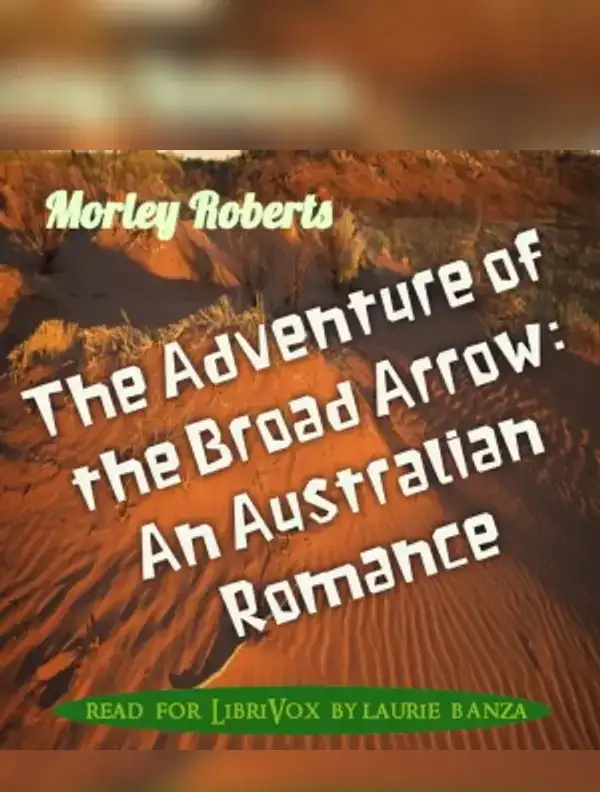
Morley Roberts pushes late-nineteenth-century imperial adventure fiction to its absolute physical limits, setting his narrative within the sun-scorched, waterless void of the Australian interior. Through relentless physical suffering and speculative lost-race encounters, the narrative examines how rapidly human civilized pretenses evaporate under extreme environmental trauma.
The Adventure of the Broad Arrow: An Australian Romance by Morley Roberts is a late-Victorian wilderness survival novel and lost-race adventure. Following two stubborn gold prospectors, Smith and Mandeville (known as “Baker”), as they push deeper into the arid bush than their companions dare, the story devolves into a brutal battle against thirst, heat, and an isolated, hostile tribe. It is an ideal read for enthusiasts of Victorian frontier fiction and wilderness survival stories, though modern readers sensitive to dated nineteenth-century colonial tropes may prefer to pass.
| Author | Morley Roberts |
|---|---|
| Publication Era | Late Victorian / 1890s Colonial Fiction |
| Genre | Wilderness Survival, Lost-Race Adventure, Australian Romance |
| Primary Themes | Nature vs. Human Ambition, Colonial Myth-Making, Survival Psychology, Greed |
| Target Audience | Fans of classic outback literature, vintage survival tales, and 19th-century adventure tropes |
| Narrative Perspective | Third-Person Omniscient |
Plot Overview & Premise
The narrative begins on the fringes of the Australian bush during a punishing drought. When an expedition searching for gold reaches its breaking point, intense heat and empty water holes force most of the party to abandon the enterprise and turn back. Only two men—Smith and Mandeville (nicknamed “Baker”)—refuse to give up on their dreams of fortune. Choosing to gamble their lives against the desert, they press forward into uncharted territory, driven purely by the prospect of striking a massive gold outcrop.
Their gamble swiftly turns into an ordeal of severe dehydration, hallucinations, and physical exhaustion. Navigating dry billabongs, treacherous salt sinks, and blinding sand tornadoes, Smith and Baker barely cling to life. Just as survival seems impossible, their path crosses with a legendary, isolated tribe operating deep in the uncharted interior. Known in bush lore as the “Brodarro”—a name derived from the broad arrow stamp historically used to mark British convict property—this unknown community presents a new and immediate threat. Trapped between ruthless environmental hazards and a fierce, insular tribe, the two prospectors must rely on grit, luck, and tactical cunning to survive and bring their discovery back to civilization.
Key Themes & Literary Analysis
Morley Roberts draws directly upon his real-life experiences as an itinerant worker in Australia during the late 1870s, lending authentic texture to the physical realities of outback travel. Rather than treating the desert merely as a background setting, Roberts constructs the Australian bush as an active, hostile antagonist that continuously punishes human arrogance.
- Environment as the Ultimate Neutralizing Force: The narrative strips away Victorian ideas of male supremacy and technological progress. In the arid interior, gold holds zero intrinsic value compared to a pint of muddy billabong water.
- The Transmutation of Imperial Symbols: The “Broad Arrow”—originally a symbol of British government property and convict servitude—is transformed within the narrative into a mythical tribal marker (“Brodarro”). This reflects late-Victorian anxieties surrounding isolation and regression away from the mother country.
- Psychological Degradation of Greed: As heat and thirst take over, the dynamic between Smith and Baker shifts from romanticized fellowship to primitive self-preservation. Roberts highlights how quickly societal conditioning breaks down under severe physical duress.
Who Should Read This?
Recommended For:
- Historians and fans of late 19th-century adventure authors like H. Rider Haggard or Bertram Mitford.
- Readers interested in early Australian colonial literature and outback survival narratives.
- Literary researchers exploring lost-race subgenres and imperial fiction tropes.
Not Recommended For:
- Readers looking for modern pacing, contemporary dialogue, or nuanced cross-cultural depictions.
- Those who dislike sensationalist Victorian portrayals of indigenous or isolated tribes.
Frequently Asked Questions
Is The Adventure of the Broad Arrow based on a true story?
While the story itself is a sensationalized work of fiction, Morley Roberts drew heavily upon his real experiences wandering the Australian bush in his youth. The harsh depictions of heat, thirst, and outback topography reflect authentic geographical hazards of the region.
What does the term “Broad Arrow” signify in the book?
Historically, the broad arrow was a British government heraldic mark stamped on military equipment and convict uniforms. In the novel, Roberts uses it both literally and mythically, connecting British convict history with a mysterious lost tribe deep in the unexplored bush.
Is this book part of a series or a standalone novel?
This work is a standalone novel. It fits into the broader body of late-Victorian “Australian Romance” literature, characterized by tales of frontier exploration, gold hunting, and bush survival.