
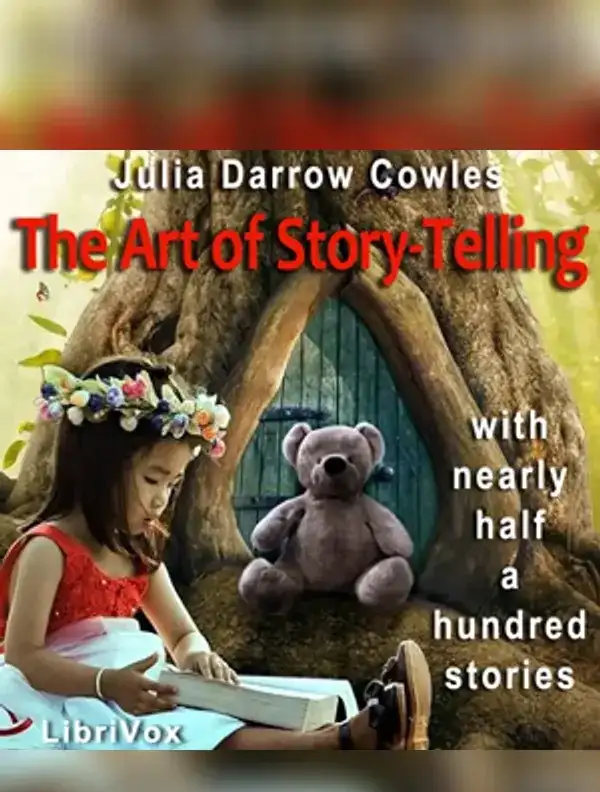
Long before digital media transformed early childhood education, early twentieth-century educators recognized that the spoken word possessed an unmatched power to shape young minds and refine moral character. Julia Darrow Cowles’s 1914 work, The Art of Story-Telling, with nearly half a hundred stories, bridges practical educational theory and narrative performance to restore oral storytelling to its central place in homes and classrooms.
This combined instructional manual and story anthology offers concrete advice on selecting, preparing, and performing narratives for children, paired with nearly fifty curated exemplar tales ranging from folklore and Greek myths to seasonal fables and biblical accounts. It is ideal for primary school teachers, librarians, traditional storytellers, and parents seeking structured moral literature, whereas readers looking for contemporary pacing, modern fiction, or non-didactic narrative prose may prefer alternative titles.
| Author | Julia Darrow Cowles |
|---|---|
| Original Publication Year | 1914 |
| Genre | Educational Guide / Literary Anthology / Oral Pedagogy |
| Main Themes | Moral Education, Oral Tradition, Childhood Development, Narrative Curation |
| Target Audience | Teachers, Parents, Librarians, Storytellers, Historians of Education |
| Structure | 12 Theoretical/Methodological Essays followed by 24 Narrative Modules (containing ~50 short stories) |
Plot Overview & Premise
The Art of Story-Telling, with nearly half a hundred stories functions as both a handbook on oral performance and an anthology of classic children’s literature. Julia Darrow Cowles divides her work into two distinct operational halves: a theoretical blueprint for the storyteller and a practical repertoire of stories designed for immediate classroom or home deployment.
The first section establishes the fundamental rationale for story-telling across various settings. Cowles addresses the role of oral tales in the home environment, the primary grades, and formal school curricula. She provides systematic frameworks for selecting material that aligns with a child’s psychological development, laying down guidelines on dramatization, vocal control, narrative pacing, and the art of retaining a child’s attention without resorting to excessive theatricality. Rather than viewing storytelling as simple entertainment, Cowles frames it as a disciplined art capable of cultivating empathy, aesthetic taste, and intellectual discipline.
The second section puts these principles into action through a broad collection of approximately fifty stories. The selections include:
- Nature Fables & Pourquois Tales: Stories explaining natural phenomena, such as Why the Bear Sleeps All Winter and Opechee the Robin Redbreast.
- Ethical & Fables of Conduct: Direct allegories addressing personal responsibility and honesty, including The Honest Woodman, The Little Boy Who Forgot to Wash His Hands, and The Gold Bugs.
- Folklore & Regional Legends: Adaptations drawn from diverse traditions, such as The Miser of Takhoma, Legend of the Arbutus, and Nils and the Bear.
- Heroic & Classical Myth: Legend retellings highlighting bravery and consequence, featuring Robin Hood and Sir Richard-at-the-Lee, King Midas’ Ears, and How the Queen of the Sky Gave Gifts to Men.
- Seasonal & Devotional Narratives: Holiday-themed pieces and scriptural retellings, including Jerusalem Artie’s Christmas Dinner, Story of David, and The Twenty-third Psalm.
Key Themes & Literary Analysis
Cowles writes from the height of the early twentieth-century Progressive Education Movement, an era that sought to humanize classroom instruction and replace rigid rote learning with organic engagement. Her text highlights several core themes that reflect both the educational philosophy of her period and timeless storytelling principles.
1. The Dual Imperative of Ethics and Aesthetics
A central tenet of Cowles’s methodology is that an effective story must satisfy both ethical intent and aesthetic form. A narrative rich in moral lessons fails if it lacks artistic appeal, while a beautifully told story without substance misses an opportunity to shape character. Cowles encourages storytellers to select works where moral lessons emerge naturally from character action rather than forced preachy conclusions.
2. Orality as an Intellectual Bridge
Cowles emphasizes that oral storytelling serves as a vital bridge between oral speech and written literacy. By listening to structured stories, young children build dynamic vocabularies, absorb sentence structures, and develop internal visualization skills long before they master independent reading. The oral act creates a shared emotional experience between speaker and listener that silent reading cannot replicate.
3. Taxonomy of Childhood Interest
Through her theoretical chapters and story selections, Cowles outlines a clear taxonomy of children’s literary preferences. She argues that early childhood requires simple rhythmic jingles and animal fables, whereas primary and upper elementary students require complex hero tales, myths, and historical narratives that stretch their developing moral and social awareness.
Who Should Read This?
This volume serves as both a practical resource for educators and an informative artifact for literary historians interested in early twentieth-century American pedagogy.
Pros:
- Provides clear, timeless techniques for oral delivery, story selection, and audience engagement.
- Features a diverse collection of short stories that can be read aloud in five to fifteen minutes.
- Offers valuable insights into the historical development of early childhood reading programs.
Cons:
- The early twentieth-century language and explicitly moralistic tone may feel dated to contemporary readers.
- Several included tales rely on simplified adaptations of complex folklore and classical myths.
Frequently Asked Questions
Is this book primarily a theoretical manual or a collection of fiction?
It is a dual-purpose work. The first twelve chapters offer theoretical and practical instruction on the craft of storytelling, while the remaining sections contain nearly fifty short stories chosen to illustrate those principles in action.
What age group is this story collection designed for?
The theoretical guide covers children from early childhood through the middle elementary grades. The anthology includes simple nature jingles for young listeners alongside complex mythic and historical tales suited for older children.
Are the stories in this volume original works by Julia Darrow Cowles?
While Cowles authored the instructional essays, most of the short stories are her adaptations and retellings of traditional folklore, classic myths, historic legends, and biblical narratives designed specifically for oral performance.