
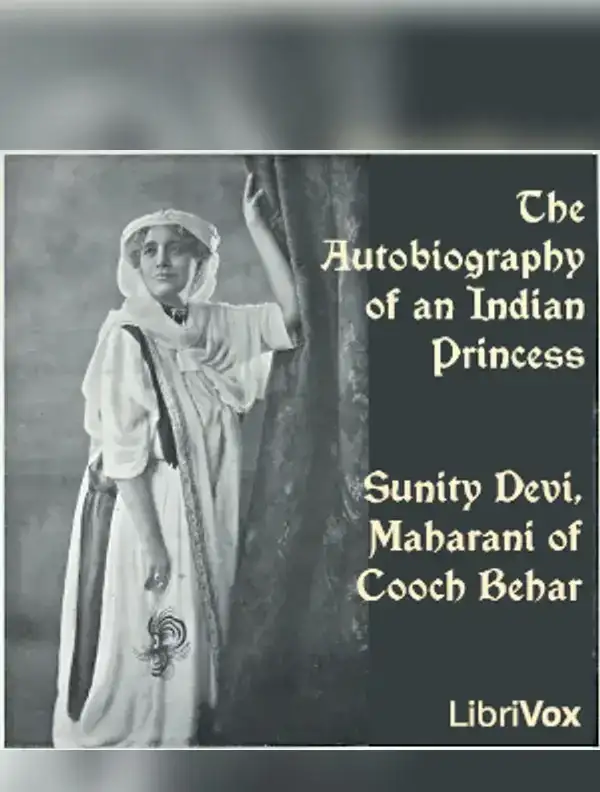
When Maharani Sunity Devi published her memoirs in 1921, she offered Western and Indian readers an unprecedented portal into the lived reality of late nineteenth- and early twentieth-century Indian royalty. The Autobiography of an Indian Princess, written by Sunity Devi, Maharani of Cooch Behar, is a historical memoir that chronicles her journey from a childhood grounded in Brahmo Samaj religious reform to her high-society marriage and diplomatic role across British India and Edwardian England. The central narrative focuses on navigating personal identity, royal obligations, and cultural diplomacy across two wildly different worlds. This memoir is ideal for readers of colonial history, women’s life writing, and South Asian biography, though casual readers seeking dramatic fictional tropes may find its measured, diplomatic tone subdued.
| Author | Sunity Devi (Maharani of Cooch Behar) |
|---|---|
| Original Publication | 1921 |
| Genre | Autobiography / Historical Memoir / Women’s Life Writing |
| Main Themes | Cultural Identity, Colonial Diplomacy, Female Agency, Family & Royal Duty |
| Target Audience | Historians, lovers of biography, scholars of British Imperial and South Asian history |
| Narrative POV | First-person memoir |
Plot Overview & Premise
Sunity Devi begins her life story by exploring her childhood as the daughter of Keshub Chunder Sen, a prominent philosopher and social reformer within the Brahmo Samaj movement. Her early years were steeped in intellectual vitality, moral devotion, and religious reform in Bengal. However, her trajectory shifted dramatically with her marriage to Maharaja Nripendra Narayan of Cooch Behar—a union that sparked considerable public debate due to reformist principles and administrative oversight from the British Crown.
The autobiography traces her transition into royal life in Cooch Behar, detailing state festivals, family traditions, and public engagements. As Maharani, Sunity Devi made multiple trips to England, meeting Queen Victoria and becoming a respected figure in London society. Her narrative balances public obligations—such as managing her family’s royal standing and overseeing her children’s Western education—with profound personal grief, including the painful loss of her husband and sons. Across fifteen chapters, the text records a life lived at the intersection of imperial authority and deep personal conviction.
Key Themes & Literary Analysis
Sunity Devi’s narrative voice is dignified, reflective, and emotionally honest. A primary theme throughout the book is the negotiation of dual identity. She represents an elite class of modernizing Indian royalty who maintained their cultural heritage while comfortably interacting with Western high society. Her accounts of meetings with British Viceroys and royal figures show how personal grace and social diplomacy were used to navigate the political complexities of the British Raj.
Another central thematic element is the focus on domestic and maternal experience within royal households. Rather than emphasizing state policy or political conflict, Sunity Devi foregrounds family dynamics, motherly devotion, societal expectations, and resilience in the face of tragedy. Her commentary on traditional Indian festivals alongside descriptions of Victorian court functions highlights her ability to move seamlessly between distinct cultural realms. While her writing avoids overt political defiance against colonial authorities, her memoir stands as a vital historical source detailing the human side of princely state leadership.
Who Should Read This?
Recommended For:
- Readers interested in South Asian history, colonial India, and princely state customs.
- Enthusiasts of nineteenth- and early twentieth-century memoirs written by women.
- Scholars researching Indian social reform movements like the Brahmo Samaj.
Who Might Want to Skip:
- Readers looking for sensationalized fiction or fast-paced adventure narratives.
- Those seeking an anti-colonial political treatise, as Sunity Devi writes from a diplomatic, aristocratic perspective.
Frequently Asked Questions
Is The Autobiography of an Indian Princess a work of fiction or historical non-fiction?
It is an authentic historical memoir published in 1921 by Maharani Sunity Devi of Cooch Behar, detailing her actual life, family history, and experiences in India and England.
What historical figures are featured in the memoir?
The book includes accounts of her father, religious reformer Keshub Chunder Sen, Queen Victoria, and several British Viceroys who served in India during her lifetime.
What are the primary themes of the book?
Major themes include balancing Eastern traditions with Western society, royal duty, female leadership in the domestic sphere, maternal grief, and religious devotion.