
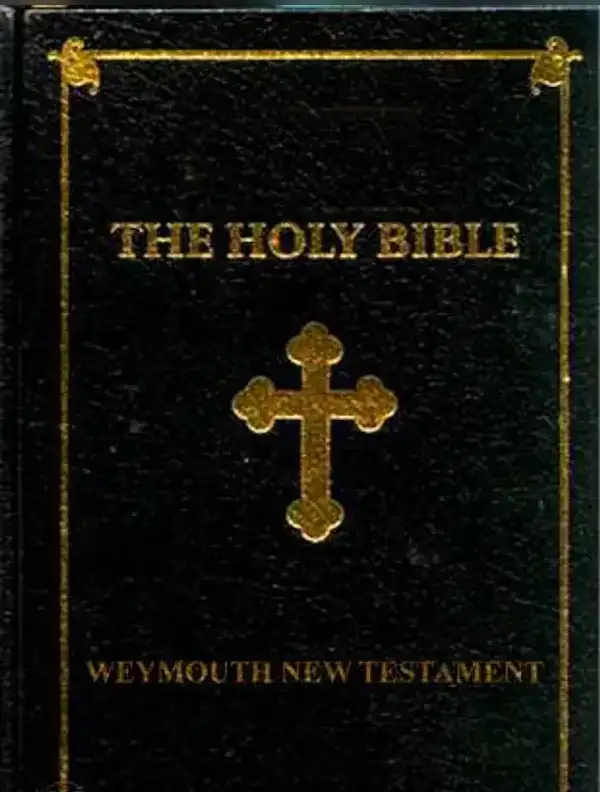
Translating ancient Greek texts into accessible vernacular without stripping away theological nuance requires a careful balance of philological rigor and literary sensitivity. Richard Francis Weymouth’s rendering of the Gospel of Matthew stands as a monument to turn-of-the-century scholarship, bringing the life, teachings, and ministry of Jesus Christ into clear, dignified English prose.
The Gospel of Matthew (Weymouth New Testament), translated by philologist Richard Francis Weymouth and published posthumously in 1903, presents the first book of the New Testament in nineteenth-century modern speech based on his critically acclaimed Resultant Greek Testament. This work is best suited for biblical scholars, Christian readers across denominations, and literary enthusiasts seeking a historically significant, non-sectarian translation; readers seeking archaic Elizabethan cadence or modern 21st-century paraphrases may prefer alternative editions.
| Translator / Editor | Richard Francis Weymouth (Edited by Ernest Hampden-Cook) |
|---|---|
| Original Publication | 1903 (Baker and Taylor / James Clarke & Co) |
| Genre | Gospel / Sacred Scripture / Biblical Translation |
| Source Text | The Resultant Greek Testament |
| Core Themes | Messianic Fulfillment, The Kingdom of Heaven, Christian Ethics, Discipleship |
| Target Audience | Theology students, lay readers, audio listeners, biblical scholars |
| Narrative Structure | Four-part progression across 28 chapters |
Plot Overview & Premise
The Gospel of Matthew in the Weymouth New Testament (WNT) follows the chronological narrative of Jesus of Nazareth, establishing his identity as the promised Messiah through a structured four-part thematic arc across twenty-eight chapters.
Chapters 1–7: The Advent and the Law of the Kingdom
The narrative opens with the genealogy and virgin birth of Jesus, establishing his lineage through King David and Abraham. Following his baptism by John the Baptist and his temptation in the wilderness, Jesus initiates his public ministry in Galilee. This opening movement culminates in the Sermon on the Mount (Chapters 5–7), where Jesus reinterprets Mosaic law, establishes the moral principles of the Kingdom of God, and introduces the Lord’s Prayer.
Chapters 8–14: Signs, Wonders, and Growing Opposition
This section documents Jesus’s miraculous healing ministry, demonstrating authority over disease, nature, and demonic forces. As his popularity grows among the common people, tension escalates with religious leaders—the Pharisees and Sadducees. Jesus commissions his twelve apostles to spread the message, delivering a series of agricultural and kingdom parables (such as the Sower and the Mustard Seed) to explain divine mysteries to his followers.
Chapters 15–21: Revelation, Transfiguration, and Entry into Jerusalem
Jesus expands his ministry, performing miracles beyond Jewish territories and confirming Simon Peter’s confession of him as the Christ. After his transfiguration on the mountain, Jesus foretells his upcoming suffering, death, and resurrection. The narrative shifts dynamically in Chapter 21 as Jesus enters Jerusalem during the Passover season, riding a donkey to fulfill prophetic scriptural expectations and cleansing the Temple courts.
Chapters 22–28: The Passion, Crucifixion, and Great Commission
The final act focuses on the confrontation between Jesus and the Jerusalem authorities, featuring the Olivet Discourse regarding future judgment. After the Last Supper, Judas Iscariot betrays Jesus, leading to his arrest, trial before Pontius Pilate, and death by crucifixion at Golgotha. The Gospel concludes with Jesus’s bodily resurrection from the tomb and his appearance to the disciples in Galilee, issuing the Great Commission to teach and baptize all nations.
Key Themes & Literary Analysis
The primary literary achievement of Weymouth’s Matthew lies in its linguistic philosophy. As a lay Baptist scholar and professional philologist, Dr. Richard Francis Weymouth aimed to determine how the original gospel writers would have written had they been composing in everyday nineteenth-century English. By stripping away artificial ecclesiastical jargon and archaic phrasing while retaining reverence, Weymouth created a translation tailored for private reading and public comprehension.
- Textual Synthesis: The foundation of this translation rests upon Weymouth’s own Resultant Greek Testament, an exhaustive collation that synthesized agreement among premier textual critics of the 19th century, including Lachmann, Tischendorf, Tregelles, Lightfoot, Westcott, and Hort.
- Messianic Prophecy and Jewish Audience: Matthew’s Gospel repeatedly emphasizes fulfilled Old Testament prophecies. Weymouth’s clear sentence structure highlights these connections, emphasizing how Jesus embodies the Jewish prophetic ideal.
- Non-Sectarian Clarity: Edited for release by Reverend Ernest Hampden-Cook after Weymouth’s death in 1902, the text intentionally avoids denominational slant, making the moral teachings and historical narrative accessible to readers across broad theological spectrums.
Who Should Read This?
The Weymouth translation of Matthew remains an important literary bridges between traditional public church readings and individual study text.
Recommended For:
- Students of Translation History: Anyone studying early modern efforts to update English biblical scholarship prior to mid-20th-century revisions.
- Lay Readers and Audio Listeners: Those looking for a smooth, natural-sounding English flow that simplifies complex Greek sentence constructs.
- Ecumenical Study Groups: Groups interested in a neutral text unaffected by Victorian doctrinal biases.
Considerations:
- Readers who prefer the poetic, formal Elizabethan cadence of the King James Version may find Weymouth’s modern speech directness less stylistically dramatic.
- Because the translation reflects turn-of-the-20th-century English idioms, some phrasing may still feel slightly formal compared to contemporary 21st-century translations.
Frequently Asked Questions
What sets the Weymouth New Testament apart from other translations?
The Weymouth New Testament is distinguished by its philological origin, translated directly from Dr. Richard Francis Weymouth’s Resultant Greek Testament. Its primary goal was providing an accurate, idiomatic 19th-century English rendering free from sectarian bias or overly technical ecclesiastical language.
Who was Richard Francis Weymouth?
Dr. Richard Francis Weymouth (1822–1902) was an English philologist, Bible scholar, and schoolmaster. As a devout layman in the Baptist denomination, he devoted his later life to critical Greek text reconstruction and biblical translation before passing away in Essex.
Is the Gospel of Matthew in the WNT suitable for academic study?
Yes. Because the translation rests upon a consensus of top 19th-century textual critics (including Westcott, Hort, and Tischendorf), it serves as a valuable resource for examining historic Greek textual scholarship and early modern English translation methodologies.