
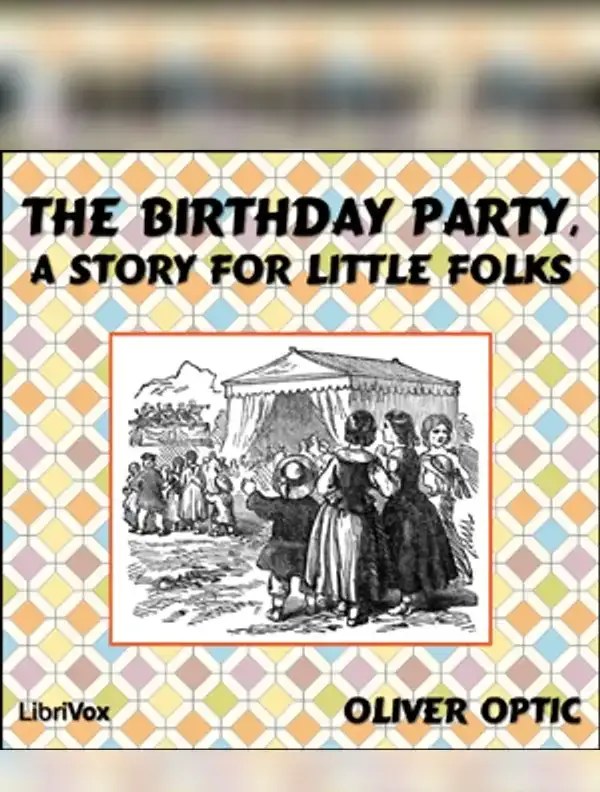
Nineteenth-century juvenile literature frequently balanced charming domestic vignettes with direct moral instruction, a formula that William Taylor Adams perfected under his famous pen name, Oliver Optic. In The Birthday Party, A Story for Little Folks, a simple summer gathering serves as the backdrop for an instructional exploration of youth, kindness, and unselfish joy.
The Birthday Party, A Story for Little Folks by Oliver Optic is a vintage 19th-century children’s story that follows young Flora Lee as her family prepares a special July birthday celebration designed to teach her lessons in generosity and social grace. This book is best for early readers, educators, and collectors of antique American juvenile fiction; readers looking for high-stakes conflict or modern pacing should look elsewhere.
| Author | Oliver Optic (William Taylor Adams) |
|---|---|
| Publication Era | 1860s (Mid-19th Century) |
| Genre | Children’s Fiction / Moral & Didactic Literature |
| Main Themes | Generosity, selflessness, filial obedience, simple pleasures |
| Target Audience | Early readers, parents, historians of children’s literature |
| Narrative POV | Third-Person Omniscient |
Plot Overview & Premise
The narrative opens during early summer as Flora Lee approaches her birthday in July. Recognizing Flora’s good conduct and gentle nature, her mother decides to organize a proper party to celebrate the occasion and reward her daughter’s character. Rather than focusing solely on gifts or vanity, the preparation focuses on creating an environment where Flora can share her blessings with companions.
Structured across four brief chapters, the story traces the movement from anticipation to the event itself. Flora’s parents guide her through the responsibilities of being a gracious host, emphasizing that true enjoyment arises from ensuring her guests feel welcomed and happy. Through small daily interactions and party games, Flora learns to put the feelings of others above her own desires, illustrating the reward of an unselfish spirit.
Key Themes & Literary Analysis
Didactic Moral Instruction
Adams wrote during an era when children’s books were explicitly crafted to shape moral character. Flora Lee functions as an ideal role model for young readers of the 1860s. Her obedience and kindness earn her the celebration, signaling to the child audience that virtue brings genuine reward and familial harmony.
The Nature of Unselfish Joy
A central focus of the narrative is the distinction between selfish indulgence and shared happiness. Flora’s mother continuously redirects her daughter’s focus toward her guests. The text asserts that a birthday party is not merely a celebration of self, but an opportunity to practice hospitality, empathy, and kindness toward peers.
19th-Century Domestic Ideals
The story offers a clear window into middle-class American family values of the mid-nineteenth century. Domestic harmony, parental wisdom, and innocent outdoor play are presented as the cornerstones of a wholesome childhood, reflecting the period’s cultural views on raising ethical youth.
Who Should Read This?
Recommended For:
- Parents seeking gentle, classic stories with traditional moral lessons for young children.
- Literary historians and researchers interested in 19th-century American juvenile literature.
- Audiobook listeners looking for quick, wholesome vintage material.
Not Recommended For:
- Readers seeking fast-paced action, modern humor, or complex character arcs.
- Those who disfavor overtly preachy or didactic narrative styles.
Frequently Asked Questions
Is this story part of a larger series?
Yes, this volume was published as part of Oliver Optic’s “Riverdale Story Books,” a multi-volume collection of short, illustrative tales created specifically to convey moral lessons to young children through accessible domestic scenarios.
What age group is this book intended for?
The story is tailored for early readers aged 5 to 9, utilizing simplified vocabulary, short chapters, and straightforward thematic lessons that are easy for young minds to absorb.
Who was Oliver Optic?
Oliver Optic was the primary pen name of William Taylor Adams (1822–1897), a prolific American author, teacher, and politician who wrote hundreds of popular short stories and series for young boys and girls during the 19th century.