
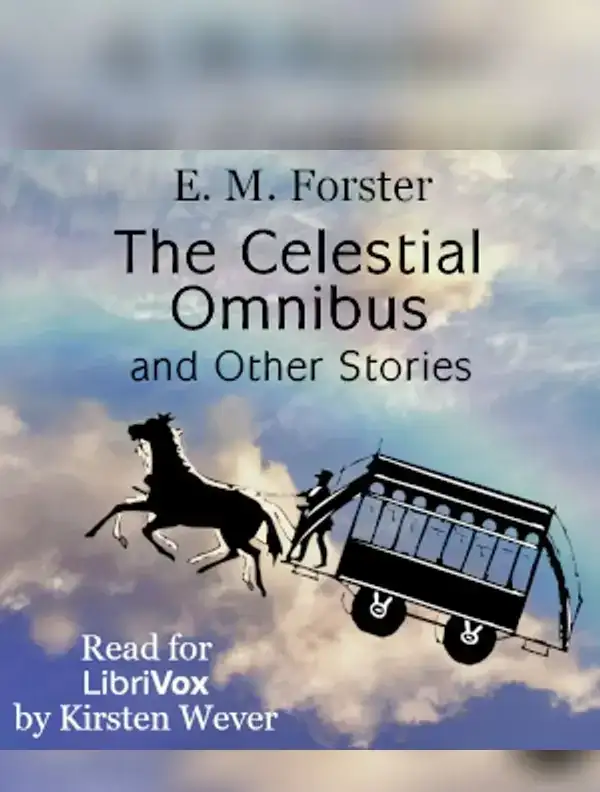
When Edwardian propriety collides with ancient mythology, the conventional boundaries of early twentieth-century English life rapidly dissolve into surreal transcendence. E. M. Forster’s first short fiction collection uses fantasy not as mere escapism, but as a sharp critique of rigid social conventions, intellectual snobbery, and emotional repression.
The Celestial Omnibus, and Other Stories is a 1911 magical realism and allegorical fiction collection by E. M. Forster. Gathering six distinct tales, the work pits Victorian-Edwardian rationalism against classical myth, spiritual awakening, and the untamed natural world. This collection is ideal for readers who appreciate modern classic literature, philosophical allegories, and subtle social satire. Those seeking high-action modern fantasy or complex magic systems may find its quiet, literary tone less appealing.
| Author | E. M. Forster |
|---|---|
| Original Publication Era | 1911 (Edwardian Era) |
| Genre / Sub-genre | Magical Realism / Allegorical Fantasy / Classic Literature |
| Main Themes | Pagan mythology vs. social conformity, true imagination vs. academic snobbery, spiritual liberation, nature vs. industrialization |
| Target Audience | Literary fiction enthusiasts, students of modernism, fans of mythical realism |
| Narrative Perspective | Varied (First-person and Third-person limited across different stories) |
Plot Overview & Premise
The collection brings together six short stories written early in Forster’s career, each exploring a sudden rift in the mundane fabric of daily life where the supernatural or pagan enters without warning:
- The Story of a Panic: While vacationing in Italy, a group of proper English tourists is overtaken by a sudden, irrational terror caused by the unseen presence of the god Pan. Only a quiet boy named Eustace is deeply changed, shedding his docility to embrace raw, joyful pagan energy.
- The Other Side of the Hedge: A exhausted man trudging down a dusty, highly competitive road steps through a roadside hedge, discovering a timeless, idyllic countryside where people live without ambition or race toward a goal.
- The Celestial Omnibus: A curious young boy discovers a mysterious bus stop that leads to the realm of classic literature and pure imagination. While the innocent child experiences true aesthetic wonder, his literary neighbor Mr. Bons—whose name is “Snob” spelled backward—meets a grim fate when he attempts the journey armed only with arrogance.
- Other Kingdom: An innocent young woman, resisting her wealthy fiancé’s attempts to possess and civilize her, escapes into a beech grove and literally transforms into a tree to preserve her freedom.
- The Curate’s Friend: A conventional English clergyman encounters a faun in the countryside, gaining an unshakeable sense of joy that fundamentally alters his approach to religion and friendship.
- The Road from Colonus: An aging Englishman visiting Greece experiences a profound moment of divine clarity near a hollow tree, only for his well-intentioned family to pull him away, forcing him back to a dull, spirit-crushing existence in London.
Key Themes & Literary Analysis
In this collection, Forster establishes many of the humanist concerns that would define his famous novels like Howards End and A Passage to India. Central to the narrative is the tension between rigid social expectation and inner spiritual freedom. Characters who adhere strictly to social status, mechanical progress, and superficial decorum are consistently blind to the wonder surrounding them.
Mythology serves as a disruptive, liberating catalyst. By introducing figures like Pan, fauns, and personified artistic realms into mundane settings, Forster suggests that modern Western culture has detached itself from genuine feeling, imagination, and nature. True understanding requires a child-like open-heartedness rather than academic posturing. This is nowhere clearer than in the title story, where the hypocritical literary elite are exposed as spiritually dead despite their memorized citations, while an unpretentious child gains access to paradise.
Who Should Read This?
Recommended For:
- Readers who enjoy classic 20th-century British literature with a magical or supernatural edge.
- Fans of allegorical stories that critique social norms, snobbery, and materialism.
- Literary scholars interested in the early development of E. M. Forster’s humanist worldview.
Not Recommended For:
- Readers looking for plot-heavy epic fantasy or detailed worldbuilding systems.
- Those who prefer straightforward realist fiction without allegorical or symbolic elements.
Frequently Asked Questions
Is this collection connected to E. M. Forster’s famous novels?
While the stories are standalone works of fiction, they share the same central humanist philosophies, critiques of English class hypocrisy, and longing for emotional authenticity found in Forster’s major novels like A Room with a View and Howards End.
What is the meaning behind the title story?
“The Celestial Omnibus” contrasts genuine emotional appreciation of art with superficial intellectualism. The story demonstrates that true literary and artistic beauty requires humility and wonder rather than elitist knowledge used to show off social status.
Are these stories suitable for modern readers?
Yes. Although written during the early 1900s, the collection’s critiques of hyper-competitiveness, human alienation from nature, and social pretense remain entirely relevant today.