
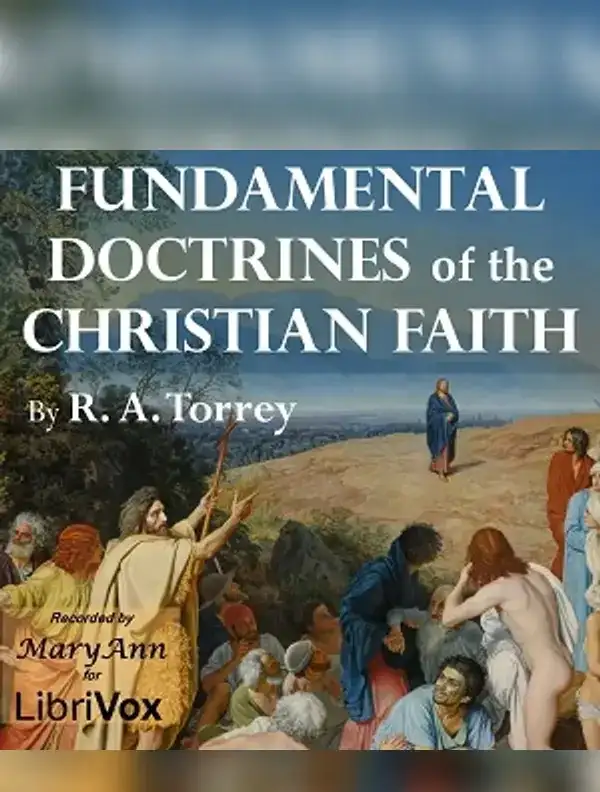
When early 20th-century Christian congregations faced shifting cultural standards and emerging theological movements, clear doctrinal grounding became an urgent pastoral necessity. R. A. Torrey answered this demand by transforming a series of highly attended Sunday sermons into a straightforward, systematic defense of historic Christian belief.
The Fundamental Doctrines of the Christian Faith by R. A. Torrey is a foundational work of conservative Protestant theology and pastoral apologetics. Originating as a series of sermon addresses to address new converts lacking formal instruction, the text systematically outlines primary Christian doctrines, including biblical inspiration, the deity of Christ, substitutionary atonement, and the nature of the afterlife. This work is ideal for readers seeking a clear, uncompromising exposition of early 20th-century fundamental Protestant theology, whereas readers looking for ecumenical dialogue or non-dogmatic philosophy may find its approach overly rigid.
| Metadata Field | Details |
|---|---|
| Author | Reuben Archer (R. A.) Torrey |
| Original Publication Era | Early 20th Century (1918) |
| Genre | Christian Theology / Pastoral Apologetics / Non-Fiction |
| Core Themes | Biblical Inerrancy, Trinitarian Orthodoxy, Substitutionary Atonement, Soteriology, Eschatology |
| Target Audience | Pastors, lay leaders, students of historic Protestant theology, and Christian apologists |
| Structure & Style | 15 topical sermon-adapted chapters preceded by an author’s preface; direct, biblically grounded, and polemical |
Plot Overview & Premise
The Fundamental Doctrines of the Christian Faith was born out of direct practical necessity. Serving a rapidly growing congregation filled with recent converts, evangelist and educator R. A. Torrey recognized that many church members possessed little systematic understanding of essential Christian doctrines. To remedy this, he designed a sermon series addressing the foundational tenets of the Christian worldview, which drew overflowing crowds and prompted immediate requests for a permanent printed edition.
The work unfolds across fifteen distinct thematic chapters, systematically building a logical framework for traditional Christian faith:
- The Authority of Scripture: Torrey opens by defining the scope and nature of divine inspiration, arguing for the supreme authority and reliability of the Bible.
- The Nature of God: The text distinguishes the God of orthodox Christianity from alternative concepts popular in the era, specifically contrasting Christian theology with Christian Science and modern secular philosophy. It emphasizes God’s infinite perfection, absolute unity, and personal nature.
- The Person and Work of Jesus Christ: Torrey details the dual nature of Christ, presenting rigorous scriptural arguments for both His absolute deity and His genuine humanity.
- The Holy Spirit: Two chapters focus on establishing the Holy Spirit as a distinct personal entity rather than an impersonal force, asserting His full deity within the orthodox doctrine of the Trinity.
- Salvation and Redemption: Torrey defends substitutionary atonement against Unitarian and Christian Science redefinitions. He subsequently explains justification by faith as the defining doctrine of Protestantism, alongside the necessity of the “New Birth” (regeneration) and progressive sanctification.
- Eschatology and Final Reality: The concluding sections address bodily resurrection (both of Christ and of believers), the literal reality of the Devil, the existence of a physical hell, and the everlasting duration of future punishment.
Key Themes & Literary Analysis
1. Polemical Contrast and Apologetic Defense
Torrey does not write in a theological vacuum. Throughout the text, he deliberately positions orthodox Christian doctrine against alternative modern movements of his day, notably Unitarianism, Christian Science, and liberal rationalist philosophy. By systematically citing Scripture to refute competing definitions of God, sin, and salvation, Torrey provides readers with an apologetic handbook designed to defend traditional orthodoxy against modern shifts in thought.
2. Absolute Reliance on Scriptural Authority
A hallmark of Torrey’s method is his heavy reliance on proof-texts and direct biblical exposition. Rather than building arguments primarily on philosophical speculation or human tradition, every doctrine is anchored in specific Old and New Testament passages. This biblicocentric approach reflects the broader early 20th-century Fundamentalist movement, which prioritized scripture as the final authority in all matters of faith and practice.
3. Pastoral Accessibility and Practical Intent
Despite handling dense theological concepts such as pneumatology, soteriology, and eschatology, the style remains direct and accessible. Because the material originated as spoken pulpit addresses, the language avoids overly academic jargon in favor of clear, persuasive explanations designed for laypeople and new believers.
Who Should Read This?
Recommended For:
- Students of Church History: An excellent primary source for understanding the core tenets of the early 20th-century Christian Fundamentalist movement.
- Pastors and Ministry Leaders: Offers a structured blueprint for teaching systematic theology to local church congregations.
- Traditional Protestant Readers: Readers seeking a robust, direct defense of classic evangelical doctrines will appreciate Torrey’s clear exposition.
Who Might Want to Skip:
- Progressive or Liberal Theologians: Those seeking flexible, non-dogmatic interpretations or contemporary re-evaluations of traditional doctrines may find Torrey’s strict literalism unappealing.
- Casual Readers: Readers looking for narrative prose or personal memoirs rather than structured theological argument will likely want to choose a different genre.
Frequently Asked Questions
What is the main purpose of R. A. Torrey’s book?
The book was written to provide clear, systematic instruction on core Christian doctrines for new believers and church members who lacked a solid grounding in historic Protestant theology.
How does Torrey address alternative views like Christian Science and Unitarianism?
Torrey explicitly contrasts traditional Christian doctrines—such as the deity of Christ, the personal nature of God, and substitutionary atonement—against the teachings of Christian Science and Unitarianism, using biblical citations to critique their positions.
Is this book suitable for beginners in Christian theology?
Yes. Because the chapters originally served as pastoral sermons aimed at new converts, the text is designed to explain complex doctrines in plain, accessible language without requiring prior academic training in theology.