
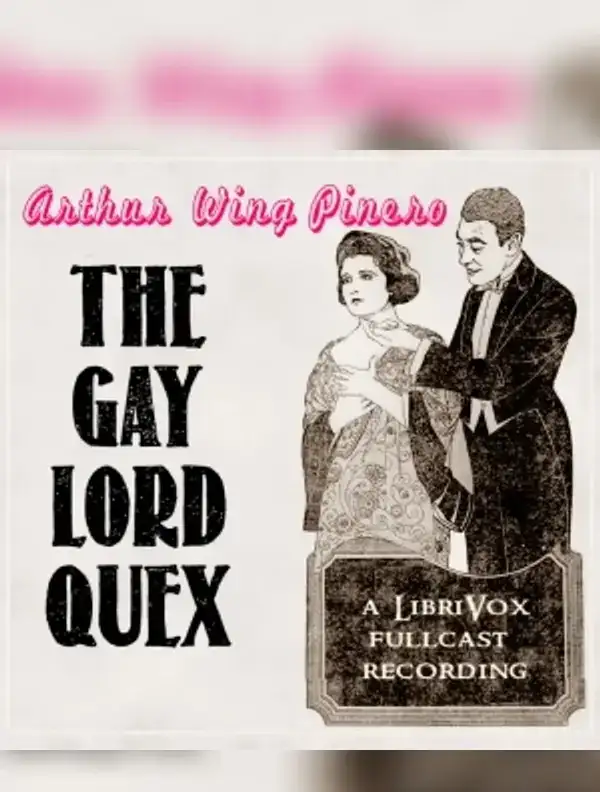
Reforming a notorious reputation in late Victorian society required far more than a simple change of heart—it demanded surviving the intense scrutiny of a moralizing public. Sir Arthur Wing Pinero’s 1899 stage comedy The Gay Lord Quex dissects the double standards of Victorian morality with sharp wit and high-stakes theatrical tension.
The Gay Lord Quex, a classic four-act Victorian comedy of manners by Arthur Wing Pinero, revolves around the Marquess of Quex, a reformed womanizer attempting to secure a respectable marriage with the virtuous Muriel Eden. His past catches up with him as Sophy Fullgarney, a fiercely protective manicurist, schemes to expose his lingering ties to the seductive Duchess of Strood. This play is ideal for fans of Oscar Wilde, Edwardian theatre, and historical social satires, while readers looking for modern narrative pacing or earnest contemporary romance may prefer to skip it.
| Author | Arthur Wing Pinero |
|---|---|
| First Performed / Publication Era | 1899 (Late Victorian Era) |
| Genre | Victorian Comedy of Manners / Satirical Drama |
| Structure | Four-Act Play |
| Main Themes | Gender Double Standards, Moral Reformation, Class Dynamics, Reputation vs. Reality |
| Target Audience | Enthusiasts of 19th-century British theatre, social comedy, and period satires |
Plot Overview & Premise
The narrative opens in the fashionable Bond Street manicuring salon run by Sophy Fullgarney. Sophy is deeply devoted to her foster-sister, Muriel Eden, who has become engaged to the Marquess of Quex. Quex carries an infamous reputation across London as an unrepentant rake and womanizer. Although Quex insists he has permanently foresworn his libertine lifestyle to become a devoted husband, Sophy remains unconvinced of his sudden moral transformation. She resolves to test his loyalty before the marriage takes place.
When the principal characters gather at Fauncey Court, Sophy seizes her opportunity. She discovers that Quex has agreed to a final, private farewell meeting with his former mistress, the seductive Duchess of Strood. Sophy eavesdrops on their late-night meeting and attempts to trap Quex into an unequivocal compromise.
What follows in the iconic third act is a thrilling battle of wits between the aristocrat and the manicurist. When Quex realizes Sophy has caught him, he turns the tables by locking her in the room, threatening to ruin her reputation and her own engagement to the palmist Frank Pollitt (“Valma”) if she exposes him. Impressed by Sophy’s willingness to sacrifice her own social standing to save Muriel, Quex releases her. This unexpected display of honor earns Quex Sophy’s respect, ultimately leading to an agreement that allows Quex to prove his genuine reform and secure his future with Muriel.
Key Themes & Literary Analysis
- The Gendered Double Standard: Pinero highlights the stark contrast in how late Victorian society judged male versus female indiscretions. Lord Quex’s extensive romantic past is largely excused as youthful folly, whereas a woman in the same environment risks total social exile for the slightest breach of decorum.
- Class and Moral Agency: Unusually for the era, a working-class woman—the manicurist Sophy Fullgarney—drives the dramatic tension of the play. Sophy acts as the moral guardian of the story, outmaneuvering aristocratic figures who assume their status places them above scrutiny.
- Reputation versus True Character: The comedy relies heavily on the tension between public perception and private morality. Quex must prove that his true character has evolved beyond his public notoriety, while Sophy demonstrates that genuine integrity exists independent of high social rank.
Who Should Read This?
Recommended For:
- Fans of late 19th-century British drama, classic comedy of manners, and writers like Oscar Wilde or George Bernard Shaw.
- Readers interested in Victorian social history, gender roles, and theatrical history.
- Audio drama listeners seeking well-constructed full-cast classic plays.
Who Might Want to Skip:
- Readers who prefer modern novel structures over dramatic stage scripts.
- Those uncomfortable with period-typical views on class structure and courtship conventions.
Frequently Asked Questions
Is The Gay Lord Quex a standalone play?
Yes, The Gay Lord Quex is a standalone four-act theatrical play written by Sir Arthur Wing Pinero. It was first staged in London in 1899 to widespread critical and popular acclaim.
What does “gay” mean in the context of this play’s title?
In the late Victorian era, the word “gay” referred to someone who was lighthearted, carefree, or hedonistic. In this specific context, it denotes Lord Quex’s history as a pleasure-seeking, fashionable womanizer.
Why is Sophy Fullgarney such a central character?
Sophy serves as the moral center and catalytic force of the play. Her loyalty to her foster-sister drives the plot, forcing Lord Quex to demonstrate genuine integrity rather than relying solely on his aristocratic charm.