
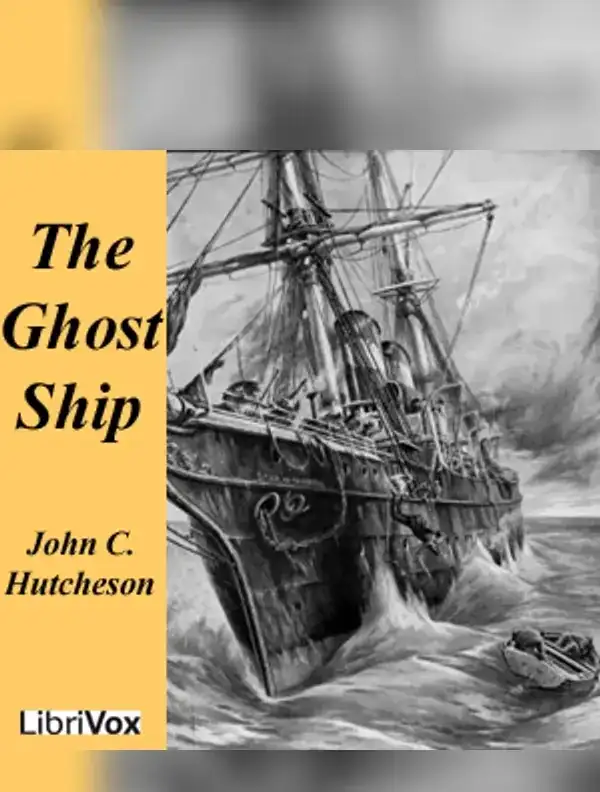
Nautical fiction at the close of the nineteenth century frequently balanced strict maritime realism with the haunting unknown, and John C. Hutcheson’s novel captures that tension with singular atmospheric dread.
The Ghost Ship by John C. Hutcheson is a late Victorian maritime adventure novel following the officers and crew of the steamer Star of the North as they encounter an impossible phantom vessel across storm-swept Atlantic waters, sparking compounding disaster and deadly intrigue. This book is best suited for readers who appreciate authentic nineteenth-century sea lore, traditional Victorian suspense, and detailed shipboard procedures; readers preferring fast-paced contemporary fantasy or gore-heavy horror may wish to skip it.
| Attribute | Details |
|---|---|
| Author | John C. Hutcheson |
| Publication Era | Late 19th Century (c. 1886) |
| Genre | Maritime Fiction / Gothic Sea Mystery |
| Main Themes | Seamanship vs. Superstition, Isolation, Human Treachery, Survival |
| Target Audience | Fans of classic nautical adventure, Victorian mysteries, and sea lore |
| Narrative POV | First-Person (Shipmate/Officer perspective) |
Plot Overview & Premise
The story opens aboard the Star of the North, a state-of-the-art ocean-going steamer navigating transatlantic trade routes at the close of the nineteenth century. Routine maritime operations take an unsettling turn when the crew spots a strange sail on the horizon. The mysterious vessel moves in ways that defy wind direction and navigational logic, causing growing bewilderment among the ship’s seasoned officers.
As the Star of the North presses onward into the Gulf Stream, weather conditions rapidly deteriorate. A severe gale brings a succession of accidents, leaving the steamship damaged and anchored under extreme duress. Amidst heavy seas and compounding technical failures, the phantom craft reappears, plunging the crew into deep mystification. Is the strange vessel a genuine apparition, an illusion brought on by fatigue and tempestuous weather, or a malicious merchant craft operating outside maritime law?
The tension shifts from supernatural dread to human peril when the steamer answers a distress call (“Boat Ahoy!”) and takes on survivors. What begins as a rescue mission unfolds into a sinister scheme involving betrayal, violence, and criminal conspiracy aboard the high seas. The narrative escalates through armed clashes and mutinous struggle before the protagonist is separated from his vessel. Stranded far from home, the narrator endures a seven-year exile in Venezuela before finally securing passage back home to recount the harrowing events.
Key Themes & Literary Analysis
1. Steam Realism Meets Maritime Folklore
Hutcheson excels at contrasting the modern, industrial reality of steamships against age-old nautical folklore. The officers of the Star of the North rely on position logging, coal engines, and precise calculations. When forced to confront a ship that violates physical navigation rules, their rational framework fractures, capturing the era’s anxiety between emerging technology and uncharted natural phenomena.
2. The Escalation from Mystery to Human Malice
While the story leans into spectral tropes early on, it grounded its real danger in human corruption. Hutcheson shifts the psychological horror of a ghost ship into a visceral tale of survival, combat, and lawlessness on the high seas, showing that human greed and violent mutiny are far more lethal than imagined phantoms.
3. Authentic Nineteenth-Century Seamanship
The narrative is rich with accurate period terminology, storm management procedures, and engine room dynamics. Hutcheson paints an authentic picture of late Victorian merchant marine life, giving readers an immersive look at how sailors handled gales, riggings, and sudden mechanical failures.
Who Should Read This?
- Recommended For: Enthusiasts of classic Victorian adventure, historical maritime fiction, and sea mysteries in the vein of Herman Melville or William Hope Hodgson.
- Skip If: You expect a purely paranormal ghost story or fast-paced modern pacing; the novel spends significant time detailing authentic ship routines and period-accurate navigation.
Frequently Asked Questions
Is this novel a pure supernatural ghost story?
No. While the book heavily leverages spectral atmosphere and strange sightings that confuse the crew, it balances supernatural tropes with realistic maritime action, human conflict, and survival realism.
When does the story take place?
The narrative is set during the late nineteenth century, reflecting the transitional era when steam engines and traditional sail craft shared the world’s shipping lanes.
Is this work part of a series or a standalone novel?
It is a standalone classic sea adventure novel written by John C. Hutcheson, focused entirely on the voyages and misadventures surrounding the crew of the Star of the North.