
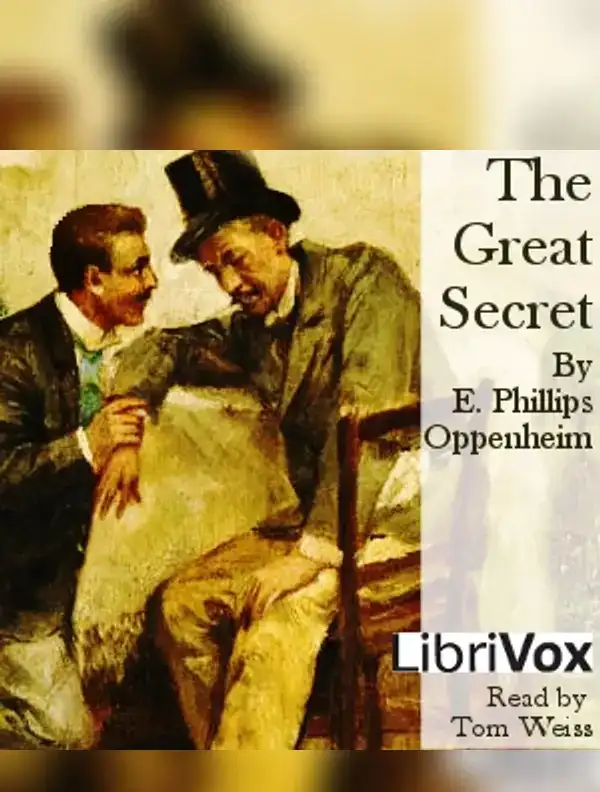
When an idle, wealthy sportsman finds his tranquil existence shattered by a frantic stranger begging for sanctuary in a London hotel room, the comfortable boundaries of Edwardian high society vanish in an instant. E. Phillips Oppenheim’s novel The Great Secret thrusts its unsuspecting gentleman protagonist into a deadly labyrinth of political conspiracy, international covert operations, and shadow diplomacy.
The Great Secret by E. Phillips Oppenheim is a classic Edwardian spy thriller detailing how country gentleman Hardross Courage gets entangled in a perilous conspiracy after harboring a desperate fugitive. This novel is ideal for readers who enjoy early 20th-century espionage, swift action, and classic British adventure; it may prove less appealing to those looking for contemporary dark antiheroes or psychologically heavy realism.
| Author | E. Phillips Oppenheim |
|---|---|
| Original Publication Date | 1906 |
| Genre / Sub-genre | Espionage Thriller / Edwardian Mystery |
| Main Themes | International political intrigue, national loyalty vs. personal honor, covert networks |
| Target Audience | Enthusiasts of early spy fiction, classic pre-WWI adventures, and historical thrillers |
| Narrative Perspective | First-person (Hardross Courage) |
Plot Overview & Premise
Hardross Courage leads a comfortable, unbothered existence managing his English country estate, participating in high-level cricket matches at Lord’s, and enjoying the privileges of wealth. His untroubled world collapses during a stay at a London hotel when an exhausted, desperate man bursts into Room No. 317 claiming that assassins are pursuing him. Driven by sportsmanship and traditional codes of honor, Courage protects the man, unwittingly plunging headfirst into a subterranean conflict between rival international syndicates and state operatives.
As the body count rises and enigmatic figures like Miss Van Hoyt and the mysterious Mr. Guest cross his path, Courage realizes the struggle centers on a geopolitical secret capable of altering power balances across Europe and America. Inheriting a legacy of danger from dying men, Courage assumes false identities, navigates covert organizations such as the Waiters Union, and races across international borders to avert global catastrophe before his pursuers catch up with him.
Key Themes & Literary Analysis
Oppenheim, frequently remembered as a founding architect of the modern spy novel, uses The Great Secret to explore pre-World War I anxiety regarding hidden cabals and secret alliances. A central theme is the collision between traditional aristocratic chivalry and the modern, mechanized world of professional espionage. Hardross Courage represents the quintessential Edwardian ideal—guided by sportsmanship and personal honor—forced to adapt quickly to a world where codes of fair play are routinely ignored by lethal state agents.
The narrative relies on rapid pacing, shifting identities, and atmospheric set pieces ranging from aristocratic drawing rooms to shadowy European transit hubs. Oppenheim skillfully embeds political suspense into everyday social encounters, transforming benign locations—such as cricket grounds, hotel terraces, and dining cars—into arenas of tactical surveillance and mortal peril.
Who Should Read This?
Recommended For:
- Fans of Vintage Espionage: Readers who appreciate the origins of spy literature alongside authors like Erskine Childers, John Buchan, and Eric Ambler.
- Pulp & Adventure Enthusiasts: Readers who enjoy fast-moving plots packed with disguised operatives, secret codes, and narrow escapes.
- Historical Fiction Devotees: Anyone fascinated by Edwardian atmosphere, social etiquette, and early 20th-century geopolitical anxieties.
Who Might Want to Skip:
- Readers who prefer modern procedural detail, moral ambiguity, or complex psychological studies over traditional adventure tropes.
- Those sensitive to older literary conventions and straightforward melodramatic plot twists characteristic of early serial fiction.
Frequently Asked Questions
Is The Great Secret part of a series or a standalone novel?
The Great Secret is a standalone novel. While Oppenheim wrote dozens of thrillers sharing similar themes of international espionage, this storyline and its specific characters resolve completely within this single volume.
What is the primary setting and time period of the story?
The story takes place in the early 1900s during the Edwardian era. The action spans several locations, moving from London hotels and country estates across international transit lines and European hubs.
What makes E. Phillips Oppenheim’s style distinct in this book?
Oppenheim blends high-society romance with brisk political conspiracy. His work stands out for transforming peaceful aristocratic life into a backdrop for secret agents, hidden syndicates, and high-stakes international crises.