
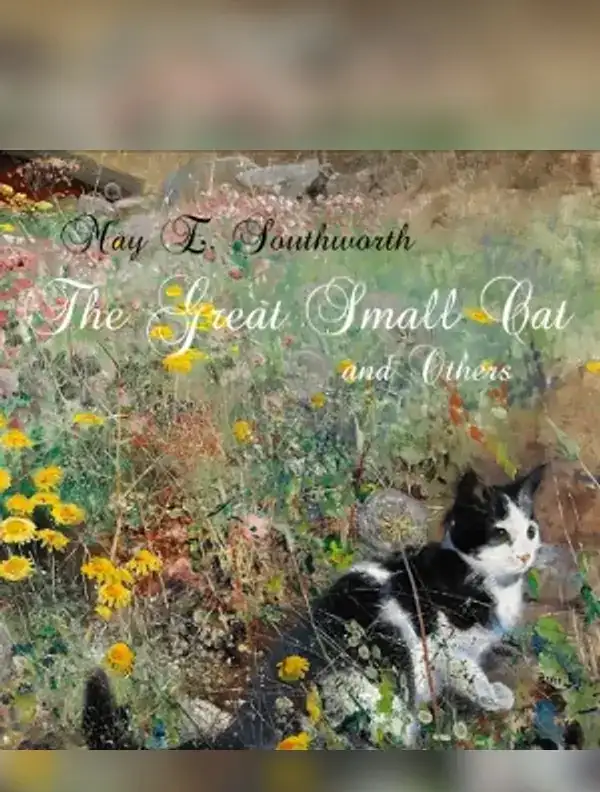
Few early twentieth-century writers captured the enigmatic, fiercely independent nature of feline companions with as much bittersweet realism as May E. Southworth. Rather than idealizing animals through sanitized fables, her work exposes the fragile, profound bond between human beings and cats in an unpredictable world.
The Great Small Cat and Others by May E. Southworth is a short story collection centered on seven distinct feline narratives, ranging from mine-dwelling mousers to abandoned pets navigating harsh environmental survival. This vintage anthology is ideal for readers who appreciate classic animal literature and emotional realism, though sensitive animal lovers should note its melancholic themes and tragic endings.
| Author | May E. Southworth |
|---|---|
| Publication Era | Early 20th Century (1914) |
| Genre | Animal Fiction / Short Story Anthology / Classic Literature |
| Narrative POV | Third-Person Omniscient |
| Primary Themes | Feline loyalty, human-animal bond, environmental hardship, mortality, abandonment |
| Target Audience | Enthusiasts of vintage animal tales, short fiction collectors, and literary historians |
Plot Overview & Premise
The Great Small Cat and Others opens with an introductory framing before delivering seven standalone vignettes, each dedicated to a different cat navigating life alongside human companions or enduring isolation. The tales span varied settings—from industrial mining operations to quiet domestic parlors and deserted wildernesses.
In stories like “A Mine, a Miner, and a Cat,” Southworth examines working-class animals whose instinctual drive provides utility and solace to isolated workers. Other entries, such as “Marooned” and “Thursday,” focus on abandonment, resilience, and the quiet dignity of cats forced to survive human neglect or physical displacement. Rather than leaning on overt fantasy, Southworth grounds each character in observable cat behaviors, emphasizing their curiosity, loyalty, and vulnerability. Readers are explicitly cautioned before entering these narratives: several stories conclude with genuine tragedy, highlighting the harsh realities facing animals in an era before modern welfare standards.
Key Themes & Literary Analysis
Unfiltered Emotional Realism
Unlike many contemporary children’s animal books that guarantee happy resolutions, Southworth’s collection belongs to a vintage tradition of tragic animal fiction. She treats her animal protagonists with solemn respect, allowing nature, accident, and human indifference to exert realistic consequences on their lives.
The Working Animal and Human Companionship
Throughout the collection, cats are portrayed not merely as decorative pets, but as active participants in human survival and emotional health. Whether catching vermin in deep mines or providing quiet comfort to lonely individuals, the animals foster a sense of mutual reliance with their human counterparts.
Observation of Feline Psychology
Southworth demonstrates a keen eye for cat behavior. Her narrative voice avoids extreme anthropomorphism, opting instead to translate feline instincts—hunting, territorial awareness, maternal protection, and self-preservation—into compelling emotional story arcs.
Who Should Read This?
Recommended For:
- Readers interested in early 1900s animal fiction and literary history.
- Cat lovers who appreciate realistic, non-animated depictions of animal behavior.
- Fans of short story anthologies focused on human-animal relationships.
Who Might Want to Skip:
- Readers who prefer lighthearted pet stories with guaranteed happy endings.
- Those who are particularly sensitive to animal distress, loss, or tragic resolutions.
Frequently Asked Questions
Is this book suitable for young children?
Parents and educators should exercise caution. While the prose is accessible, several stories contain tragic themes and explicit loss that may distress sensitive or younger readers.
Is “The Great Small Cat and Others” a continuous novel?
No, it is an anthology consisting of an introduction and seven independent short stories, each focusing on a different feline protagonist in a distinct setting.
What makes May E. Southworth’s writing style distinct?
Southworth writes with direct, observant prose that combines warmth toward animals with an unflinching willingness to depict the harsh realities of their existence.