
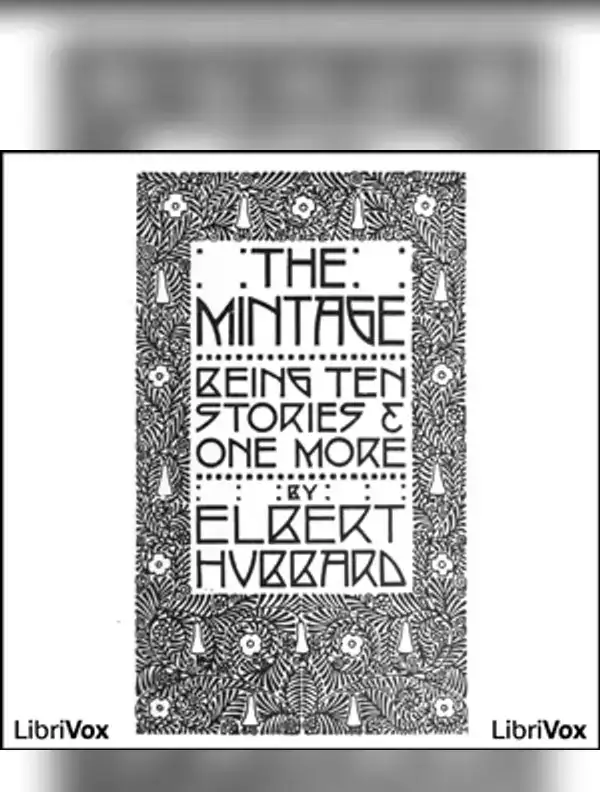
Long before self-help and modern humanism shaped popular philosophy, Elbert Hubbard captured the quiet nobility of everyday empathy through his distinctive, plainspoken prose. His collection of short pieces emphasizes that genuine human value emerges from spontaneous kindness, meaningful labor, and honest personal connections rather than rigid dogma or high status.
The Mintage by Elbert Hubbard is a collection of eleven short stories and historical vignettes that explore compassion, labor, and interpersonal connection in late 19th- and early 20th-century life. Ranging from railway acts of kindness to reimagined historical encounters between iconic figures, the book serves readers interested in early American philosophy and uplifting classic fiction, though readers seeking tight, modern narrative plotting may find its episodic, moralistic structure understated.
| Author | Elbert Hubbard |
|---|---|
| Publication Era | Early 20th Century (1910) |
| Genre | Short Story Collection / Philosophical Vignettes |
| Main Themes | Universal Compassion, The Ethos of Work, Human Kindness, Historical Humanism |
| Target Audience | Fans of classic American literature, historical short fiction, and early humanist prose |
| Narrative Perspective | First-person observer & Third-person omniscient |
Plot Overview & Premise
Unlike continuous novels, The Mintage functions as an anthology of eleven distinct narratives, each constructed to illustrate a specific dimension of human character. Hubbard balances observational tales of contemporary American life with reflective portrayals of historical figures, demonstrating that basic human needs and virtues remain constant across eras.
The collection opens with “Five Babies,” a tale detailing a thousand-mile train journey where five frightened foreign-born orphans are cared for by complete strangers. Despite language barriers, passengers and railway crew unite to supply food, warmth, and comfort without prior arrangement. This spirit of instinctive generosity establishes the baseline for the remaining ten selections:
- To The West: An exploration of frontier ambition, movement, and the American drive toward self-reliance.
- Simeon Stylites the Syrian: A critical examination of religious asceticism, contrasting extreme self-denial with active, practical service to humanity.
- Battle of Little Big Horn: A reflective narrative examining historical conflict, duty, and tragic loss on the American frontier.
- Sam: A character study focusing on loyalty, work ethic, and quiet integrity in an ordinary working-class life.
- Cleopatra and Cæsar: A reimagining of ancient leadership, passion, and political power stripped down to core human motivations.
- A Special Occasion: A domestic story highlighting how simple moments gain profound meaning through shared affection.
- Uncle Joe and Aunt Melinda: A portrait of rural marriage, shared struggles, and enduring companionship.
- Billy and the Book: A narrative about literacy, curiosity, and how access to knowledge can transform a young life.
- John the Baptist and Salome: A dramatic retold history focusing on conviction, desire, and moral conflict.
- The Master: A closing reflection summarizing the core attributes of leadership, artistic devotion, and personal mastery.
Key Themes & Literary Analysis
The Philosophy of Active Living
The organizing principle of the collection is encapsulated in Hubbard’s core belief: real life exists in love, laughter, and productive effort, whereas idleness leads to decay. Stories like “Sam” and “The Master” celebrate physical and mental labor as sources of self-respect, rejecting the idea that comfort or isolation brings true contentment.
Spontaneous Compassion Over Institutional Duty
In “Five Babies,” Hubbard highlights how human empathy functions best when unrestricted by formal bureaucracy. The passengers react not out of legal obligation, but out of basic morality. This contrast recurs throughout the book, particularly in “Simeon Stylites the Syrian,” where solitary, static devotion is viewed as far less valuable than useful, outward kindness.
Democratizing Historical Icons
When treating figures like Caesar, Cleopatra, or John the Baptist, Hubbard strips away grand legend to focus on personal decisions and emotional vulnerability. By placing historical rulers alongside humble figures like Uncle Joe or Billy, the collection suggests that everyday choices contain as much moral weight as historical events.
Who Should Read This?
Recommended For:
- Readers who appreciate early 20th-century American philosophy and traditional storytelling.
- Fans of character-driven short fiction that emphasizes moral clarity and optimism.
- Historians of American literature interested in the Roycroft movement and Elbert Hubbard’s distinct perspective.
Who Might Skip It:
- Readers looking for complex, dark, or anti-hero-driven narratives.
- Those who prefer continuous, long-form novels rather than standalone thematic vignettes.
Frequently Asked Questions
Is “The Mintage” a single continuous story or an anthology?
It is an anthology consisting of eleven independent short stories and essays. Each entry focuses on different characters, historical moments, or moral themes, allowing readers to consume the stories individually or as a complete collection.
What is the meaning behind the title “The Mintage”?
The term refers to the process of stamping or coining money, which Hubbard uses as a metaphor for personal character and wisdom. To Hubbard, true human value is “minted” through active effort, love, and practical goodwill rather than mere accumulation of wealth.
How does “The Mintage” compare to Hubbard’s other famous works?
While Hubbard is best known for historical essays like “Little Journeys” and inspirational tracts like “A Message to Garcia,” this collection leans more heavily into creative storytelling and character vignettes, while retaining his signature conversational and direct tone.