
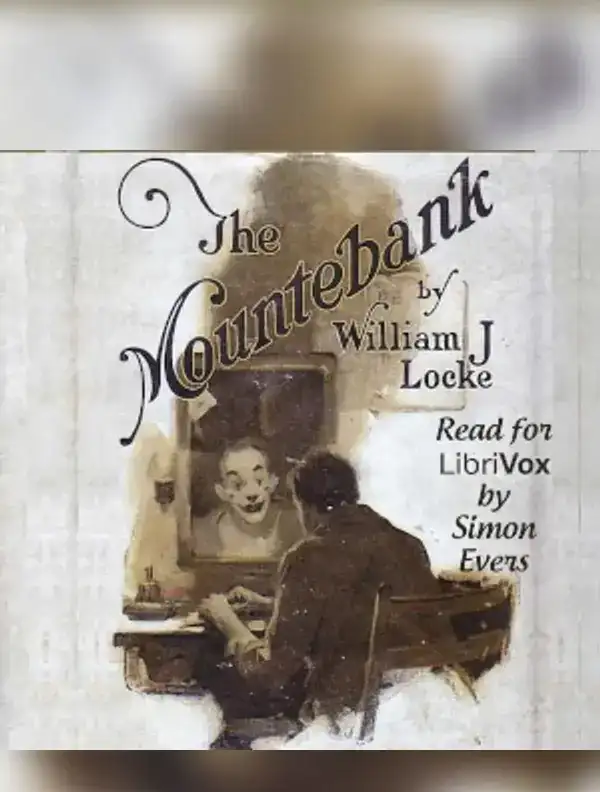
Transformation across social strata often demands a painful reconciliation with one’s origins, particularly when wartime heroism contrasts starkly with civilian obscurity. William John Locke’s 1921 novel The Mountebank captures this exact psychological friction through the life of a former circus performer elevated by war.
The Mountebank, written by William John Locke, is a post-World War I social drama detailing the identity crisis of Andrew Lackaday, an English orphan raised in a French circus who rises to the rank of Brigadier General during the Great War before being forced back into his old life as a clown. This book is best for readers who appreciate early 20th-century character studies and post-war historical fiction; it may not suit readers looking for fast-paced military battle narratives.
| Author | William John Locke |
|---|---|
| Original Publication Era | 1921 (Post-WWI Era) |
| Genre | Historical Fiction / Social Drama / Psychological Fiction |
| Main Themes | Class mobility, post-war reintegration, dual identity, loyalty vs. ambition |
| Target Audience | Fans of classic British literature, WWI history enthusiasts, and social dramas |
| Narrative POV | First-Person Observer (Framed through an acquaintance) |
Plot Overview & Premise
Andrew Lackaday begins life with few advantages. Born an English orphan and raised within the colorful yet demanding environment of a French itinerant circus, he learns the arts of juggling and pantomime under the stage name “Petit Patou.” Accompanied by his loyal Marseillaise partner, Elodie, Andrew earns a modest living travelling across France, content with his specialized trade.
The outbreak of World War I completely upends his existence. Enlisting in the British Army, Andrew discovers an unexpected aptitude for military strategy, leadership, and discipline. Over the course of the conflict, he rises through the ranks with remarkable swiftness, ultimately achieving the prestigious position of Brigadier General. Honored by his peers and accepted into high society, he falls in love with Lady Muriel, a woman far above his pre-war station.
When the armistice arrives, demobilization strips away his military command. Lacking independent wealth or upper-class connections, Andrew realizes that peacetime society offers no place for a wartime general without private means. Forced to make a living, he dons his clown makeup once again, secretly returning to the circus circuit as “Petit Patou.” The central tension of the story follows his struggle to navigate two drastically different worlds: the dignity and romance of his wartime persona versus the reality of his humble stage career.
Key Themes & Literary Analysis
- The Illusion of Class Mobility: Locke uses Andrew’s meteoric rise and sudden fall to critique early 20th-century class structures. While the total war effort briefly flattened social hierarchy based on merit, post-war society quickly re-established rigid boundaries.
- The Crisis of Post-War Identity: Andrew embodies the alienation felt by millions of veterans returning to civilian life. His physical transformation into a circus clown highlights the absurd, performative nature of adapting to post-war normalness.
- Duty and Personal Loyalty: The contrast between Andrew’s loyalty to Elodie—his steadfast companion from his lean years—and his romantic aspiration toward Lady Muriel underscores the core moral dilemma of the story.
Who Should Read This?
Recommended For:
- Readers interested in the human side of demobilization after the First World War.
- Enthusiasts of early 20th-century British and French historical settings.
- Fans of character-driven plots exploring social identity and personal sacrifice.
Who Might Skip:
- Readers expecting an action-packed combat novel set on the frontlines.
- Those who prefer modern, fast-paced thrillers over reflective, classic prose.
Frequently Asked Questions
Is The Mountebank based on a true story?
No, the novel is a work of fiction. However, William John Locke drew heavy inspiration from real-world accounts of soldiers and officers who struggled to reintegrate into civilian society following the sudden end of World War I.
What does the word “mountebank” mean in the context of the novel?
Historically, a mountebank refers to a itinerant performer or street doctor who deceives crowds. In this novel, it serves as a dual metaphor for Andrew’s career as a circus entertainer and his internal feeling of masquerading as a high-class gentleman.
Is this novel part of a series or a standalone work?
The Mountebank is a standalone novel that offers a complete narrative arc regarding Andrew Lackaday’s life before, during, and after the Great War.