
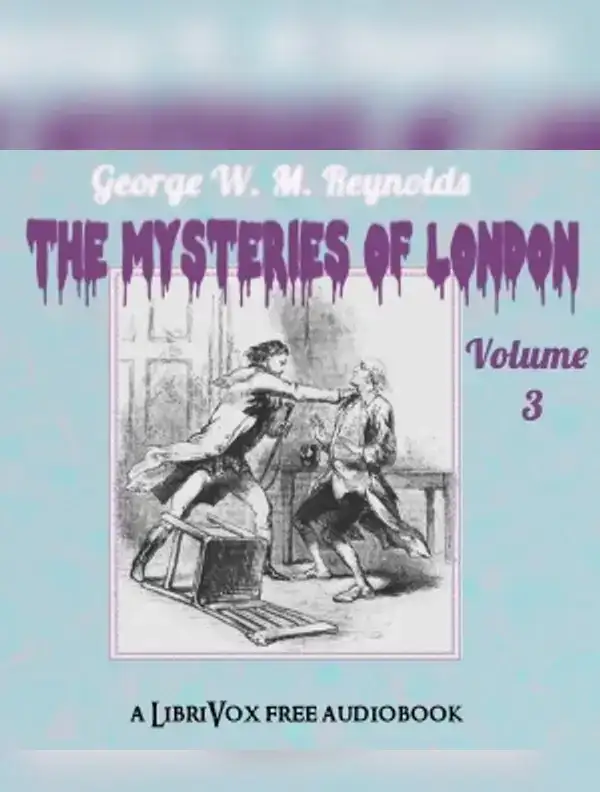
Mid-nineteenth-century London was a city divided by an unbridgeable chasm between aristocratic splendor and subterranean squalor, a reality George W. M. Reynolds exploited with ruthless narrative flair.
The Mysteries of London Vol. III by George W. M. Reynolds is a classic Victorian urban gothic novel and penny dreadful serial that exposes the moral decay of 1840s London through interlocking narratives of crime, blackmail, and aristocratic hypocrisy. Centered on the noble highwayman Tom Rainford, the insidious criminal fence Old Death, and the noble Earl of Ellingham, this volume is best suited for enthusiasts of 19th-century serial melodramas and historical crime fiction, while readers seeking tight, modern pacing may find its sprawling episodic structure challenging.
| Metadata Field | Details |
|---|---|
| Author | George W. M. Reynolds |
| Original Era / Publication Date | Mid-Victorian (Serialized 1845–1846) |
| Genre / Sub-genre | Urban Gothic, Sensation Fiction, Penny Dreadful |
| Main Themes | Class divide, systemic corruption, criminal underworlds, hypocrisy of the elite, penal injustice |
| Target Audience | Readers of classic British literature, gothic mysteries, Victorian social histories, and serial crime dramas |
| Narrative Perspective | Third-person omniscient |
Plot Overview & Premise
In this dramatic third installment of Reynolds’s landmark serial, the narrative descends deeper into the dual realities of Victorian society. The overarching storyline shifts heavily onto the charismatic highwayman Thomas Rainford (known as Tom Rain) and his fraught dealings with the terrifying, manipulative fence Benjamin Bones, alias “Old Death.” As Old Death pulls the strings of London’s criminal network from subterranean hideouts and dark rookeries like Seven Dials, Rainford attempts to navigate a life bound by crime while retaining a strict personal code of honor.
Parallel to the underworld intrigue runs the aristocratic plot involving the Earl of Ellingham, the mysterious and virtuous Esther de Medina, and the treacherous intrigues of high-society figures. A central pillar of Volume III is the surprising revelation of familial ties that bind the upper class directly to the criminal underworld, exposing how aristocracy and criminality are two sides of the same coin. The plot escalates through false accusations, dramatic trials at Bow Street, imprisonments in Newgate and the King’s Bench Prison, and a sensational sequence involving scientific experiments with galvanism to resuscitate a condemned man.
True to the serial penny dreadful tradition, Reynolds weaves numerous detailed subplots and “interpolated histories” throughout the text. Readers are given raw, empathetic backstories of marginalized figures—such as “The History of Jacob Smith,” “The History of Tim the Snammer,” and “The History of a Livery Servant”—which detail how poverty, abandonment, and social neglect systematically drive ordinary citizens into lives of desperation and crime.
Key Themes & Literary Analysis
1. Institutional Hypocrisy and the Double Standard of Morality
Reynolds mercilessly contrasts the vices of the wealthy with the forced crimes of the destitute. Characters like the outwardly pious Mrs. Martha Slingsby and Mr. Sheepshanks represent religious and social hypocrisy, using moral respectability as a cover for greed and deceit. Meanwhile, criminals like Tom Rainford are shown to possess far greater empathy and integrity than the aristocrats who condemn them. Reynolds presents a scathing critique: society punishes the starving thief while rewarding the affluent villain.
2. The Gothic Metropolis as a Living Labyrinth
In Reynolds’s hands, London ceases to be merely a background setting and becomes a monster in its own right. The author contrasts upper-class enclaves like Mayfair and Carlton House with the filth, fog, and disease-ridden alleyways of Lock’s Fields and Castle Street. Secret trapdoors, underground storehouses, damp dungeons, and overcrowded debtor prisons highlight the constant, claustrophobic presence of danger, suggesting that death and moral corruption lurk directly beneath the gilded surface of Victorian progress.
3. Radical Social Commentary and Popular Serial Form
While categorized as a penny dreadful due to its sensational plot twists, romantic melodramas, and cliffhangers, Volume III carries a potent political edge. Reynolds was a prominent Chartist activist, and his political leanings infuse the text. Through lengthy observational chapters—such as explicit commentaries on the condition of the working classes and the brutality of the penal system—he uses mass-market entertainment as a vehicle to champion labor rights, prison reform, and social justice.
Who Should Read This?
Recommended For:
- Victorian Literature Enthusiasts: Readers who enjoy Wilkie Collins, Charles Dickens, or Eugène Sue’s The Mysteries of Paris will appreciate Reynolds’s vivid, unfiltered depiction of 1840s London.
- Fans of Gothic & Crime Serials: Those fascinated by classic tropes—secret identities, subterranean dens, bold robberies, and tragic backstories—will find endless entertainment in this installment.
- Social History Buffs: Readers interested in early Victorian radical politics, the Chartist movement, and historical perspectives on the British class system.
Skip If:
- You prefer tightly focused, short narratives without lengthy digressions or sprawling casts of dozens of characters.
- You are uncomfortable with classic 19th-century melodramatic dialogue, overt moralizing, and episodic pacing.
Frequently Asked Questions
Can Volume III be read without reading the previous volumes?
While Volume III introduces self-contained subplots and new central characters like Tom Rainford and Jacob Smith, it is part of a continuous, mega-serialized story. Reading from Volume I provides helpful context regarding recurring figures, though Reynolds frequently summarizes past events to keep new readers oriented.
Why was George W. M. Reynolds so popular in the Victorian era?
Reynolds matched sensational storytelling—filled with crime, romance, and scandal—with radical socio-political critiques that resonated strongly with the working class. At his peak, his serials outperformed the works of Charles Dickens in total sales.
What makes this volume significant within Victorian crime fiction?
Volume III stands out for its realistic, gritty exploration of London’s criminal logistics, detailing how stolen goods were fenced through networks like Old Death’s, while simultaneously offering a rare, sympathetic look at the systemic causes of working-class crime.