
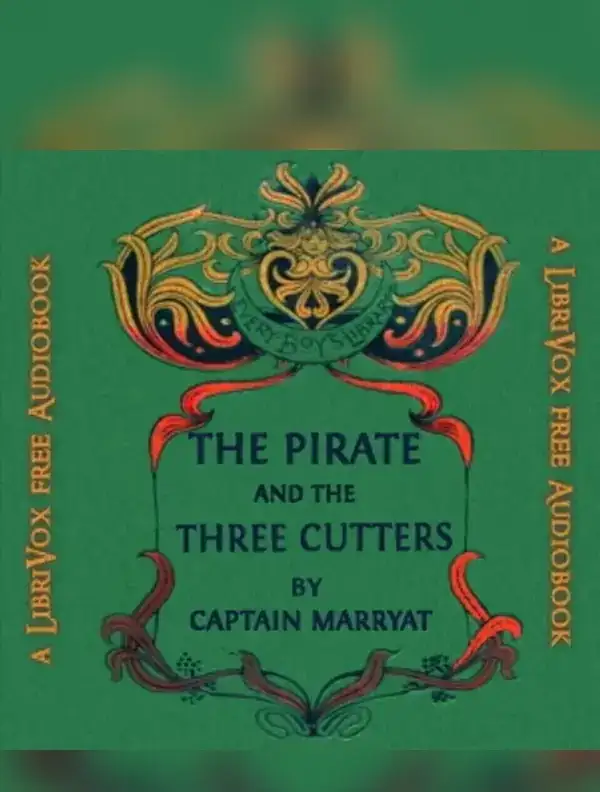
Long before modern naval fiction established its foothold in popular culture, Captain Frederick Marryat drew directly from his personal experiences in the Royal Navy to forge the template for high-seas storytelling. His 1836 dual-work publication, The Pirate, and The Three Cutters, offers a fascinating double feature: a dark Victorian melodrama centered on maritime lawlessness paired with an irreverent, farcical satire of coastal smuggling.
The Pirate, and The Three Cutters by Frederick Marryat is a classic 19th-century maritime double novella that contrasts a Byronic tale of sea criminality and naval engagements with a lighthearted comedy set off the coast of England. Ideal for enthusiasts of early Victorian sea literature and naval history, though casual modern readers seeking tight, single-narrative pacing may find its romanticized tropes and structural split unusual.
| Author | Captain Frederick Marryat |
|---|---|
| Original Publication Era | 1836 (Victorian Era) |
| Genre | Maritime Fiction / Nautical Romance & Satire |
| Main Themes | Piracy, Duty vs. Rebellion, Naval Bureaucracy, Smuggling, Byronic Heroism |
| Target Audience | Fans of classic naval adventure, nautical historians, Victorian literature readers |
| Narrative Perspective | Third-Person Omniscient |
Plot Overview & Premise
The book is divided into two distinct novellas that display Marryat’s range as a writer, shifting from grave melodrama to sharp social comedy.
The first portion, The Pirate, recounts the turbulent life of Edward Ramsay, the ruthless commander of the pirate vessel The Avenger. Ramsay fits the traditional mold of the Byronic hero—a brooding, complex figure governed by fatal flaws and tragic circumstances. The narrative follows shipwrecks in the Bay of Biscay, tense sea chases, violent boarding attacks, marooning on desolate sandbanks, and desperate escapes. Throughout the drama, Marryat embeds authentic naval mechanics and vivid character vignettes, such as an aged steersman holding his post under direct fire—a detail Marryat drew straight from his own youthful service as a midshipman under Lord Cochrane aboard HMS Impérieuse.
In contrast, The Three Cutters serves as a comedic companion piece written to complement the original volume. Set around Portland Bill on the English coast, it weaves together the antics of three distinct vessels: a Royal Navy cutter, a Customs Revenue cutter intent on catching lawbreakers, and a wealthy gentleman’s private yacht secretly involved in illicit smuggling operations. Through misunderstandings, unexpected romantic entanglements, and witty exchanges, Marryat pokes fun at upper-class eccentricities, naval rigidities, and the ridiculous nature of amateur smuggling.
Key Themes & Literary Analysis
Marryat’s work stands as a pivotal transition point in maritime literature, bridging the gap between 18th-century picaresque novels and the tactical realism of later sea authors. Several key elements define the literary composition of this volume:
- Lived Realism vs. Melodramatic Convention: While the narrative arc of The Pirate relies heavily on Victorian melodrama—such as separated twins, sudden coincidences, and tragic court trials—the handling of the ships is undeniably accurate. Marryat’s command of rigging, weather conditions, and naval terminology grounds the narrative in authentic maritime reality.
- The Tonal Contrast of the Sea: By pairing a dark tale of high-seas crime with a light farce, Marryat showcases two opposing perspectives of early 19th-century seafaring. One paints the ocean as a dangerous wilderness of lawlessness and sudden death, while the other treats coastal waters as a playground for societal folly.
- Social Satire and Gender Roles: The Three Cutters subverts expectations by introducing polite society members into naval environments. Marryat highlights the absurdity of shore-bound customs and gender expectations when forced onto the functional, male-dominated deck of a vessel.
Who Should Read This?
This combined work holds significant value for readers interested in the evolution of naval fiction and Victorian popular entertainment.
Pros:
- Unmatched nautical authenticity grounded in real naval officer experience.
- Offers both serious action-adventure and light comedy in a single volume.
- Provides historic insight into early 19th-century perceptions of piracy and smuggling.
Cons:
- The melodramatic arc in The Pirate relies on stock archetypes common to dime novels.
- The dramatic shift in tone between the two stories can feel abrupt.
Final Verdict: Recommended for modern fans of Patrick O’Brian or C.S. Forester who wish to explore the historical foundations of the naval fiction genre, as well as classic literature scholars.
Frequently Asked Questions
Are “The Pirate” and “The Three Cutters” connected in plot?
No, they are two separate novellas published together in 1836. The Pirate is a dramatic narrative focused on high-seas crime and tragedy, while The Three Cutters is a short comedic farce focusing on coastal smuggling off the English coast.
Is Frederick Marryat’s depiction of naval life accurate?
Yes. Marryat served as a midshipman and later a captain in the Royal Navy, fighting during the Napoleonic Wars. His technical descriptions of sailing, storm handling, and crew behavior are drawn directly from personal experience.
What age group is this book suitable for?
The text is suitable for young adults and mature readers comfortable with 19th-century prose styles, classic nautical vocabulary, and Victorian thematic elements.