
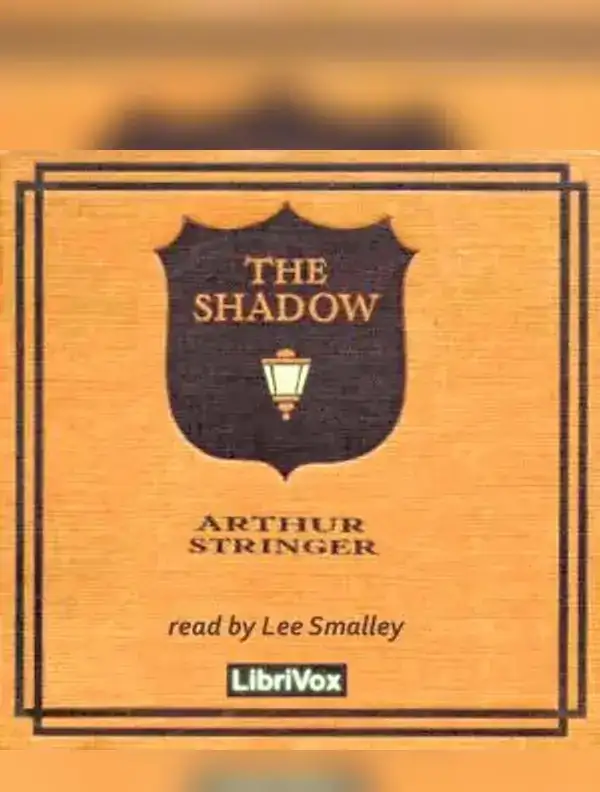
When a lawman’s duty morphs into a singular, consuming compulsion, the boundary between hunter and hunted quickly dissolves. Arthur Stringer’s early twentieth-century novel The Shadow captures this exact psychological spiral through an expansive, globe-trotting cat-and-mouse chase that stands as a fascinating precursor to the modern procedural thriller.
The Shadow, authored by Arthur Stringer and published in 1913, is a vintage crime detective novel detailing a New York City investigator’s unyielding pursuit of a cunning bank robber across continents. Perfect for enthusiasts of early American detective fiction and vintage international adventure, this story may disorient readers searching for Walter B. Gibson’s iconic 1930s pulp character of the same name or those accustomed to modern forensic thrillers.
| Metadata Field | Details |
|---|---|
| Book Title | The Shadow |
| Author | Arthur Stringer |
| Publication Era | 1913 (Early 20th-Century Classic Fiction) |
| Genre | Detective Fiction / Crime Thriller / International Adventure |
| Narrative POV | Third-person limited |
| Primary Themes | Obsessive fixation, human endurance, law vs. criminality, global manhunt |
| Target Audience | Fans of early detective literature, classic manhunt tropes, and pre-noir crime fiction |
Plot Overview & Premise
The narrative opens in the bustling environment of early 20th-century New York City, where a daring and sophisticated bank robbery sets off police alarms. Assigned to the case is a determined detective whose professional pride and moral code demand total resolution. What begins as a routine urban investigation quickly escalates into a grueling, multi-continental pursuit.
Across twenty-two episodic chapters, the detective trails his elusive target through a series of calculated steps, sudden evasions, and treacherous environments. As the thief flees across North America and abroad, the detective gives up comfort, personal stability, and eventually his own mental equilibrium to keep the trail warm. Stringer constructs a narrative filled with unexpected twists, shifts in identity, and tense close-calls that test the limits of physical and emotional endurance for both characters.
Key Themes & Literary Analysis
Arthur Stringer, a prolific Canadian-born novelist, screenwriter, and poet, brings a distinctly visual pacing to the narrative. Having penned early silent film serials, Stringer builds tension through episodic movement and vivid atmospheric shifts.
- The Psychology of Obsession: Rather than focusing solely on clues and physical evidence, the story centers on how an unsolved case reshapes an investigator’s psyche. The detective’s quarry becomes less of a criminal suspect and more of an existential shadow haunting his life.
- The Global Scope of Early Crime: Written during an era when steamship travel and international telegraphs were expanding global connectivity, the novel highlights how criminal enterprises—and law enforcement—were forced to adapt beyond municipal borders.
- Disambiguation and Historical Context: Readers should note that Stringer’s work predates the famous 1930s pulp hero Lamont Cranston (“The Shadow” made famous by Street & Smith and radio shows). Stringer’s novel is a grounded, pre-noir detective adventure anchored in the realities of early 1900s police work.
Who Should Read This?
Recommended For:
- Aficionados of historical mystery and classic crime fiction from the pre-World War I era.
- Readers interested in the evolution of the manhunt motif and procedural detective literature.
- Fans of atmospheric, globe-spanning chase stories.
Who Might Want to Skip:
- Fans seeking the supernatural or vigilante superhero character named “The Shadow” from 1930s pulp magazines.
- Readers who prefer modern high-tech forensics, fast-cut urban thrillers, or explicit graphic violence.
Frequently Asked Questions
Is this novel related to the famous 1930s pulp superhero “The Shadow”?
No. Arthur Stringer’s novel was published in 1913 and is entirely unrelated to the later pulp magazine and radio character created by Walter B. Gibson. Stringer’s work is a realistic, vintage detective manhunt rather than a vigilante hero story.
What style of writing can readers expect from Arthur Stringer in this book?
Stringer writes with descriptive prose characteristic of early 20th-century adventure literature. Given his background in film scripts and poetry, the narrative features sharp scene transitions, rhythmic pacing, and strong visual descriptions of travel and pursuit.
How long is the narrative structure of the story?
The novel is structured into twenty-two distinct sections or chapters, tracking the progression of the robbery investigation from its New York origins through its global resolution.