
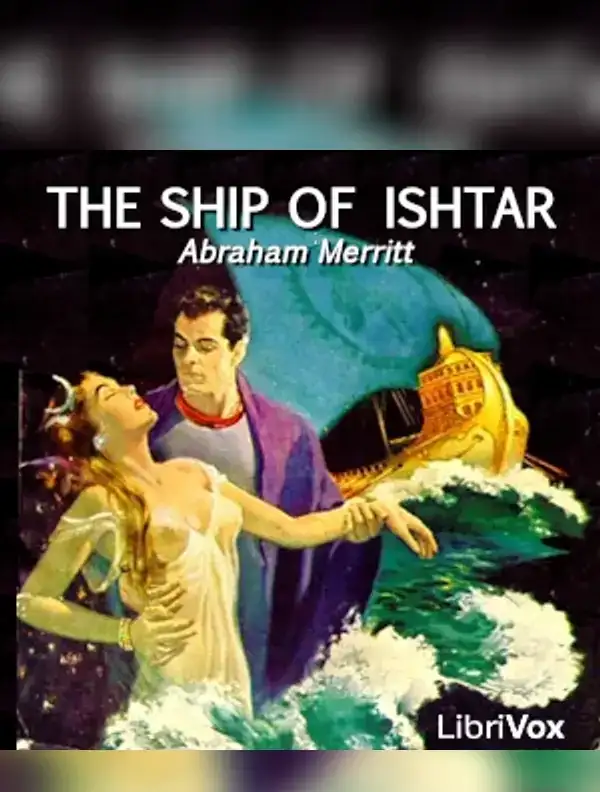
When a shell-shocked veteran of the Great War shatters an ancient stone artifact sent from Babylon, he inadvertently dissolves the boundary between mundane reality and a cosmic mythological war.
In Abraham Merritt’s 1924 portal fantasy The Ship of Ishtar, protagonist John Kenton is magically transported aboard an enchanted, interdimensional vessel frozen in a perpetual deadlock between Ishtar, the goddess of love, and Nergal, the god of death. Ideal for readers of classic pulp fantasy, sword-and-sorcery, and early twentieth-century speculative fiction; readers who dislike dense, melodramatic prose or vintage character archetypes may want to skip it.
| Field | Details |
|---|---|
| Author | Abraham Merritt |
| Original Publication Date | 1924 (Serialized), 1926 (Book format) |
| Genre | Portal Fantasy / Sword and Sorcery / Science Fantasy |
| Narrative POV | Third-person limited |
| Primary Themes | Cosmic Dualism, Escapism from Post-War Trauma, Free Will vs. Divine Control |
| Target Audience | Enthusiasts of golden-age pulp, classic fantasy world-building, and foundational speculative literature |
Plot Overview & Premise
John Kenton, a wealthy World War I veteran recovering from his wounds, receives a heavy block of carved stone uncovered during an excavation in Babylon. Upon freeing the artifact inside, he discovers a hyper-detailed miniature model of an ancient galley. When Kenton touches a glowing ruby set into the ship’s deck, he is instantly ripped from his New York study and thrust onto the full-scale vessel sailing across an uncharted, immortal ocean.
The ship itself is subject to a magical curse: it is divided down the middle by an invisible, impassable forcefield. One half is ruled by Sharane, a fierce priestess devoted to Ishtar, goddess of life and passion. The other half is commanded by Klaneth, a brutal priest serving Nergal, god of death and destruction. Nether side can overpower the other, leaving the crew trapped in an eternal stalemate.
Initial attempts to navigate this bizarre realm force Kenton into grueling captivity as a galley slave under the cruel lash of Zachel. However, through sheer resilience, combat prowess, and alliances formed with colorful companions—including the rogue pirate Gigi—Kenton escapes his chains. He sets out to conquer the vessel, win the heart of the proud priestess Sharane, and break the divine curse holding the ship in thrall. His journey takes him beyond the vessel to mysterious islands, sorcerous encounters, and treacherous temples dedicated to ancient deities.
Key Themes & Literary Analysis
Cosmic Dualism and Divine Neutrality
Rather than presenting a simple moral battle between absolute good and absolute evil, Merritt structures his mythos around fundamental cosmic dualism. Ishtar represents creation, longing, and vitality, yet her followers are capable of immense cruelty and arrogance. Nergal embodies death and decay, but his realm is an inevitable aspect of the natural order. The conflict on the ship illustrates how human lives become mere playthings when higher powers compete for absolute dominance.
Post-War Disillusionment and Escapism
Written in the years following World War I, the novel reflects a broader cultural desire to escape the shattered modern world. Kenton’s transition from a wounded soldier bored of modern civilization into a heroic figure wielding broadswords on an endless sea highlights the pulp era’s appetite for romanticized violence and primal agency. Physical struggle in a fantastical realm serves as a therapeutic alternative to the mechanized, senseless horror of modern war.
Sensual and Vivid World-Building
Merritt’s signature writing style relies on heavy visual atmosphere, romantic rhetoric, and sensory detail. The descriptions of divine light, shimmering seas, blood-soaked altars, and alien sorcery established many tropes that later defined the sword-and-sorcery genre. His prose emphasizes the grandeur and terrifying scale of the supernatural, distinguishing it from the grounded historical fiction of his era.
Who Should Read This?
Recommended For:
- Fans of Vintage Fantasy: Readers who appreciate early speculative fiction by authors like Robert E. Howard, Edgar Rice Burroughs, and H.P. Lovecraft.
- Literary Historians: Anyone researching the origins of portal fantasy and the development of American pulp magazines during the 1920s.
- Lovers of High Melodrama: Readers who enjoy romantic, larger-than-life heroes, mythic stakes, and opulent prose styles.
Who Might Want to Skip:
- Modern Pacing Seekers: Readers accustomed to stripped-down, fast-paced modern thriller structures may find the ornate 1920s language overly descriptive.
- Critical Modern Lens: Readers sensitive to outdated romance tropes and traditional gender roles typical of early twentieth-century magazine fiction.
Frequently Asked Questions
Is The Ship of Ishtar part of a series or a standalone story?
The novel is a complete standalone story. While Abraham Merritt authored several influential fantasy works with similar themes—such as The Moon Pool and The Dwellers in the Mirage—this narrative begins and resolves entirely within its own volume.
How did this novel influence modern fantasy literature?
Published in the mid-1920s, the book helped pioneer the “portal fantasy” structure and heavily influenced early sword-and-sorcery writers. Authors like Fritz Leiber and Henry Kuttner cited Merritt’s work as a foundational influence on their fantastical world-building and atmospheric storytelling.
What is the tone and age suitability of the book?
The story features intense mythological violence, themes of captivity, and vintage romantic melodrama. While appropriate for young adults and older audiences, its historical writing style and dark pulp elements are best suited for mature readers interested in classic fantasy literature.