
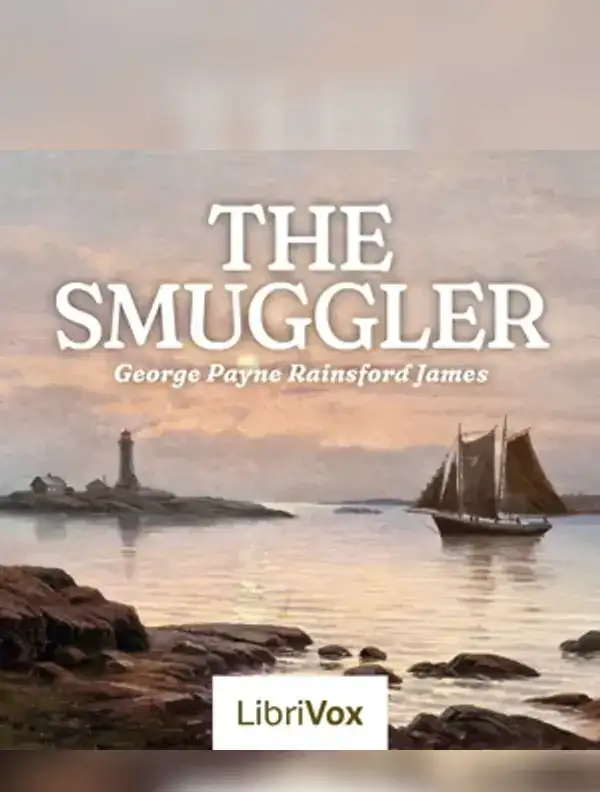
Eighteenth-century Kent served as the ideal breeding ground for illicit trade, where quiet coastal inlets and complicit local gentry transformed illegal distribution into a lucrative regional economy. In The Smuggler, G. P. R. James crafts a multi-layered narrative of romantic intrigue, social hypocrisy, and criminal enterprise along the treacherous English coastline.
The Smuggler by George Payne Rainsford James is a Victorian historical adventure novel set in 18th-century Kent, detailing the tension between law enforcement, wealthy silent backers, and ruthless contraband rings. The story focuses on the eccentric Zachary Croyland, his brother Sir Robert, and the dangerous Radford family. Ideal for readers of classic British historical fiction and naval period literature; casual readers looking for rapid modern thriller pacing may find the dense prose demanding.
| Author | George Payne Rainsford James (G. P. R. James) |
|---|---|
| Original Publication Date | 1845 (Three Volumes) |
| Genre / Sub-genre | Historical Fiction / Victorian Adventure Romance |
| Main Themes | Class Hypocrisy, Law vs. Custom, Economic Exploitation, Family Secrets |
| Target Audience | Enthusiasts of 19th-century classic literature, historical crime, and British local history |
| Narrative Point of View | Third-Person Omniscient |
Plot Overview & Premise
Situated in the southeastern corner of England, the county of Kent sits merely twenty-one miles across the Channel from France. Unlike the rocky coasts of Cornwall where wrecking dominated illicit maritime activities, Kentish smuggling operated as an organized, highly profitable import enterprise. G. P. R. James uses this historic setting to explore how wealthy “gentleman smugglers” funded wide-scale duty evasion, amassing riches while leaving the physical dangers of nocturnal runs and battles with customs officers to the desperate laboring class.
The central plot orbits the Croyland and Radford families. Mr. Zachary Croyland, an eccentric and sharp-tongued observer, maintains a suspicious degree of insight into the regional contraband network. While he purports to disapprove of the violence, his penchant for illicit luxuries raises questions about his true connection to the trade. Meanwhile, his brother, Sir Robert Croyland, finds his household entangled in financial pressures and domestic secrets involving his two daughters. Darkening the neighborhood are the Radfords—ruthless operators whose involvement in local crime goes far beyond duty-free brandy, plunging the quiet Kentish countryside into conspiracy, coercion, and violent confrontations with the authorities.
Key Themes & Literary Analysis
1. Class Hypocrisy and Economic Complicity
A primary focus of the novel is the distinction between those who profit from crime and those who commit it. James illustrates how high society hypocritically accepts tax-free luxuries in their drawing rooms while condemning the violent men who secure those goods. The “gentleman smuggler” risks only capital, while the poor runner risks the gallows, creating a stark critique of Victorian and Georgian class dynamics.
2. The Struggle Between Legal Authority and Local Custom
Throughout the 18th century, coastal populations viewed customs duties as arbitrary government extortion rather than moral law. The narrative highlights this cultural divide: local communities frequently shielded smugglers from federal officers, regarding contraband trade as an honorable local tradition rather than felony, complicating the moral standing of characters on both sides of the law.
3. Victorian Historical Realism and Romanticism
As a contemporary of Sir Walter Scott, G. P. R. James infuses his work with precise regional detail, atmospheric landscape descriptions, and intricate subplot structures. The novel balances realistic depictions of historic smuggling operations with melodrama, secret identities, and romantic rivalries typical of mid-19th-century popular fiction.
Who Should Read This?
This book is ideal for:
- Classic Literature Enthusiasts: Readers who appreciate 19th-century narrative style, expansive subplots, and formal prose.
- British History Buffs: Anyone fascinated by the real-world history of 18th-century English contraband rings, naval patrol history, and Kentish local lore.
- Fans of Historical Drama: Readers who enjoy stories featuring family feuds, coastal secrecy, and romantic intrigue set against a historical backdrop.
You might want to skip this if:
- You prefer fast-paced, dialogue-heavy modern thrillers without lengthy descriptive passages.
- You are disinclined toward dense Victorian sentence structures and multi-volume narrative arcs.
Frequently Asked Questions
Is The Smuggler based on real historical events?
While the characters and specific family rivalries are fictional, the novel accurately reflects the historical reality of 18th-century Kentish smuggling operations, including the presence of organized syndicates similar to the famous Hawkhurst Gang and the complicity of local landowners.
How is the book structured?
The novel was originally published in 1845 as a traditional Victorian “three-decker” (three volumes), containing nearly forty chapters that systematically build the web of intrigue around the Croyland and Radford families.
Does the novel focus more on action or romance?
G. P. R. James balances both elements. While there are tense encounters with revenue cutters, midnight runs, and armed skirmishes, a substantial portion of the plot deals with domestic politics, family inheritances, and romantic entanglements among the gentry.